How Many Beaches Are In St Barts?
How many beaches does St Barts actually have? A count of the named beaches on the island, which are public, and how to reach each one.
St Barthelemy, usually written St Barts, is a French island in the Caribbean covering about 21 square kilometres, and nearly every guide to it opens with the same claim: a remarkable number of beaches packed into a small coastline. The count itself is less tidy than the brochures suggest. The island's shoreline is a series of coves and bays, and where one bay ends and the next begins is a matter of naming rather than measurement, so the honest answer depends on who is counting and how.
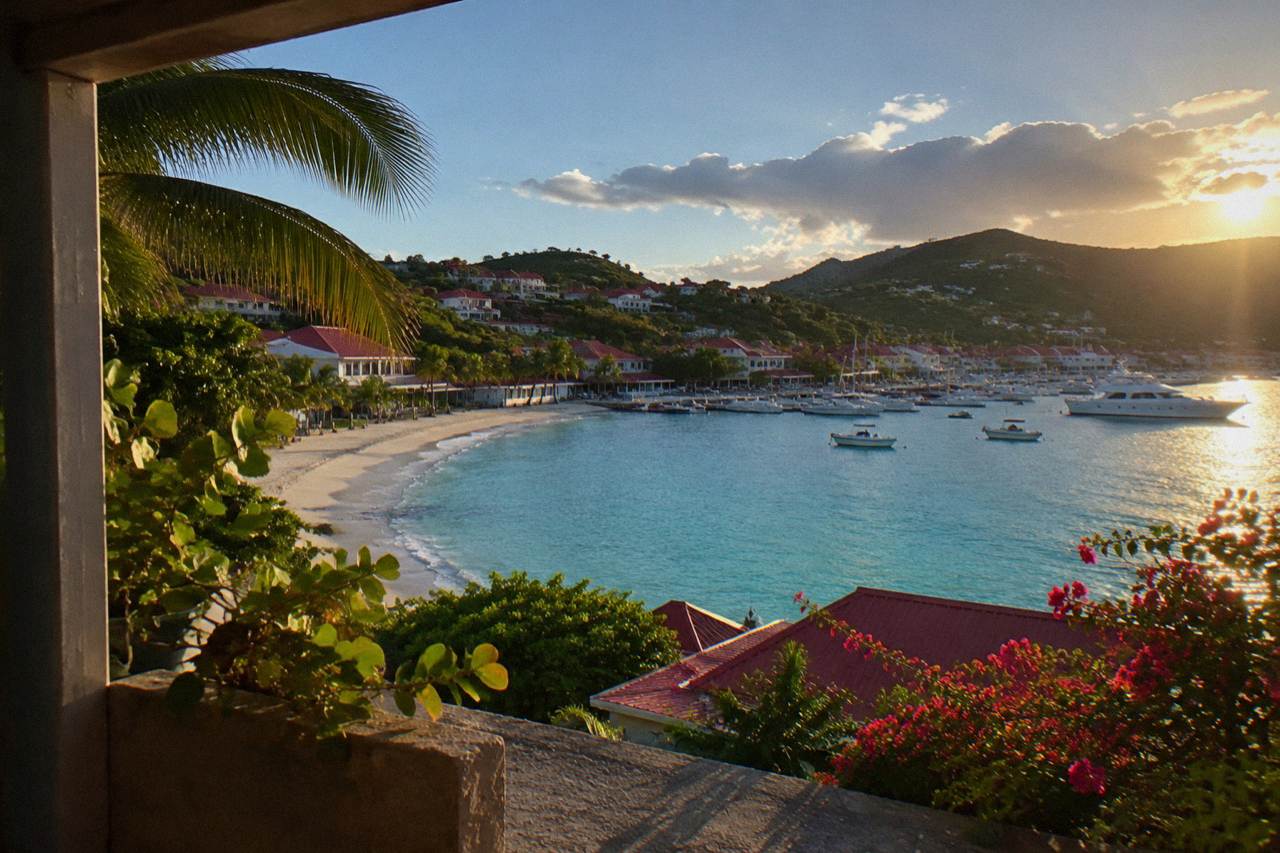
The tourism committee's own list names eleven beaches on St Barts: Saint-Jean, Gouverneur, Saline, Shell Beach, Flamands, Colombier, Grand Cul-de-Sac, Lorient, Toiny, Marigot and Corossol. Because the coastline is made of coves, some counts separate neighbouring stretches of sand and reach a higher figure, while others merge them and land lower. Eleven named public beaches is the working number the island's official tourism material supports.
Those eleven names are the ones that appear on the island's maps and in its official tourism material, and they are the names used on every road sign, rental listing and boat itinerary around the island. Some of them answer to two names: Shell Beach is also called Grand Galet, and Saline appears in French sources as Anse de Grande Saline. That double naming is part of why published counts drift upward, since a list that prints both the French and the English name for the same stretch of sand can appear to describe two beaches.
The island also has smaller coves that sit below the threshold of a named beach. Anse des Cayes on the north coast is one such place, counted as a beach by some lists and as a surfing spot by others. The simplest approach is to treat the eleven named beaches as the anchor set and to acknowledge that a few unnamed or semi-named coves add to the total without changing it much.
For a broader rundown of what each coast holds, the best beaches in St Barts by coast guide groups the same names by shoreline, and the question of are there public beaches in St Barts is covered in its own answer.
Which Beaches Does The Island Count?
The eleven named beaches split across the island's coasts as follows: Saint-Jean, Lorient and Flamands sit on the north shore, Grand Cul-de-Sac and Toiny on the northeast and east, Saline, Gouverneur and Colombier on the south, and Shell Beach, Corossol and Marigot close to Gustavia and the west coast. Each of these is public, and each appears by name on the island's official tourism material and standard maps.
The geography explains the count. St Barts is a hilly island whose coast bends into bays, and almost every bay holds one beach. Colombier sits at the end of its own peninsula in the northwest and belongs to the marine reserve; it is reached by boat or by a walk, and no road reaches it. Gouverneur and Saline face south and are reached by road over the hills from Gustavia. Grand Cul-de-Sac curves along a shallow bay on the island's eastern side.
| Beach | Coast | Reached by |
|---|---|---|
| Saint-Jean | North, by the airport | Road |
| Lorient | North | Road |
| Flamands | Northwest | Road |
| Colombier | Northwest peninsula | Boat or walk only |
| Shell Beach (Grand Galet) | West, by Gustavia | Road, short walk from town |
| Corossol | West | Road |
| Marigot | Northwest of Gustavia | Road |
| Gouverneur | South | Road |
| Saline | South | Road |
| Grand Cul-de-Sac | East | Road |
| Toiny | Southeast | Road |
Two practical notes attach to this list. First, access at Colombier is genuinely different from the rest: the bay lies inside the marine reserve and has no road, which is why boat trips and the coastal walk are the two ways in. Second, several of these beaches have their own pages on this site with more detail, including Colombier Beach, Gouverneur Beach and Saline Beach.
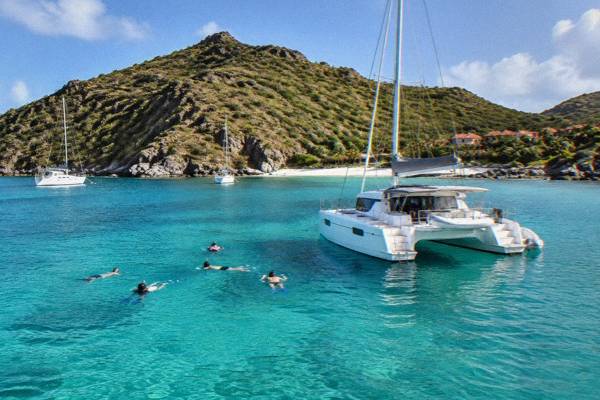
Colombier is also the beach most often seen from the water rather than from the sand. The group sail that departs from St Martin and calls at Gustavia, Colombier and Ile Fourchue reaches the bay the way most people historically did, by boat, and its listing runs only from 12 May to 31 August 2027. The day's itinerary is on the operator's live listing.
Are All Beaches In St Barts Public?
Yes, all of the named beaches on St Barts are public, including the stretches in front of hotels and villas. The tourism committee describes every beach on the island as free to access. What is private is the land above the sand: hotels and homes may own their terraces, chairs and beach clubs, but the beach itself below them remains public and can be walked by anyone.
This is a French legal arrangement, and it matters more on St Barts than on many Caribbean islands because so much of the waterfront is privately developed. A sunbed service or a restaurant on the sand is a private business operating on public ground; the sand in front of it stays open. In practice this means a visitor can walk the full length of any beach on the island, and no hotel can close off its section of shoreline.
The public rule comes with island-wide restrictions of a different kind. The environment agency's regulatory-zones page, which governs the marine reserve, prohibits dogs on all of the island's beaches under a municipal order that applies even to leashed animals, and the reserve's rules add further limits in its own zones: a 5-knot speed limit on the water, no jet skis, no touching or feeding of protected species including sea turtles, and no collecting coral, shells or sand. The reserve lists 23 dive sites within its boundaries.
How Do You Reach The More Remote Beaches?
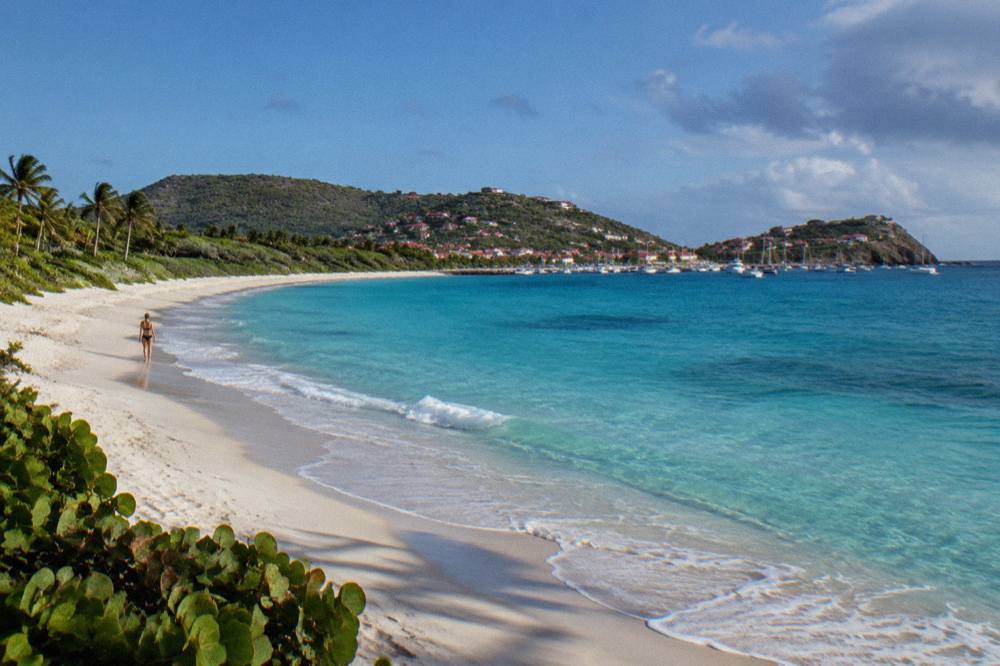
Ten of the eleven named beaches on St Barts are reached by road, most of them by steep and winding routes over the island's hills. Colombier is the exception: no road reaches it, so access is by boat or by a coastal walk, and the bay lies inside the marine nature reserve where boating rules apply. A rental car, a taxi or a boat charter covers every beach on the island.
Driving on St Barts follows French rules, on the right, on narrow roads with steep grades. Speed limits run to 50 km/h island-wide and 30 km/h in Gustavia and Saint-Jean. Rental counters at Gustaf III Airport include Avis, Budget and Hertz, alongside local agencies and the open-air Mini Moke operators the island is known for. The practical point for beach-hopping is simple: the roads between beaches are short in distance but slow in pace, and a day that includes four or five beaches is a full day. The wider set of guides lives on St Barthelemy Travel.
For the water side, several boat options run from St Martin and Sint Maarten. The question of is it worth renting a car in St Barts has its own answer on this site, as does the comparison of getting to St Barts by ferry or small plane.
What Rules Apply At St Barts Beaches?
The marine nature reserve's rules set the main restrictions: a 5-knot speed limit in its zones, a ban on jet skis and other motorized water devices, no dogs on any beach on the island, and no touching or feeding of protected species, with sea turtles strictly protected. The environment agency's regulatory-zones page lists 23 dive sites and forbids collecting coral, shells or sand anywhere in the reserve.
Colombier and Ile Fourchue, the two reserve bays most visited by boats, carry additional rules. Vessels over 25 metres are not permitted, ecological mooring buoys are preferred over anchoring, and anchoring itself is restricted in parts of the enhanced protection zones. Drones are prohibited in and near the reserve without authorization. These rules are enforced by the territorial environment agency, which also asks that turtle nests and sightings be reported rather than disturbed.
For a swimmer or sunbather, the everyday rules are fewer. Bring what you need, take out what you bring, keep dogs at home, and leave shells, coral and sand where they lie. The beaches themselves are undeveloped in the sense that the tourism committee describes: public sand, no entry charge, and access on foot from the road.
Which Beaches Suit Which Kind Of Day?
The honest answer is that St Barts does not rank its beaches officially, and this site does not either: water conditions, sand quality or safety at any individual beach remain unrated. What the map supports is a split between the beaches close to Gustavia, which suit a short visit between other stops, the long southern bays, which suit a half-day with a car, and Colombier, which suits a day planned around a boat trip or a walk.
Readers who want a steer toward a single stretch of sand can read what is the nicest beach in St Barts and what is the most beautiful beach in St Barts. For matching a beach to an activity, the St Barts beach guide by activity and the land snorkeling beaches guide do the same job in more detail, within the same limits.
The one distinction the map makes clearly is between road beaches and boat beaches. Ten names are a drive away; Colombier is not. That single fact organises any beach itinerary on the island more than any ranking does, and it is why boat tours from St Martin consistently include Colombier and Ile Fourchue rather than the roadside bays.
| Question about the count | Short answer |
|---|---|
| Named beaches on the tourism list | Eleven |
| Beaches reached by road | Ten |
| Beach with no road access | Colombier |
| Beaches that are public | All of them |
| Dog-friendly beaches | None, island-wide |
Common Questions About St Barts Beaches
How many beaches are in St Barts?
Eleven named beaches appear on the island's official tourism material: Saint-Jean, Gouverneur, Saline, Shell Beach, Flamands, Colombier, Grand Cul-de-Sac, Lorient, Toiny, Marigot and Corossol. Smaller coves add to the coastline, but eleven is the working count of named beaches.
Are all the beaches in St Barts public?
Yes. Every beach on the island is public and free to access, including stretches in front of hotels and villas. The land above the sand can be private, but the beach itself cannot be closed.
Can you walk to Colombier Beach?
Yes, by a coastal walk, since no road reaches the bay. The other way in is by boat. The walk's length and difficulty are not specified.
Are dogs allowed on beaches in St Barts?
No. A municipal order prohibits dogs on all beaches on the island, even on a leash, and the marine reserve's rules reinforce the ban in its zones.
Is there a beach near Gustavia?
Yes, Shell Beach, also called Grand Galet, sits closest to the capital and is reached by a short walk from town. Corossol and Marigot lie a short drive away on the same side of the island.
Which St Barts beach has no road access?
Colombier, on the northwest peninsula inside the marine nature reserve. It is reached by boat or on foot, and boat tours from St Martin call there regularly.
Whether the count is eleven or a few more depending on the coves included, the practical shape of St Barts is constant: a compact set of public beaches looping every coast, ten of them on the road network and one, Colombier, belonging to the boats and the walkers.