Are There Public Beaches In St Barts?
Yes, every beach on St Barts is public by law. A clear guide to the island's named beaches, what free access means, and the rules that apply.
St Barthelemy, usually written St Barts, is a small French island in the Caribbean of about 21 square kilometres with roughly 10,700 residents, and one of the most useful facts about it is also one of the least advertised: there is no such thing here as a private beach. Every beach on the island is public, from the sand in front of the harbour in Gustavia to the coves at the end of walking paths on the northwest coast. A hotel may own its chairs and its restaurant, but the sand and the water's edge behind it belong to the public domain. That single rule shapes how the whole island is visited, and this page lays out exactly what it means in practice.
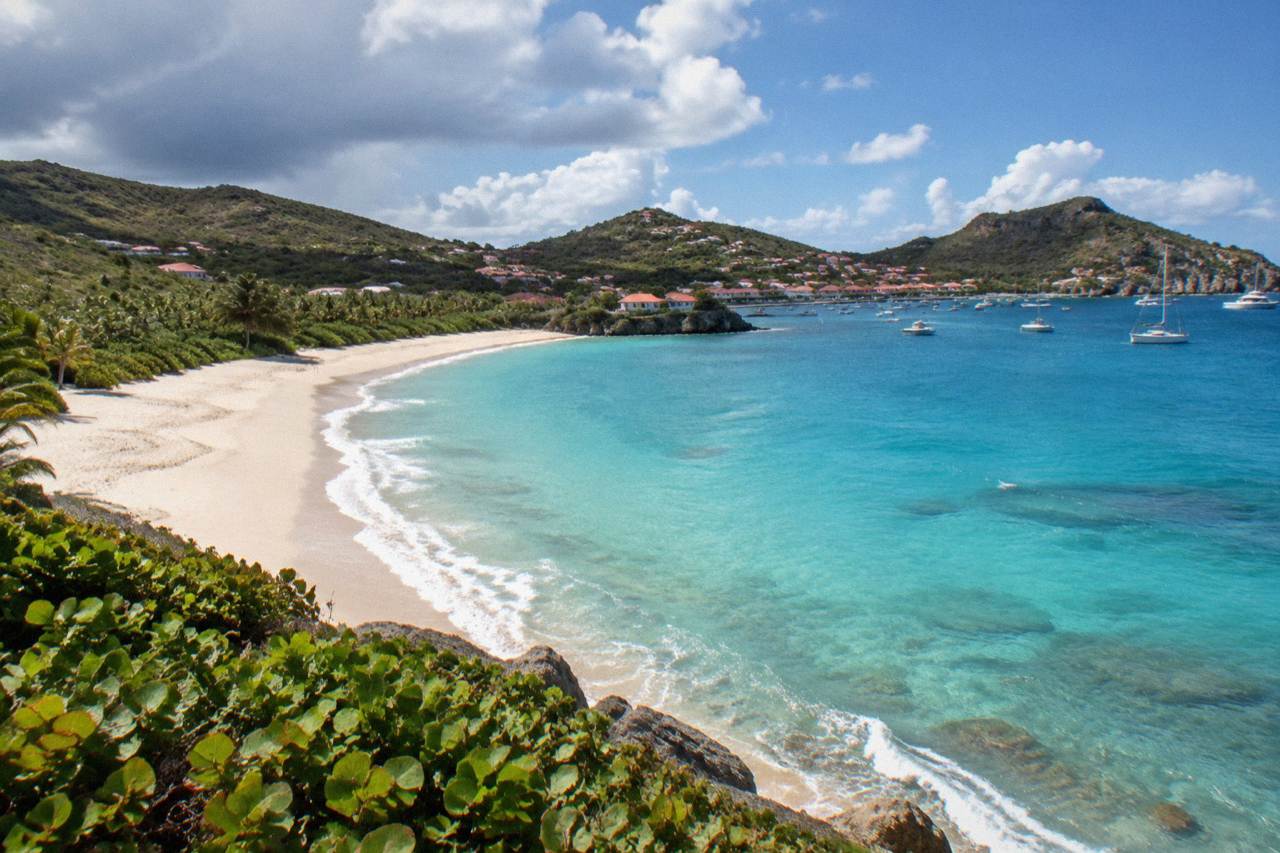
Yes, all of them. Every beach on St Barts is public, from the named strands at Saint-Jean, Gouverneur, Saline and Flamands to smaller coves such as Corossol and Marigot. The tourism committee lists the island's beaches as free public spaces, and French law places the foreshore in the public domain, so no hotel, villa or beach club can fence off its sand or charge entry for the beach itself.
That answer surprises people who have read that St Barts is a luxury destination and assumed the best stretches of sand are reserved for guests of particular properties. They are not. What a hotel or beach club owns is its infrastructure: the sun loungers, the umbrellas, the bar and the restaurant. The beach itself remains open to anyone who walks onto it, and the island's own tourism body presents the beaches as one of its core public offerings. The practical effect is that a day of beach hopping costs nothing beyond whatever transport you choose, and the full count of shores is covered in how many beaches there are in St Barts.
There is a second, quieter point worth knowing. Because the sand is public, so is the path along the water's edge. You can walk the length of any beach on the island, past hotel furniture and private setups, as long as you stay on the foreshore. This is a French legal principle carried into an overseas collectivity, and it is enforced the same way here as on the mainland coast. The island has been an overseas collectivity of France since 2007, and its public-domain rules follow that status.
Which Beaches Can You Walk Onto On St Barts?
The named public beaches on St Barts are Saint-Jean, Gouverneur, Saline, Shell Beach, Flamands, Colombier, Grand Cul-de-Sac, Lorient, Toiny, Marigot and Corossol. Each is listed by the tourism committee as a public beach, and each can be reached and used without a reservation, a membership or a hotel key, though access varies from a roadside arrival to a path or a boat.
They sit around the whole coastline. Saint-Jean is the beach beside the airport runway on the north shore, and Shell Beach, also called Grand Galet, sits a short way from Gustavia on the west. Gouverneur and Saline face south, two broad bays reached from the road above them. Flamands runs along the northwest-facing coast, Lorient sits on the north shore east of Saint-Jean, and Grand Cul-de-Sac curves along a shallow eastern bay. Toiny lies on the southeast coast, Marigot is a small cove on the north side, and Corossol faces west just north of the capital.
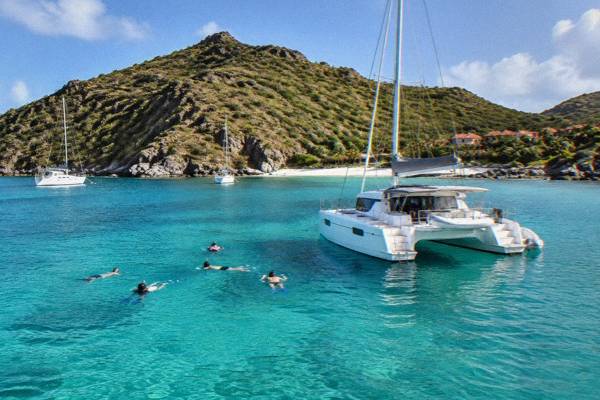
Colombier is the exception in the list, and it explains why the beach appears on so many boat itineraries. It sits at the northwest tip of the island, below steep land with no road down, so it is reached by boat or on foot along a path, and the island's sailing trips treat it as a headline stop. The Boomerangs Group Sail and Snorkel day trip from St Martin builds its route around Gustavia, Colombier Beach and Ile Fourchue, which tells you how central these public shores are to the island's appeal. If that style of day appeals, the operator's live listing shows dates and current pricing: See the live listing.
The table below sets out the named public beaches by their position on the island and how each is reached. Nothing in it requires a booking, because no beach on the island takes one.
| Beach | Position On The Island | How It Is Reached |
|---|---|---|
| Saint-Jean | North shore, beside the airport runway | From the road at Saint-Jean |
| Shell Beach (Grand Galet) | West coast, near Gustavia | On foot or by road from Gustavia |
| Corossol | West coast, north of Gustavia | From the road at Corossol |
| Flamands | Northwest-facing coast | From the road at Flamands |
| Lorient | North shore, east of Saint-Jean | From the road at Lorient |
| Grand Cul-de-Sac | East coast, in a shallow bay | From the road at Grand Cul-de-Sac |
| Marigot | North side, a small cove | From the road above the cove |
| Gouverneur | South coast | From the road above the bay |
| Saline | South coast | From the road above the bay |
| Toiny | Southeast coast | From the road at Toiny |
| Colombier | Northwest tip | By boat or on foot along a path |
For planning which shore suits which kind of day, two guides carry the detail: one sorts the best beaches in St Barts by coast, and another matches the St Barts beach guide to what each is best for.
What Does Public Access Actually Mean On St Barts?
Public access on St Barts means the sand and the waterline of every beach are open to all, free of charge, with no entry gate, no day pass and no resident-only rule. It does not mean free use of hotel facilities: loungers, clubs and restaurants on or behind a beach are private businesses, and parking or shade may be informal. The public right attaches to the beach and the foreshore, not to the services on it.
The distinction matters most at the famous strands. A beach club can run its operation right down to the sand, and its chairs are theirs, but the strip of beach between their setup and the water is public. Arrive with your own towel and the beach costs nothing. Arrive wanting a lounger and a drink brought to you, and you are buying a service from a business, on the same public sand. Nobody checks where you are staying to let you onto the beach itself.
The same logic applies to villa-front and hotel-front sand. Some of the island's most photographed bays have substantial properties behind them, and none of those properties closes the beach. The map position of each named beach is fixed and public, which is why guides describing the island, including the coverage of where the Kardashians stay in St Barts and where celebrities stay in St Barts, never mention private sand: there is none to mention.
One further point of confusion deserves a direct answer: clothing. The island has a reputation here, and the guide to St Barts nude beaches covers what is reported about Saline and Gouverneur without inventing a rule. The public status of a beach and any dress tradition on it are separate questions, and the guide treats them separately.
What Rules Apply On Public Beaches In St Barts?
The main rules on St Barts public beaches come from the environment agency and the island's marine reserve: dogs are banned from the beaches island-wide, jet skis and other motorised craft are banned in reserve zones, a 5-knot speed limit applies in protected waters, protected species including sea turtles may not be touched or chased, and nothing may be collected, not coral, shells, sand or rocks. The reserve lists 23 dive sites under its protection.
The dog ban is the one that catches visitors out, because it applies on every beach, not just inside reserve zones, and it applies even to leashed dogs. The environment agency's beach page states it plainly, with signs at beach entrances, and the reason given is wildlife protection, from nesting birds to turtles. If you are travelling with a dog, plan on the dog staying behind for beach days; the pet-travel picture is a separate topic from beach access.
The marine reserve rules matter most at Colombier, at Ile Fourchue and in the bays the boat trips visit. A sailing day that anchors off Colombier is operating inside a regulated zone, which is why the captains run things the way they do. Turtles are common in these waters and strictly protected: no touching, no chasing, no feeding, and nests or sightings are reported to the environment agency. The snorkeling side of the island is covered in detail in the guide to the best snorkeling beaches on St Barts from land.
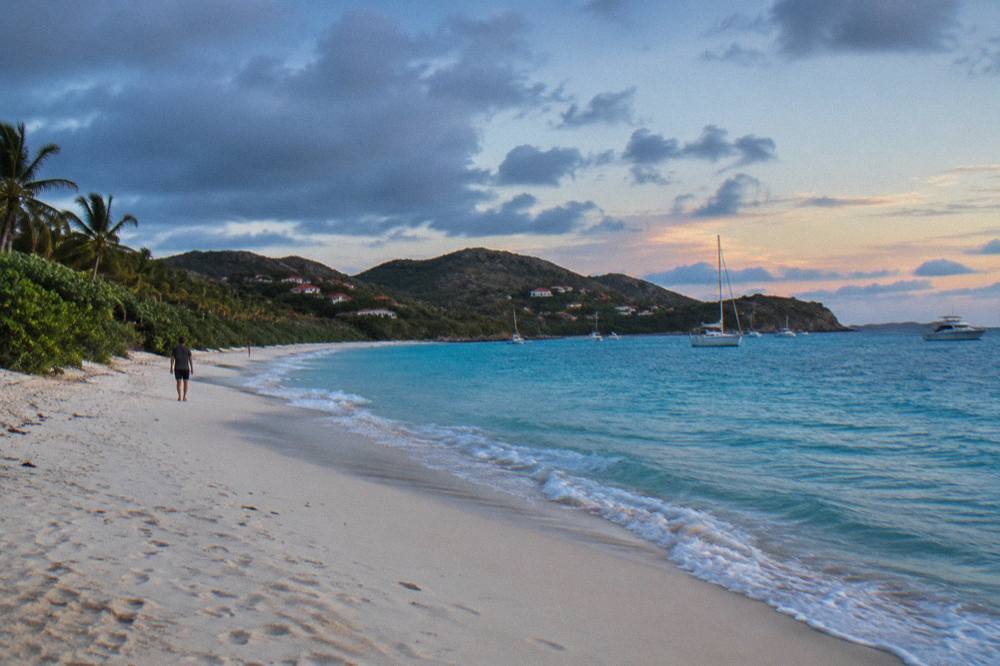
What the rules do not cover is just as notable. There is no entry fee, no permit and no booking for any public beach. There is no beach you must be a guest somewhere to stand on. The rules govern behaviour on the sand and in the water, not who is allowed there, and that is the clean summary of the whole page.
Can You Reach The Public Beaches Without A Car?
Yes. Several public beaches on St Barts sit within walking range of Gustavia, including Shell Beach on the west side, while Saint-Jean, Lorient, Flamands and Grand Cul-de-Sac are all connected by the island's road network, served by taxis and reachable on the island's small buses. Colombier is the only major beach with no road access at all, reached by boat or on foot along a path.
Practically, most people staying outside the capital do rent something, and the question of whether it is worth it is argued both ways in whether it is worth renting a car in St Barts. The roads are narrow, winding and steep, with a 50 km/h limit island-wide and 30 km/h in Gustavia and Saint-Jean, and the counter companies at the airport include Avis, Budget and Hertz alongside local agencies and Mini Moke outfits. None of that changes the access rule: whether you arrive by rental car, taxi or on foot, the beach at the end of the journey is public.
For Colombier, the boat is the comfortable answer, and it is the one beach where a day trip genuinely changes what you can reach. The group sail from St Martin is the per-person option, and it runs on its listing from 12 May to 31 August 2027; outside that window the island's boat products are private charters priced per group, which suits families and groups of friends splitting the cost. The main things to do in St Barts round up the full picture of what a day on and off the sand can hold.
How Do Public Beaches Shape A Day Trip To St Barts?
A day trip to St Barts from St Martin is built almost entirely around its public beaches: boats from Simpson Bay, Cole Bay, Anse Marcel and Grand Case cross to Gustavia, then run to Colombier and Ile Fourchue, both public shores inside the marine reserve. Every bookable trip listed here departs from St Martin or Sint Maarten, none from St Barts itself, and none of them needs beach access booked in advance because no beach on the island takes a booking.
That last point is worth sitting with. The day-trip economy exists because of the public shoreline: if Colombier were private, the sailing route would not exist in its current form. A visitor arriving by ferry at Gustavia steps off within a short walk of one public beach, Shell Beach, and a taxi ride of several more, and the whole itinerary writes itself without a single gate, ticket or membership.
It also explains why the island earns its beach reputation honestly. Roughly a dozen named public beaches on 21 square kilometres is a high density of free coastline by any measure, and the tourism committee treats that shoreline as the island's principal public asset. The water stays warm year-round, the Meteo-France normals for St Barthelemy show mean daily highs from 28.5 C in January to 31.7 C in September, and hurricane season, 1 June to 30 November, is the only stretch that needs a weather eye, never a prediction. More on that in the island's season guide coverage of St Barts weather.
Common Questions About Public Beaches In St Barts
Are There Public Beaches In St Barts?
Yes, and in fact every beach on St Barts is public. The named strands include Saint-Jean, Gouverneur, Saline, Shell Beach, Flamands, Colombier, Grand Cul-de-Sac, Lorient, Toiny, Marigot and Corossol, and no hotel, villa or club can close its stretch of sand to the public.
Do You Have To Pay To Use A Beach In St Barts?
No. Beach access is free on the entire island. You only pay if you choose private services such as a lounger, a beach club restaurant or a boat trip; the sand and the waterline themselves cost nothing.
Can Hotel Guests Stop You Using The Beach In Front Of Their Hotel?
No. The foreshore is public domain, so the strip of sand from the water's edge is open to everyone even where a hotel or beach club operates behind it. The furniture and the businesses are private, the beach is not.
Can You Take A Dog To A Beach In St Barts?
No. Dogs are banned from all beaches island-wide, even on a leash, under the rules published by the island's environment agency, with signs at beach entrances. The stated reason is protection of wildlife including nesting turtles and birds.
Which Public Beach Has No Road Access?
Colombier, at the island's northwest tip. It is reached by boat or by a walking path, and it lies inside the marine reserve, which is why so many day trips from St Martin include it alongside Gustavia and Ile Fourchue.
Are There Any Private Beaches At All On St Barts?
No. There is no private beach on the island. Private operations sit on or behind public sand, but the public right of access to every beach is total, a consequence of the island's status as a French overseas collectivity.