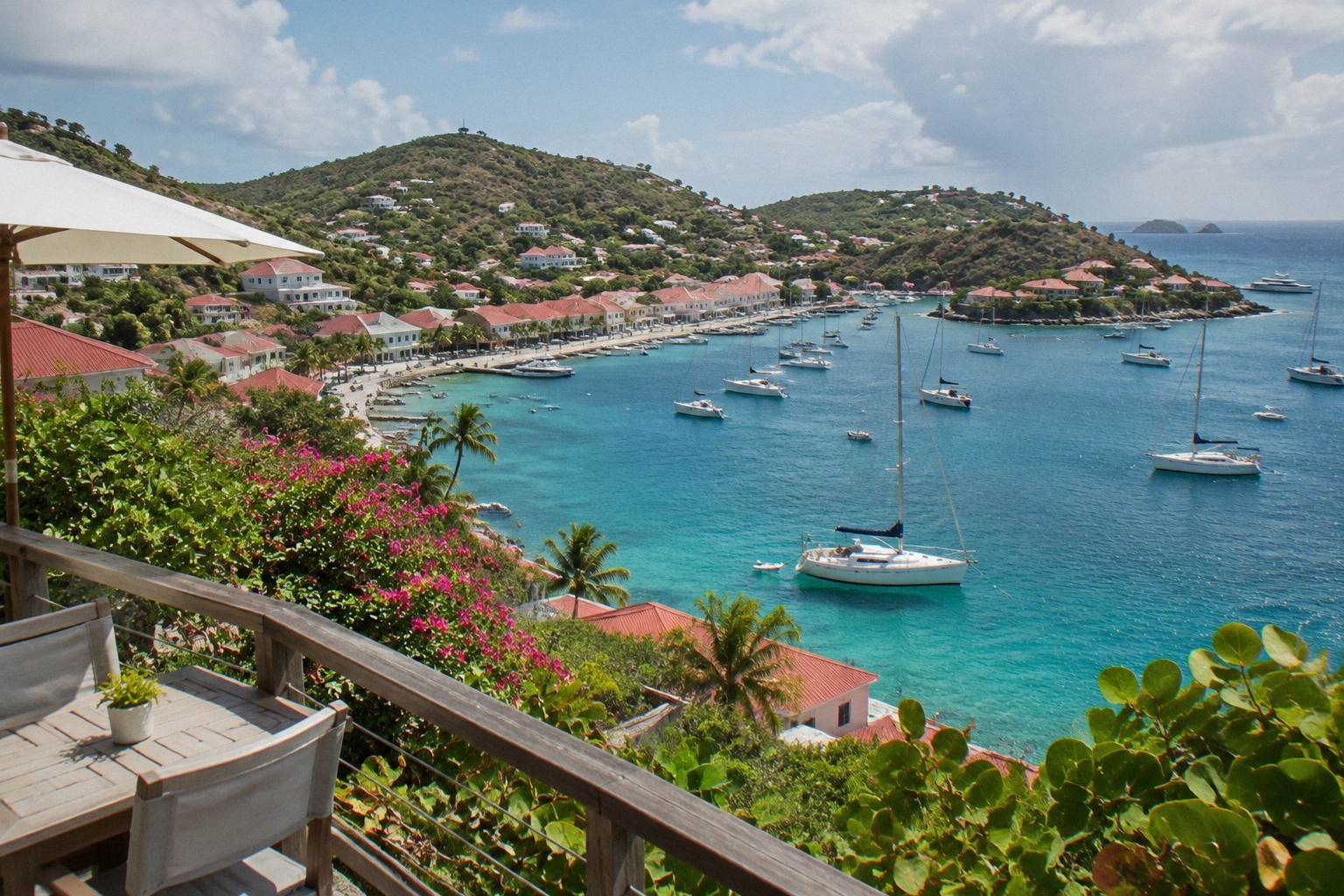
St Barts Population And Culture
St Barthelemy, better known as St Barts, counts about 10,700 residents spread across a handful of villages on an island of roughly 21 square kilometres, an overseas collectivity of France since 2007 with Gustavia as its capital.
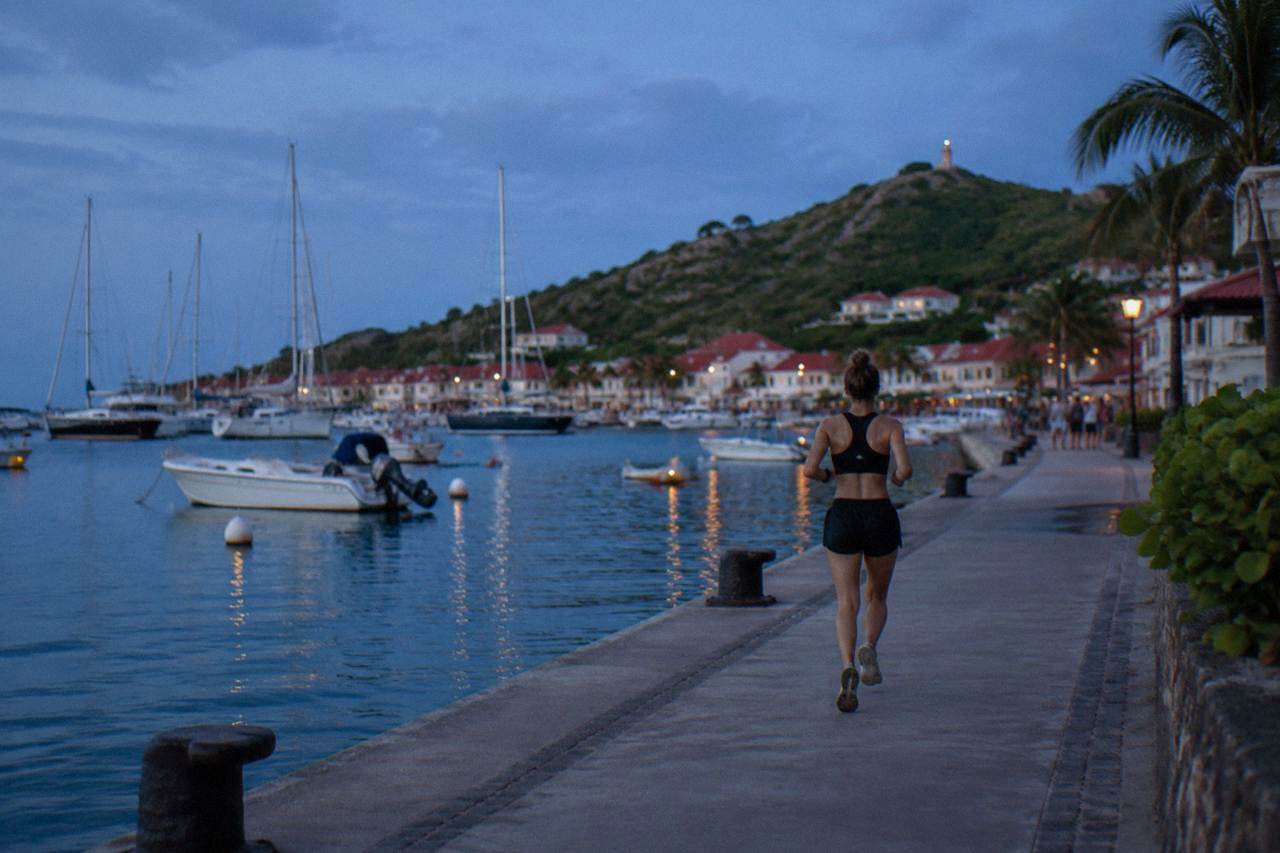
St Barts has about 10,700 residents, a figure reported as 10,660 at the January 2023 census, on an island of about 21 square kilometres. The capital is Gustavia, French is the official language, English is widely spoken, and the currency is the euro.
St Barthelemy, written St Barts in everyday use, is a small French island in the Caribbean with about 10,700 residents, an overseas collectivity of France since 2007 and a harbour capital called Gustavia. The population figure is small, the island is smaller still at about 21 square kilometres, and the combination shapes nearly everything about daily life here: one airport with a 646 m runway, one main town, a ring of quiet villages, and a calendar that swings from deep autumn quiet to a winter season of sailing regattas and festival crowds. This page from St Barthelemy Travel covers who lives on the island, where they live, what they speak, and how the culture of a French Caribbean collectivity of roughly 10,000 people actually works.
What Is The Population Of St Barts?
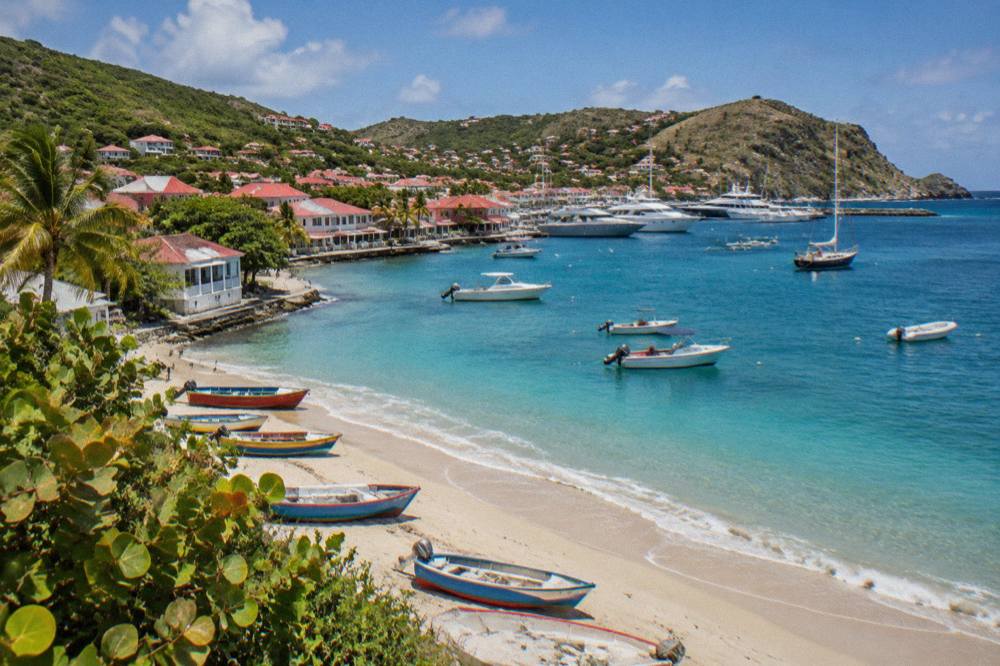
St Barts has about 10,700 residents, a figure reported as 10,660 at the January 2023 census, with the legal population of 2021 recorded at 10,556. The island covers about 21 square kilometres, which means a population a fraction the size of a mid-range mainland town shares a full working community of a capital, an airport, schools, a port and a marine reserve.
The census figure comes from the French national statistics office, which treats St Barthelemy as its own territory under code 977, separate from Guadeloupe since the island became an overseas collectivity in 2007. The numbers move slowly. Between the 2021 legal population and the January 2023 census the count grew by roughly a hundred people, a pace that keeps the island's community stable year to year rather than fast growing.
For perspective, the whole population of St Barts would fit into a single cruise ship audience several times over, and the collectivity deliberately keeps it that way: the port authority authorizes access only for ships with a capacity of up to 1,200 passengers, and all cruise vessels anchor offshore and tender their guests into Gustavia because there is no cruise pier. No centralized public cruise schedule exists, so anyone tracking calls checks the individual cruise lines or the aggregator sites rather than an official port calendar.
| Population measure | Figure | Period |
|---|---|---|
| Census count | 10,660 (about 10,700) | January 2023 |
| Legal population, total | 10,556 | Reference year 2021 |
| Land area | About 21 sq km | Current |
| Status | French overseas collectivity | Since 2007 |
| Capital | Gustavia | Current |
Where Do The Residents Of St Barts Live?
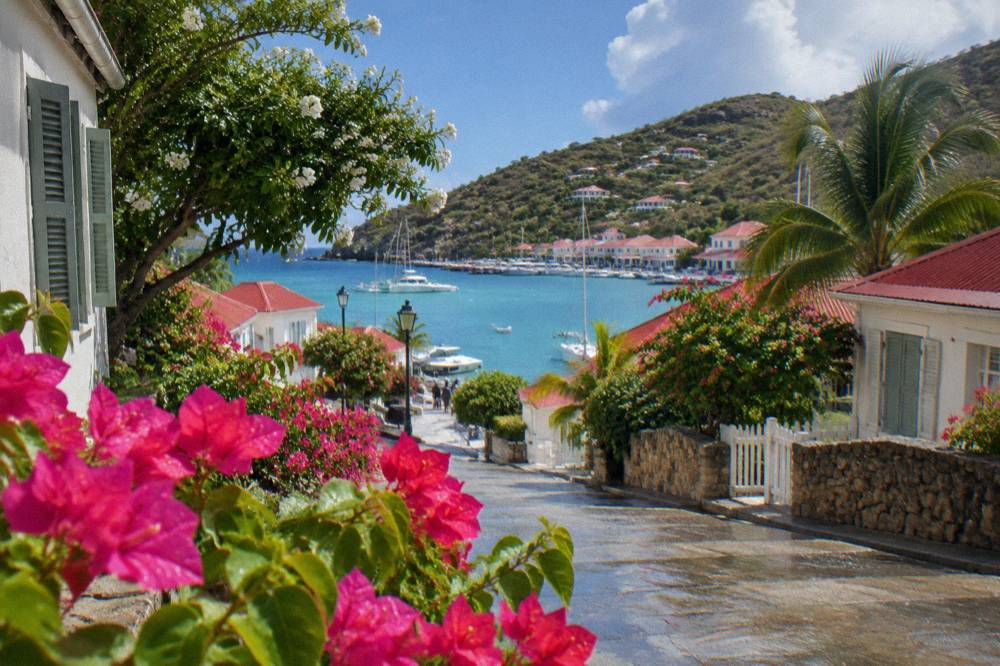
Gustavia, the capital and harbour town, concentrates the island's public life around its port, while the resident population spreads through villages named Lorient, Corossol, Saint-Jean, Flamands and Grand Cul-de-Sac around the coast. There is no inland city and no river town: the interior is hills, and the settlements sit where the slopes meet the sea, each with its own beach, its own character and its own place in the island's working week.
Corossol, on the leeward side, is the village most often described as traditional, and it holds the shell museum and the Fete de la Saint-Louis on 25 August, the day after the island's patron saint feast day on 24 August. Lorient, on the north coast, grew around one of the island's public beaches and its church. Saint-Jean curves around the bay beside the airport, so the village and the runway share a single stretch of shore. Flamands and Grand Cul-de-Sac sit at opposite ends of the island's beach map, one facing the open Caribbean, the other inside a shallow lagoon.
The tourism committee's own materials list the public beaches by name, from Saint-Jean and Gouverneur to Saline, Shell Beach, Flamands, Colombier, Grand Cul-de-Sac, Lorient, Toiny, Marigot and Corossol, and every one of them is public and free to access. That single rule matters enormously for a small resident population: the best strands on the island belong to everyone who lives here, not to the hotels beside them.
| Place | Position on the island | What defines it |
|---|---|---|
| Gustavia | Harbour capital, southwest | Port, shops, forts, tender pier |
| Saint-Jean | North coast | Bay beside Gustaf III Airport |
| Lorient | North coast | Public beach and village church |
| Corossol | West coast | Shell museum, 25 August village feast |
| Flamands | Southwest coast | Long public beach |
| Grand Cul-de-Sac | Northeast | Shallow lagoon shoreline |
| Colombier | Northwest point | Beach inside the marine reserve |
For visitors who want to see the island's wilder corners, the sea is often the better road. The Boomerangs Group Sail and Snorkel day trip from St Martin reaches Colombier Beach and Ile Fourchue, two places the island's road network barely touches, and its listing shows the season it runs and its per-person price. You can read more on the Gustavia, Colombier and Ile Fourchue tour page.
What Languages Are Spoken In St Barts?
French is the official language of St Barts and the language of its administration, schools and signage, while English is widely spoken across the island's tourism economy, and a local Saint-Barthelemy French Antillean Creole survives among long-established families. The tourism committee states plainly that both French and English serve visitors, which is unusual for a French territory and a direct legacy of the island's trading past.
In practice a visitor hears French in Gustavia's town hall and at the ferry check-in, English in the hotels, villas and boat operators, and occasionally the island's own creole, which linguists treat as distinct from the creoles of neighbouring islands. The Swedish period left its mark on street names and building styles in Gustavia rather than in the spoken language, and the island's museums cover that heritage in detail, material covered elsewhere on this site.
The language mix matters for arrival logistics too. The ferry operators' pages are published in English and French, the small-plane carriers publish in both, and the collectivity's own websites run in French with English visitor sections. Nobody arriving from the Dutch side of St Martin needs to change currency or language twice, though the euro is the only official money here, a point covered on the currency and practicalities pages of this site.
What Is The Culture Of St Barts Like?
The culture of St Barts is French Caribbean: a resident community of about 10,700 people living under French law, in the euro zone, on an island where the public calendar blends national French dates with sailing regattas, a January music festival, a November gourmet festival and two village feast days in August. The tourism committee describes an island of beaches, yachts and French-influenced living, and the small population keeps the public sphere compact enough that the whole community shares it.
The island's year is divided by seasons more than by months. From December to April the high season brings the Bucket Regatta in mid-March and Les Voiles de St Barth in April, events that fill Gustavia's anchorage with superyachts. In autumn the rhythm reverses: many hotels and restaurants close for the hurricane-season peak and reopen in waves between mid-October and early November, a pattern repeated every year rather than a dated announcement, and the island returns to something close to resident-only life.
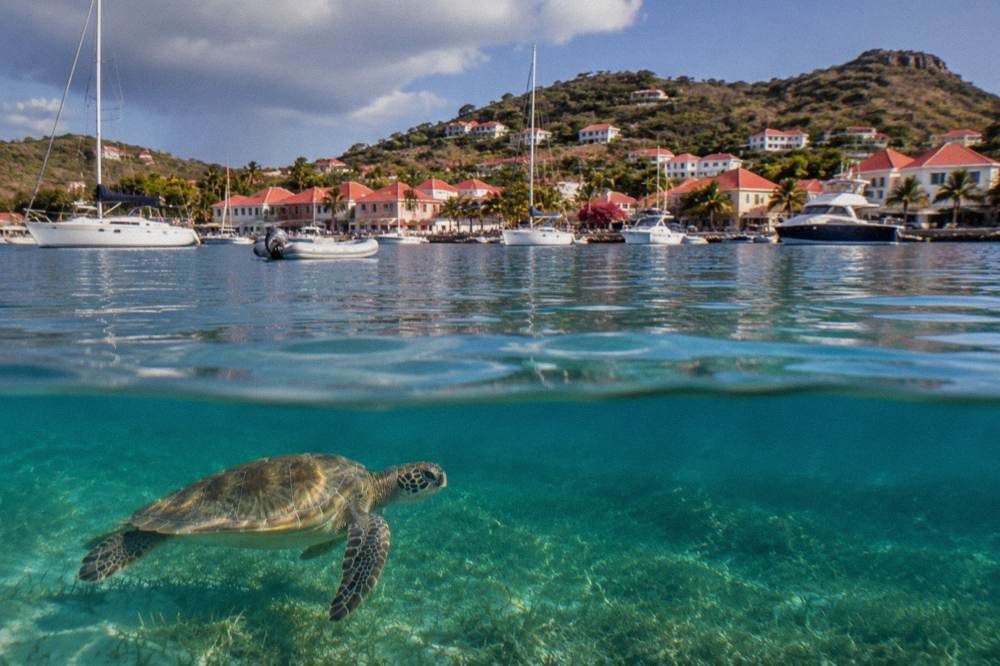
The sea is not decoration here, it is infrastructure. The marine nature reserve, run by the island's environment agency, covers five zones including Colombier Bay and Ile Fourchue, and its regulatory-zones page lists the rules that protect them: a 5-knot speed limit in protected zones, a ban on jet skis and other motorized water devices, 23 listed dive sites, no dogs on the reserve's beaches, and no touching or chasing of sea turtles. Green and hawksbill turtles are common in the Grand Cul-de-Sac lagoon and around Colombier, and the agency asks that nests and sightings be reported to it directly.
| Marine reserve rule | What the environment agency's page says |
|---|---|
| Speed in protected zones | Maximum 5 knots |
| Motorized devices | Jet skis, seabobs, electric surfboards and towed sports banned |
| Dive sites | 23 listed sites |
| Dogs | Not allowed on beaches or in the water in reserve areas |
| Protected species | No touching, chasing or feeding turtles, corals, sharks or rays |
| Vessels in Colombier and Fourchue bays | None over 25 m, ecological mooring buoys preferred |
How Do Seasons Shape The St Barts Year?
Hurricane season runs from 1 June to 30 November with its peak from mid-August to mid-October, and that window, more than any cultural choice, sets the island's working calendar: closures in autumn, reopenings between mid-October and early November, and the festival and sailing season packed into December through April. The Meteo-France normals for 1991 to 2020 show why, with October the wettest month at 135.6 mm of rain against February's 38.4 mm.
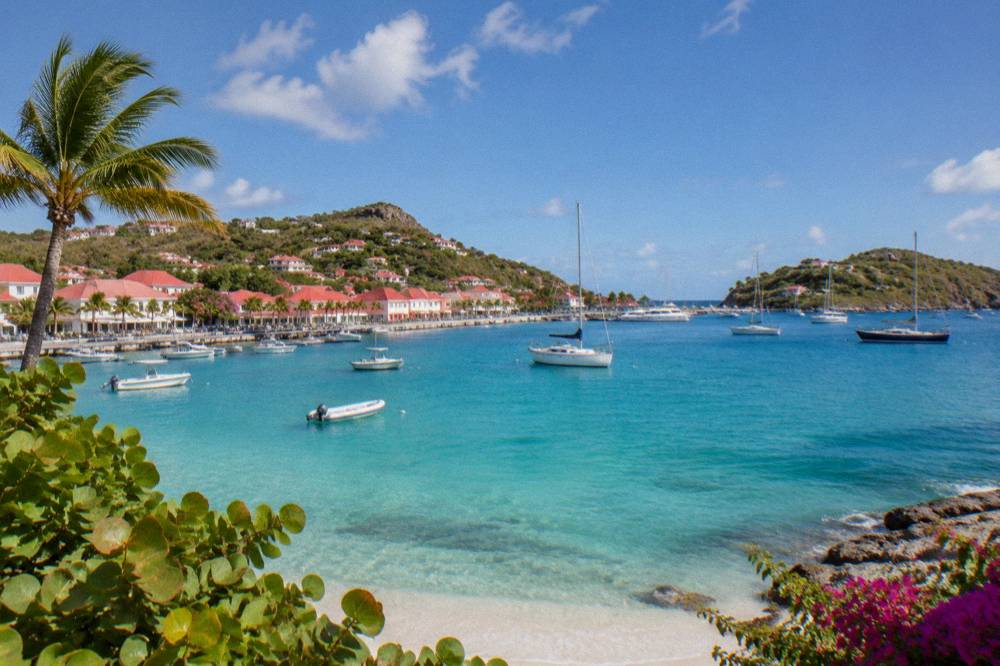
The climate is tropical and warm at both ends of the year. The Meteo-France normals, 1991-2020, give a mean daily high of 28.5 C in January rising to 31.7 C in September, with 891.3 mm of rain across the year. The sea stays warm throughout, about 26 C in winter to about 29 C from August to October. Hurricane Irma struck the island in September 2017 and remains the defining storm of recent memory, and the collectivity's buildings, hotels and villas have been rebuilt since.
| Month | Mean daily high C | Mean daily low C | Rain mm |
|---|---|---|---|
| January | 28.5 | 23.5 | 52.6 |
| February | 28.6 | 23.3 | 38.4 |
| April | 29.8 | 24.2 | 50.9 |
| July | 31.2 | 26.0 | 80.4 |
| September | 31.7 | 26.2 | 96.9 |
| October | 31.4 | 25.8 | 135.6 |
| December | 28.9 | 24.1 | 79.2 |
The seasonal swing is visible in how people arrive. Most reach the island through St Martin, by the small STOL turboprops that serve the 646 m runway at Gustaf III Airport or by the two scheduled ferries, Great Bay Express from Philipsburg and Voyager from Marigot. The crossing takes about 45 minutes from Philipsburg and about 50 to 60 minutes from Marigot, and the operators' own pages carry the current schedules. The how to get to St Barts guide on this site lays out the full route map, and the ferry operators and schedule page covers the sea options in detail.
What Events Mark The St Barts Year?
The fixed points of the St Barts calendar are the St Barth Music Festival from 8 to 18 January 2027 in its 43rd edition, the St Barth Gourmet Festival from 9 to 15 November 2026, the Bucket Regatta in mid-March, Les Voiles de St Barth in April, and the twin August feast days of Saint-Barthelemy on 24 August and Saint-Louis at Corossol on 25 August. The regattas fill Gustavia harbour, the festivals fill the restaurants, and the feast days belong mostly to the residents.
The November gourmet festival is timed deliberately: it lands in the fortnight when the island's hotel restaurants have reopened after the autumn closure, and it brings visiting chefs into those kitchens. The January music festival opens the calendar year instead, in the weeks after the New Year period when the harbour is still full. Carnival, the Film Festival in late April or early May, and the New Year's Eve fireworks in Gustavia complete the winter-to-spring run, with 2027 details for those events not yet confirmed, so this page prints no dates for them beyond what the organizers have published.
| Event | Timing |
|---|---|
| St Barth Gourmet Festival | 9 to 15 November 2026 |
| New Year's Eve fireworks, Gustavia | 31 December, annual pattern |
| St Barth Music Festival, 43rd edition | 8 to 18 January 2027 |
| Carnival | February, 2027 details unconfirmed |
| St Barths Bucket Regatta | Mid-March |
| Les Voiles de St Barth | April, dates not confirmed |
| St Barth Film Festival | Late April or early May, dates TBA |
| Fete de Saint-Barthelemy, Gustavia | 24 August |
| Fete de la Saint-Louis, Corossol | 25 August |
How Does A Small Island Population Share Its Coast?
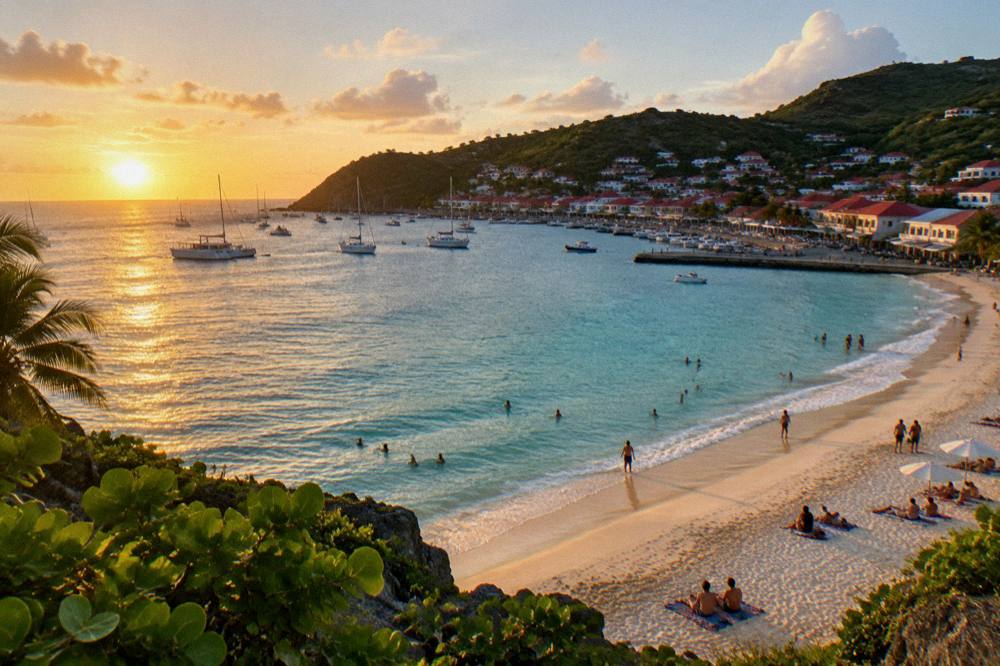
Every beach on St Barts is public and free to access, from Saint-Jean beside the airport runway to Colombier inside the marine reserve, and that single legal fact defines how a resident population of about 10,700 and a seasonal stream of visitors share the same coastline without private beaches. The tourism committee lists the beaches as public, the environment agency regulates the water in front of them, and no hotel owns the sand.
The practical effect is a coastline of small, unhurried beach communities rather than resort compounds. Each of the main beaches has its own guide page on this site, including Saline and Colombier, and the villages behind them hold the resident life. Colombier deserves its own note: it sits inside the reserve, reached on foot or by boat, and the group sail from St Martin makes it a regular stop, which is why the day-trip boats from St Martin and Sint Maarten are such a common way for visitors to see it.
For travellers pairing the two islands, the choice of base and the order of travel matter, and the St Maarten before or after St Barts page covers that planning question directly. The overnight catamaran option below is the one product listed here that turns the crossing itself into the stay.
What Should Visitors Know About Daily Life On St Barts?
Daily life on St Barts runs on the euro, French administrative rules and an island about 21 square kilometres in size, with one airport limited to small turboprops in daylight, one main town, and a resident community of about 10,700 that swells with visitors each winter. St Barthelemy sits outside the Schengen area, so entry follows French overseas rules rather than Schengen ones, and ETIAS does not govern entry.
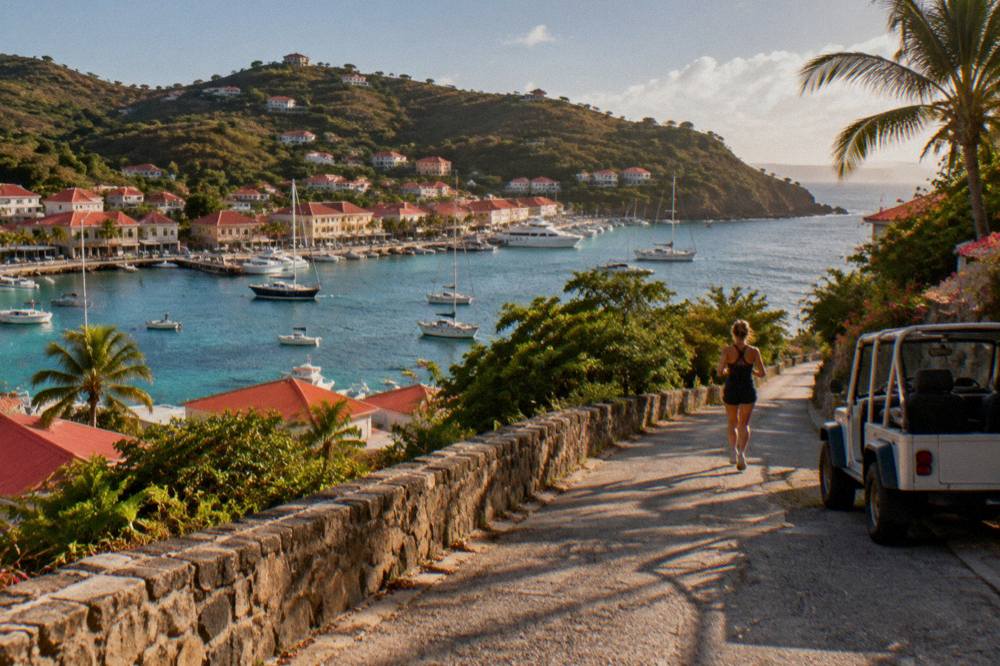
The island keeps French emergency numbers, 15 for medical, 17 for police, 18 for fire and 112 as the general European number. Driving is on the right, the roads are narrow and steep, and the rental counters at the airport include Avis, Budget and Hertz alongside local agencies renting the small open cars the island is known for, all covered in the St Barts car rental guide. The time zone is UTC minus four with no daylight saving, and plugs are European types C and E.
Accommodation follows the population scale. There are no hostels on the island, the hotel market is dominated by a small set of named properties, and a large villa market with no reliable public count supplies much of the seasonal capacity through specialist managers such as WIMCO, Sibarth and St Barth Properties. The St Barts hotels overview names the properties and explains the seasonal closure pattern in full, and for anyone weighing a hotel against a house, the difference comes down to season, party size and how much of the island's quiet rhythm a stay is meant to capture.
Common Questions About St Barts Population And Culture
What is the population of St Barts?
About 10,700 residents. The January 2023 census figure is reported as 10,660, and the legal population for 2021 was 10,556. The island covers about 21 square kilometres.
Is St Barts a country?
No. St Barthelemy is an overseas collectivity of France under Article 74 of the French Constitution, a status it has held since 2007. It uses the euro, and French is the official language.
What language do they speak in St Barts?
French is the official language and the language of administration and schools. English is widely spoken in tourism, and a local Saint-Barthelemy French Antillean Creole is spoken among long-established families.
What currency is used in St Barts?
The euro. St Barts is part of the euro zone as a French overseas collectivity, and prices on the island are quoted in euros.
Are the beaches in St Barts public?
Yes, every beach on the island is public and free to access, including those in front of hotels. Colombier sits inside the marine nature reserve, where the environment agency's rules on speed, wildlife and dogs apply.
When is hurricane season in St Barts?
Hurricane season runs from 1 June to 30 November, with the peak from mid-August to mid-October. Many hotels and restaurants close in autumn and reopen between mid-October and early November, and the festival season runs December through April.
A population of about 10,700 on about 21 square kilometres produces a particular kind of place: small enough that the ferry terminal, the airport, the port office and the environment agency all sit within a short drive of one another, and connected enough, through France, the euro and two ferry links to St Martin, that the island runs a full cultural calendar each year. That balance between scale and connection is the real answer to almost every question about how St Barts works.