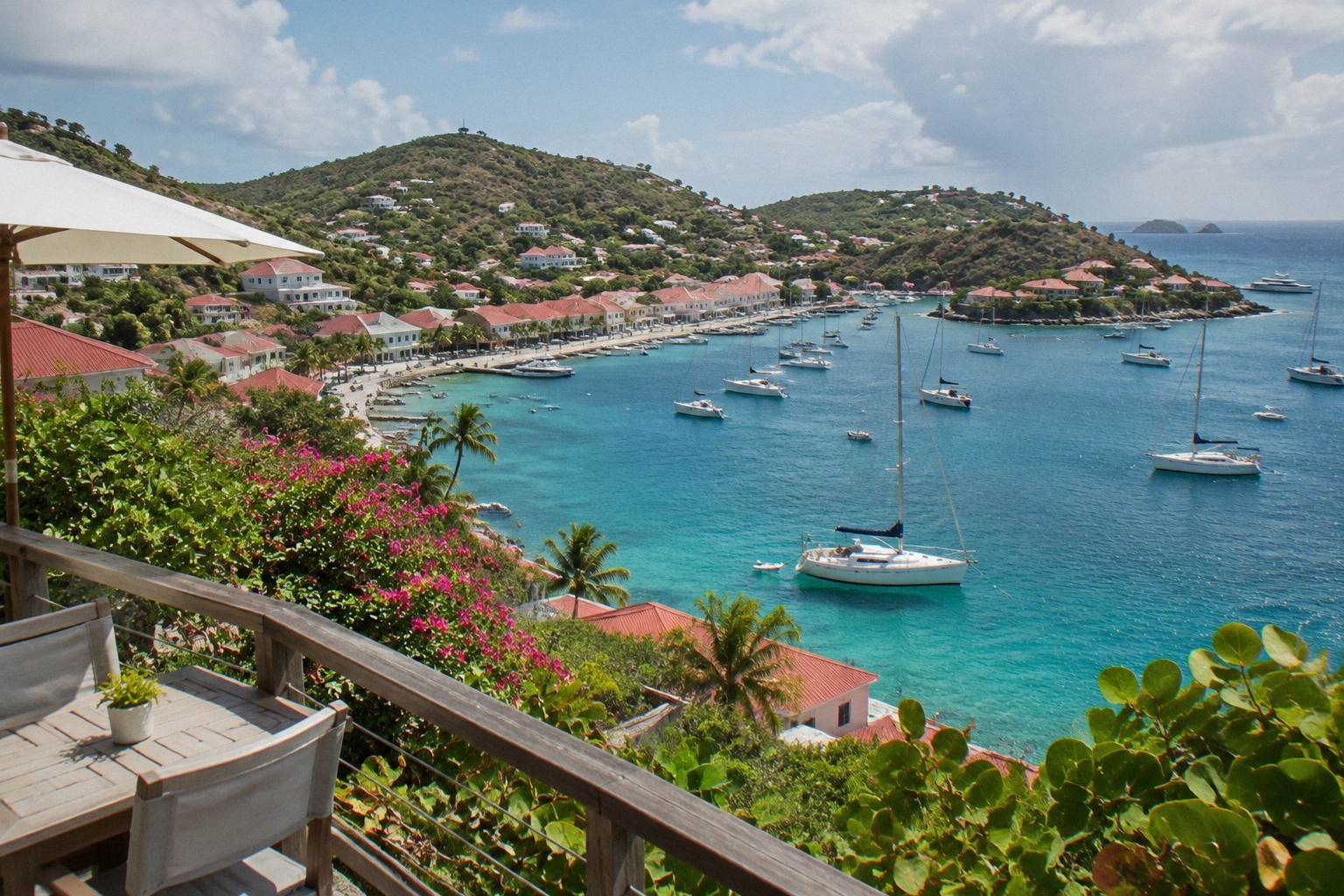
St Barts On A Budget
St Barthelemy, usually written St Barts, has a reputation built on villas and superyachts, but the island's core attractions, its public beaches and harbour, cost nothing to enter. This guide lays out where a St Barts budget actually goes and where it does not.
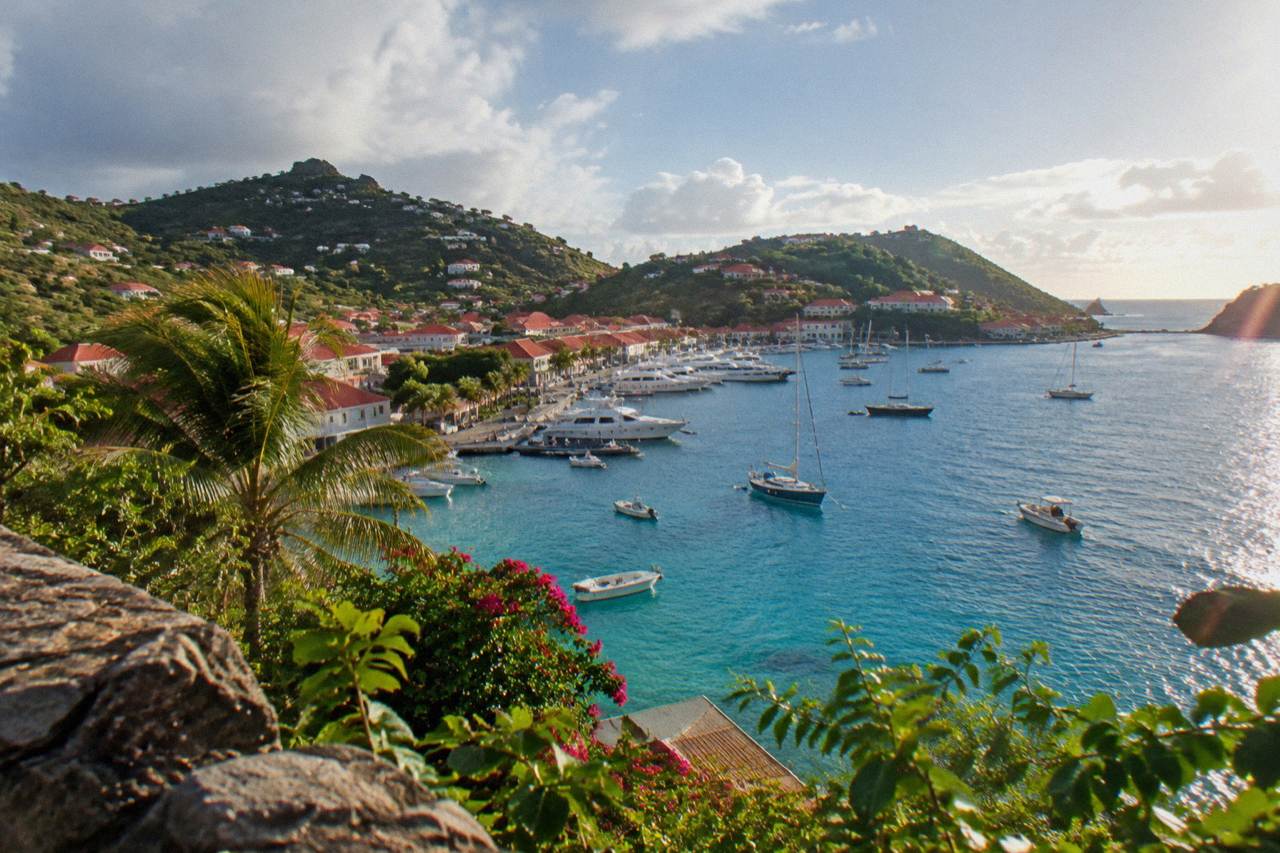
**A St Barts budget works when you control the three big levers: the season you travel in, the route you take to get there, and whether you sleep in a hotel or a smaller rental.** All beaches on the island are public and free, Gustavia's streets and viewpoints cost nothing, and the only compulsory spend beyond lodging and food is getting there and getting around. No hotel, villa or restaurant rate was confirmed from a primary source, so what follows is the structure of the costs, not the costs themselves.
St Barthelemy, usually written St Barts, is a French overseas collectivity in the Caribbean, about 21 square kilometres of hills, red-roofed Gustavia and turquoise water, with roughly 10,700 residents, euro currency and French as the official language alongside widely spoken English. It is known for luxury, and that reputation is fair. But the island's headline attractions, its beaches, are public and free by law, its harbour town is walkable, and the decisions that actually determine the size of the bill, the season, the arrival route and the roof over your head, are all yours to make. This page is a working budget guide in the honest sense: it names the levers, prints every product price from live listings rather than memory, and prints no hotel, villa or restaurant rate at all, because none of those was confirmed from a primary page.
The framing matters. St Barthelemy Travel is built around six boat products, and every one of them departs from St Martin or Sint Maarten, not from St Barts itself. That detail shapes the whole budget conversation: the island is a day-trip and short-stay destination reached through a neighbour, and the money either goes into a bed on the island or into a boat that brings you over for the day. Both are legitimate strategies, and both appear below.
What Actually Costs Money On St Barts?
Three lines dominate any St Barts budget: the bed, the crossing, and the wheels. Lodging is the largest and most season-sensitive, transport the second, because no jet can land and most people route through St Martin by small plane or ferry, and a rental car or taxis handle the island's narrow, steep, hilly roads. Everything else, the beaches, the viewpoints, the town, is free. Lodging is the largest single line and the most season-sensitive, with many hotels closing each autumn and reopening between mid-October and early November, which concentrates availability and demand into the November to April window. Transport is the second line: no jet can land on the island, the airport runway is 646 m and takes small turboprops only, so most people route through St Martin by small plane or ferry. A rental car or taxis form the third line, because the island's roads are narrow, steep and hilly. Everything else, the beaches, the viewpoints, the town, is free.
To keep the largest line of the budget under control, book a budget room or apartment.
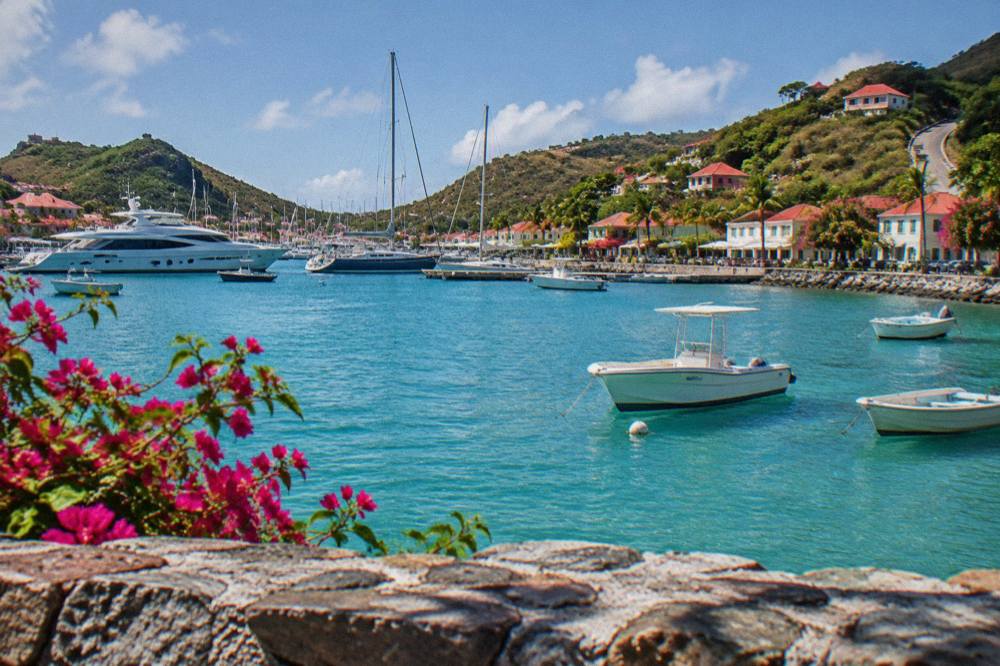
The beaches deserve their own paragraph because visitors often assume otherwise. Every beach on St Barts is public, from Saint-Jean and Gouverneur to Saline, Shell Beach (Grand Galet), Flamands, Colombier, Grand Cul-de-Sac, Lorient, Toiny, Marigot and Corossol. There is no entry fee, no beach club requirement and no private stretch. What costs money is the furniture, the food and the parking around them, not the sand or the water.
Then there is what does not exist. There is no all-you-can-list walking tour economy here: no free or tip-based guided walk appears listed here for the island, and no walking tour product exists in the site's inventory. The free tier of St Barts is the beaches, the coastal paths, the viewpoints and the open public places, and it is a genuinely large tier.
The Budget Levers At A Glance
| Lever | What it drives | How much control you have |
|---|---|---|
| Travel dates | Lodging demand, ferry frequency, what is open | Full: low season is May to November |
| Arrival route | The second largest line after lodging | Full: fly to St Martin, then small plane or ferry |
| Lodging type | The largest line of all | Full: hotel, small property, villa share or day trip |
| Ground transport | Daily movement on steep roads | Partial: rental, taxis, or staying walkable in Gustavia |
| Food style | A steady daily drain | Partial: grocery self-catering versus restaurants |
| Beaches and town | Effectively nothing | None needed: all beaches are public and free |
Is St Barts Possible On A Small Budget?
Yes, in a specific and repeatable way: entry to every beach on St Barts is free and Gustavia's harbor, forts and viewpoints cost nothing, so the island is cheap to be on and costly to sleep on. The two lines that strain a small budget are lodging and the crossing, and a day trip by boat from St Martin sidesteps the lodging line entirely. Entry to every beach is free, Gustavia's harbour, forts and viewpoints cost nothing, the budget itinerary pages on this site can be executed almost entirely on foot and sand, and the tourism committee's own materials describe the beaches as the island's core draw. The two lines that strain a small budget are lodging and the crossing. A day trip by boat from St Martin sidesteps the lodging line entirely, which is why several of the site's products exist in that shape.
The honest structure is this. A traveller who sleeps in St Martin, crosses to St Barts on a scheduled ferry or a group boat, spends the day on public beaches and in Gustavia, and crosses back in the evening, has bought the island's core experience for the price of the crossing and lunch. A traveller who sleeps on St Barts pays for the bed and gains the evenings, the quiet mornings and the beaches at the ends of the island. Neither is the wrong answer; they are different products.
The group sail listed above is the one per-person product listed here, which makes it the structural answer to the budget question: a full day on the water, including Gustavia, Colombier Beach and Ile Fourchue, priced per person rather than per boat. Note its season window carefully, because the listing shows it running only from 12 May to 31 August 2027, squarely inside the island's low season. The two private charters are per-group products; their per-person math only works out for a crew that fills the boat.
When Is The Least Expensive Time To Visit St Barts?
The low season, roughly May through October, is when the island's costs soften and its calendar empties, with the deepest quiet in September and early October, when many hotels and restaurants are closed. The trade-off is weather risk rather than cold, since the Atlantic hurricane season runs from 1 June to 30 November, peaking from mid-August to mid-October. Many hotels and restaurants close in late August and reopen in waves between mid-October and early November, so the shoulder windows of May to June, and again from mid-October into November, mix open doors with low-season pressure on rates, which vary by season and are shown on each property's own booking page. The Meteo-France normals, 1991-2020, show the island warm year round: a mean daily high of 28.5 C in January rising to 31.7 C in September, with 891.3 mm of rain across the year and October the wettest month at 135.6 mm.
Weather and price move together here, which is the honest trade. The Atlantic hurricane season runs from 1 June to 30 November, with the peak of activity from mid-August to mid-October and the climatological peak near 10 September. A storm cannot be pinned to a date, and this page will not try. What the climate table does say is that even the wettest months stay warm, and the sea is warm year round, about 26 C in winter to about 29 C from August to October.
| Month | Mean daily high (C) | Rain (mm) | Budget notes |
|---|---|---|---|
| January | 28.5 | 52.6 | Peak season, New Year period |
| February | 28.6 | 38.4 | Peak season |
| March | 29.0 | 41.4 | Peak season, Bucket Regatta mid-March |
| April | 29.8 | 50.9 | High season tapering |
| May | 30.7 | 61.7 | Shoulder; group sail season opens |
| June | 31.2 | 56.0 | Low season begins |
| July | 31.2 | 80.4 | Low season |
| August | 31.6 | 79.6 | Low season; Fete de Saint-Barthelemy 24 Aug |
| September | 31.7 | 96.9 | Deepest low; many closures |
| October | 31.4 | 135.6 | Wettest month; reopenings mid-month |
| November | 29.9 | 118.6 | Gourmet Festival 9 to 15 Nov 2026 |
| December | 28.9 | 79.2 | High season returns |
How Do You Get To St Barts Cheaply?
The least expensive structural route is a scheduled flight into St Martin, then the ferry or a small plane across, because no jet can land on St Barts and every alternative adds a leg. Great Bay Express runs from Philipsburg in about 45 minutes, Voyager from Marigot in about 50 to 60 minutes, and the small planes fly in daylight and visual conditions only. Gustaf III Airport (SBH, also called Remy de Haenen) has a 646 m runway that serves small STOL turboprops in daylight and visual conditions only, so every itinerary passes through a gateway: St Martin (SXM), San Juan (SJU), Guadeloupe (PTP) or Antigua (ANU). St Barth Commuter flies from SXM, Grand Case (SFG) and PTP; Tradewind flies from SJU and ANU; Winair also serves the island from SXM. On the water, two operators run scheduled ferries: Great Bay Express from Philipsburg on the Dutch side, about 45 minutes, and Voyager from Marigot on the French side, about 50 to 60 minutes.
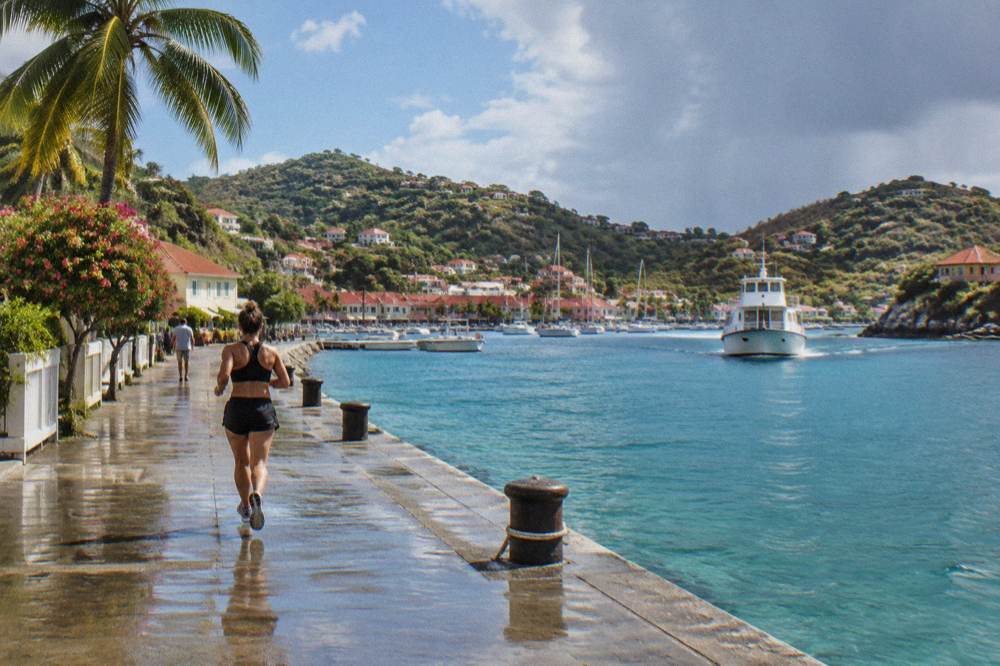
Fares for any flight, ferry or transfer come from the operators' own booking systems, which show live prices for exact dates, and those move with season and demand like everything else on this route. The structural advice is what holds: the ferry is the scheduled, weather-dependent option, the crossing can be rough, and the small plane is the fast, scenic, daylight-only option. The full detail lives in the site's getting to St Barts guide and the ferry operators and schedule page.
| Route | Mode | Operator | Notes |
|---|---|---|---|
| Philipsburg (Sint Maarten) to Gustavia | Scheduled ferry | Great Bay Express | About 45 minutes, from Bobby's Marina |
| Marigot (St Martin) to Gustavia | Scheduled ferry | Voyager | About 50 to 60 minutes |
| SXM, SFG, PTP to SBH | Small plane | St Barth Commuter | Daylight, visual conditions only |
| SJU, ANU to SBH | Small plane | Tradewind | Daylight, visual conditions only |
| SXM to SBH | Small plane | Winair | Small STOL turboprops |
For the day-trip budget, the site's product pages are the other half of this route map: the Gustavia, Colombier and Ile Fourchue sail is the per-person option, and a private charter such as the St Martin to St Barth charter turns the crossing itself into the excursion. Confirm dates on the operator's live listing before locking flights, because sea conditions and season windows govern what runs.
Where Should You Stay To Keep Costs Down?
No St Barts neighborhood comes cheaper; costs track property type and season, not location, so the levers are timing and structure. Travel in the May to November window when pressure on rates eases, sleep in St Martin or Sint Maarten and visit St Barts by boat, or book a private overnight catamaran from St Martin where the boat is your bed. St Barts lodging spans hotels, small properties and a large villa market, with managers including WIMCO, Sibarth and St Barth Properties named only as operators in the space. Rates vary by season and each property's own booking page shows them. Two structural moves exist: travel in the May to November window when pressure on rates eases, or sleep in St Martin or Sint Maarten and visit St Barts for the day or overnight by boat.
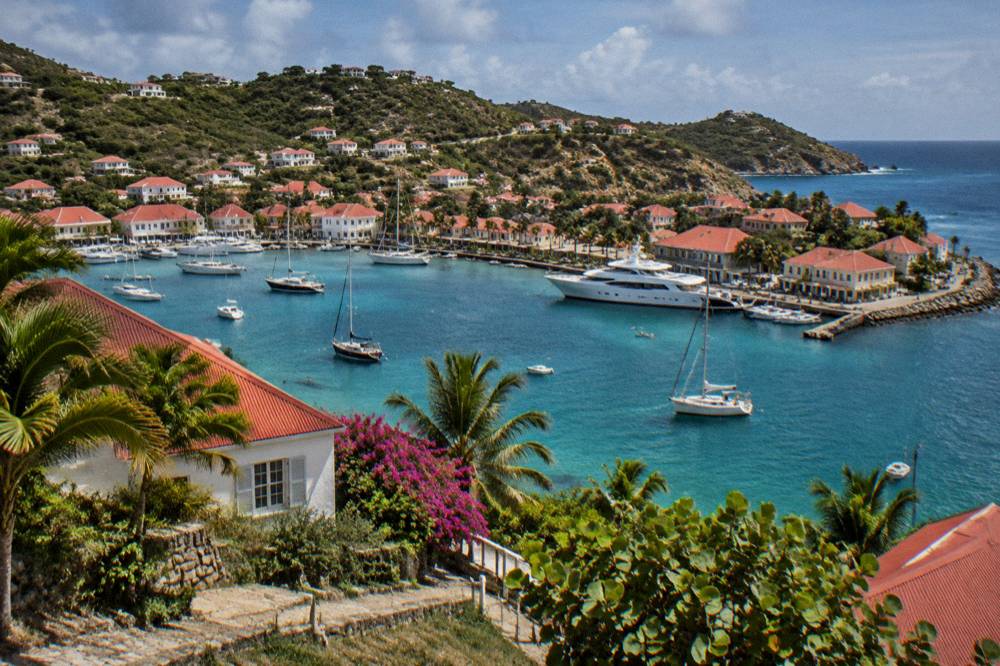
The third structural move is the overnight charter. The 2-day 1-night private catamaran from St Martin makes the boat the bed, which collapses the lodging line and the crossing line into a single product price. It is priced per group, so it suits a party of three or four far better than a couple. For hotel-side detail without rates, the site's St Barts hotels guide and the smaller-property pages cover the spectrum.
A timing note that matters more than any rate: the autumn closures are a pattern, not an event. Hotels and restaurants close in late August and reopen in waves between mid-October and early November. A budget traveller aiming for October should read the reopening pattern as part of the plan: earlier October trades open doors for low-season quiet, late October trades back. The site's month pages carry the detail. The wider set of guides lives on St Barthelemy Travel.
What Can You Do On St Barts For Free?
Every beach on the island, the harbour town of Gustavia, and the island's viewpoints and coastal paths are free and public, and no guided walk product exists to sell you one, so the free tier is genuinely the largest tier of all. The tourism committee's beach materials list Saint-Jean, Gouverneur, Saline, Shell Beach (Grand Galet), Flamands, Colombier, Grand Cul-de-Sac, Lorient, Toiny, Marigot and Corossol, all public. Gustavia's streets, the forts above the harbour and the viewpoints along the island's roads cost nothing. The marine reserve's rules, published by the environment agency, frame the free experience: a 5-knot limit in its zones, no jet skis, no dogs on beaches and no touching turtles, with 23 dive sites in its care.
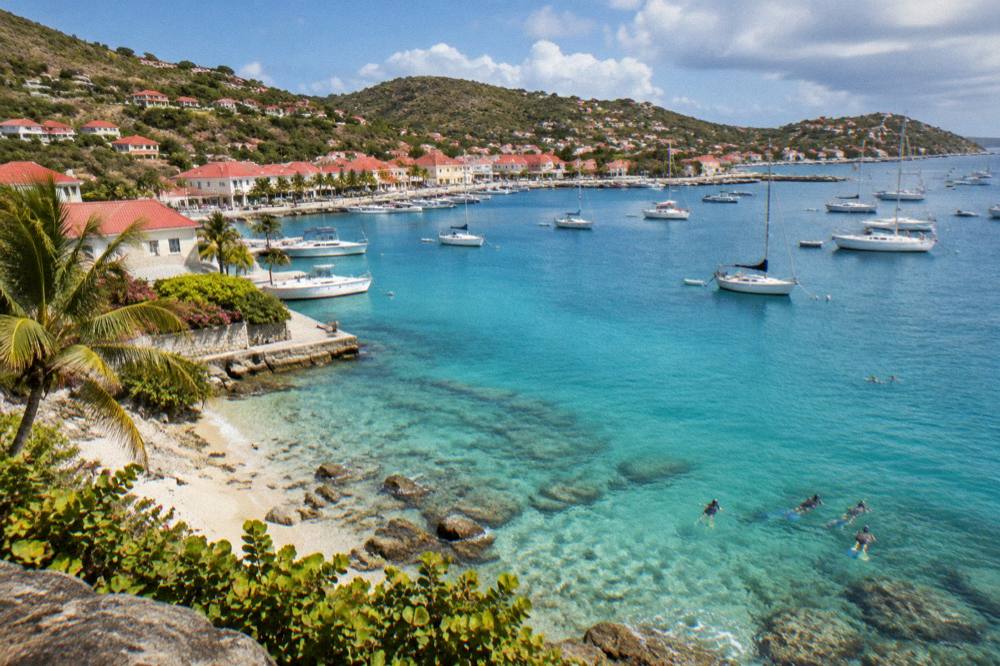
Snorkeling from shore is the island's best free activity, and the environment agency's rules are the whole brief: look, do not touch, take nothing, and leave the turtles alone. Green and hawksbill turtles are present in the island's waters, and the agency asks that nests and sightings be reported rather than approached. The site's pages on St Barts sea turtles and land snorkeling cover where the water is worth entering, always with the reserve's rules attached.
Hiking is the second free tier. The Colombier walk is the island's best known path, ending at a public beach that boats and feet share, and the site's Colombier hike page covers it without inventing a duration. No measured walking time for the Colombier walk exists.
| Free activity | Where | What the rules say |
|---|---|---|
| Swimming and sunbathing | Every beach on the island | All beaches are public and free |
| Shore snorkeling | Reserve bays including Colombier | No touching wildlife, no collecting, no gloves |
| Walking the Colombier path | Northwestern coast | Reserve rules apply in the bay |
| Gustavia streets and forts | Harbour capital | Open public spaces |
| Turtle watching from a distance | Island waters | Report sightings, never touch or chase |
How Do You Eat On St Barts Without Overspending?
Self-catering from the island's grocery shops is the one lever that works every day of a trip on St Barts: take breakfast and lunch from a shop, keep to one seated meal a day, and drink water from the tap where the site's water page says it is safe, so restaurant bills disappear from the days when nothing special is planned. The food scene is French-influenced, and describing it in general terms is all an honest page can do: hotel tables and beach clubs reopen with the autumn wave, a layer of local spots stays open year round, and a Gourmet Festival each 9 to 15 November 2026 marks the return of the high season. Beyond that, the budget structure is simple: breakfast and lunch from a shop, one seated meal a day, and water from the tap where the site's water page says it is safe.
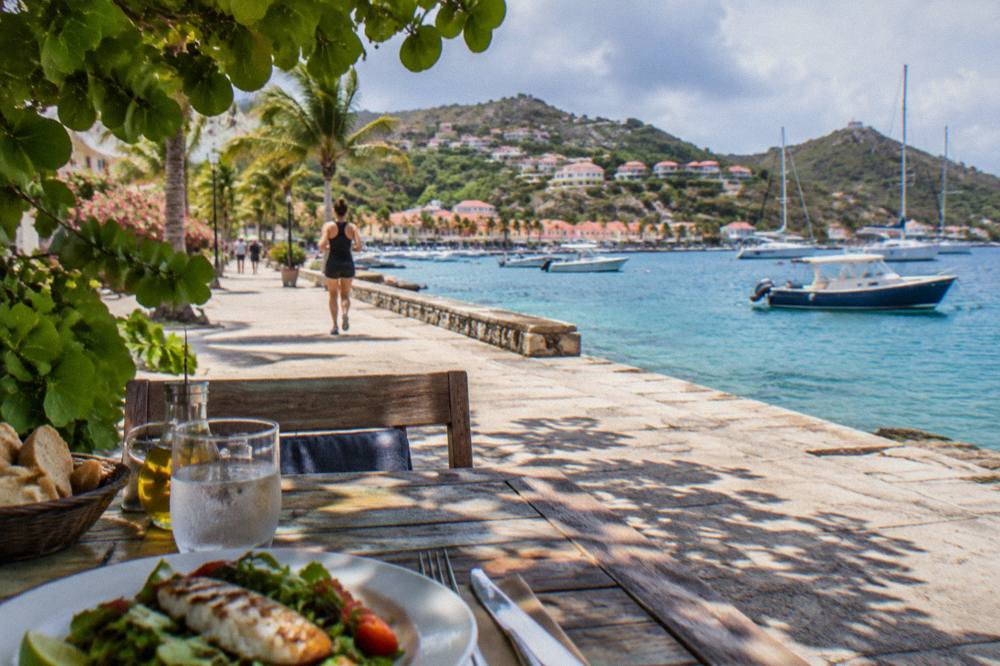
The grocery layer deserves respect as a budget tool rather than a concession. The site's St Barts groceries guide covers the shops, and the cheap eats page frames the restaurant tier without printing a price, because no price was confirmed from a primary source. What can be said with a source: the restaurateurs' association publishes a reopening calendar each autumn, and its pattern of tables reopening between mid-October and late October tells a budget traveller when the island's full food supply switches back on.
Do You Need A Rental Car On A Budget Trip?
Often you do not, if you sleep somewhere walkable and plan the day around one beach rather than four, but the island's steep, narrow roads make a car the default for multi-stop itineraries, so the honest answer depends on where your bed is. Driving is on the right, the speed limit is 50 km/h island-wide and 30 km/h in Gustavia and St Jean, and the rental counters at SBH include Avis, Budget and Hertz alongside local agencies and the open-air Mini Moke operators. No rental price appears here, and no minimum driver age either, because both vary by company; each firm's own page states its terms.
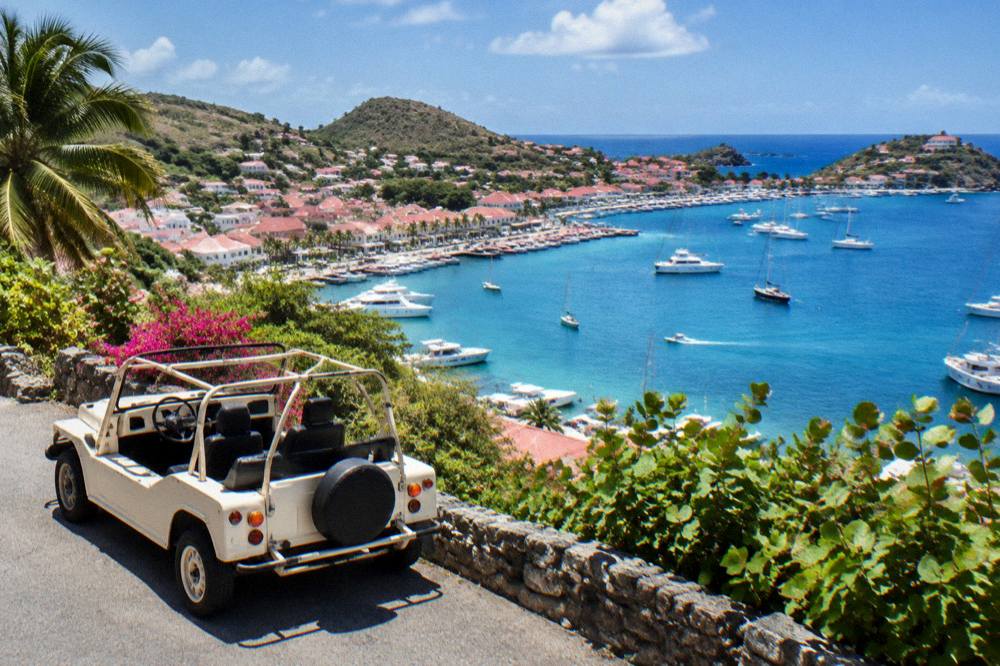
The car-free budget shape works like this: stay in or near Gustavia, walk the town, the forts and Shell Beach (Grand Galet), and spend each day on one reachable stretch of sand, or book a boat day that does the moving for you. A group sail that calls at Gustavia, Colombier and Ile Fourchue in one ticket replaces a day of driving entirely, and the per-person pricing is the point. The site's car rental guide and getting around page carry the detail.
Sample Budget Shapes For A St Barts Trip
Three honest shapes cover nearly every St Barts budget: the day trip with a crossing or group sail, one meal, free beaches and no lodging line; the overnight charter folding transport and lodging into one per-group price; and the on-island stay, the largest bill, sized by season and property type, softest in low season. Product prices stay with the live listings; no rate is invented. The day trip is the smallest structure: a crossing or group sail, one restaurant meal or a self-catered lunch, and free beaches, with no lodging line at all. The overnight charter folds transport and lodging into one per-group price, which suits a full crew of friends. The on-island stay is the full experience and the largest bill, sized by season and property type rather than by any figure this page could responsibly print, and the low-season version of it is the softest.
| Trip shape | Nights on St Barts | Transport structure | Main budget lever |
|---|---|---|---|
| Day trip from St Martin | Zero | Scheduled ferry or group sail | No lodging line at all |
| Overnight catamaran | One, aboard | Private charter per group | Lodging and crossing merged |
| Low-season island stay | Three to seven | Gateway flight plus small plane or ferry | Season softens the lodging line |
| High-season island stay | Three to seven | Same routing, higher demand | Paying for peak weather and events |
Common Questions About St Barts On A Budget
Is St Barts expensive?
Rates vary by season and each property's own booking page shows them.
What is free on St Barts?
Every beach on the island is public and free, including Saint-Jean, Gouverneur, Saline, Shell Beach, Flamands, Colombier, Grand Cul-de-Sac, Lorient, Toiny, Marigot and Corossol. Gustavia's streets, forts and viewpoints are open public spaces, and shore snorkeling is free within the marine reserve's rules.
Can you visit St Barts on a day trip?
Yes. Scheduled ferries from Philipsburg and Marigot cross in about 45 to 60 minutes, and several boat products on this site run day trips from St Martin and Sint Maarten, including the one per-person group sail, which its listing shows running from 12 May to 31 August 2027.
When is low season on St Barts?
Roughly May through October, with many hotels and restaurants closing in late August and reopening in waves between mid-October and early November. Hurricane season runs 1 June to 30 November with its peak from mid-August to mid-October; no one can predict a storm for a date.
Do you need a car on St Barts?
Not always. A stay based in walkable Gustavia with one beach per day, or a boat day that covers Gustavia, Colombier and Ile Fourchue in one ticket, can replace driving. For multi-beach itineraries the island's steep, narrow roads make a rental the default, and the counters at the airport include Avis, Budget and Hertz.
Are there free walking tours on St Barts?
No guided or tip-based walking tour is listed here. The free tier is the beaches, the coastal paths such as the Colombier walk, Gustavia's streets and forts, and the open public places.