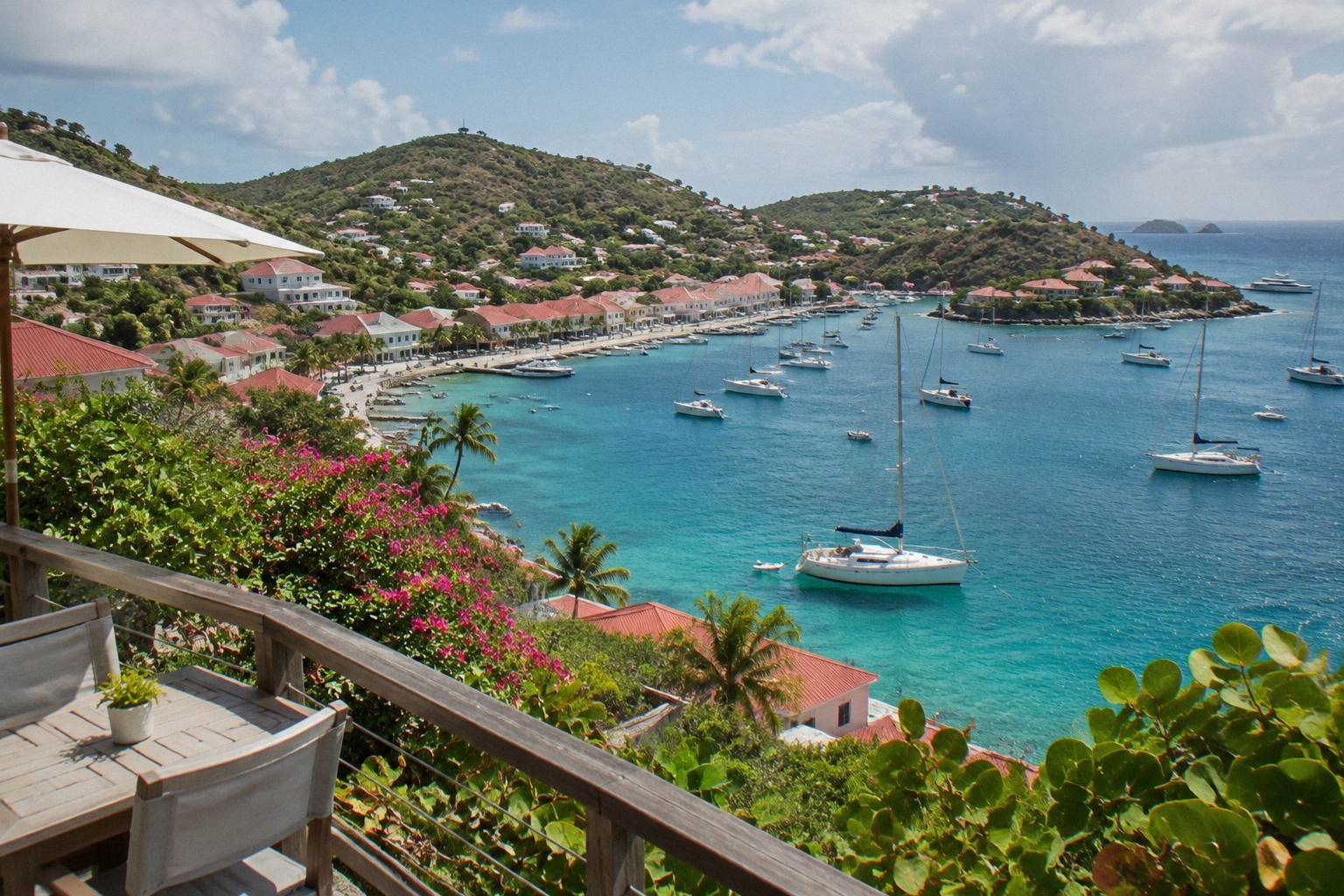
Electricity And Plugs In St Barts
St Barthelemy, usually written St Barts, is a small French island in the Caribbean, and its power sockets follow the French two-pin standard. This guide covers which plugs fit, which adapters to pack, and how to keep devices charged across flights, ferries, villas and boat days.
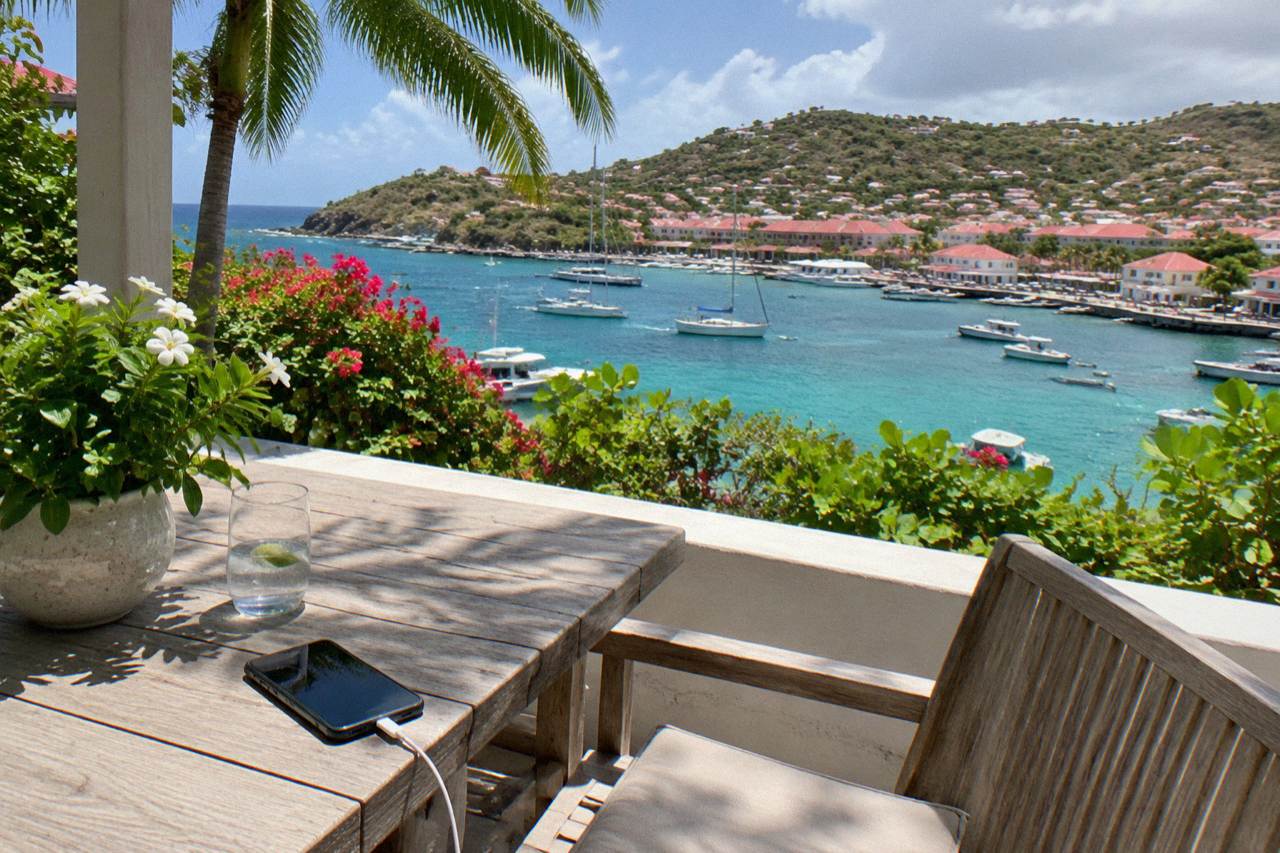
St Barts uses plug types C and E, the two-round-pin sockets found in France, so travelers from the United States and Canada need an adapter, while most European devices plug straight in. Check the label on each appliance before you travel.
St Barthelemy, usually written St Barts, is a small French island in the Caribbean, an overseas collectivity of France since 2007, and its electrical fittings follow the French standard rather than a Caribbean or North American one. The sockets accept plug types C and E, the two round-pin formats used across France, which surprises travelers who assume the island shares the flat-pin system of its Dutch and French neighbors on St Martin and Sint Maarten. That single detail shapes most of the packing list for a phone, a camera, a laptop or a hair dryer. This page from St Barthelemy Travel covers what plugs fit, which adapters to bring from each home region, how charging works on boat days, and what to expect in villas and hotels around Gustavia, Saint-Jean and the quieter coasts.
What Plug Sockets Does St Barts Use?
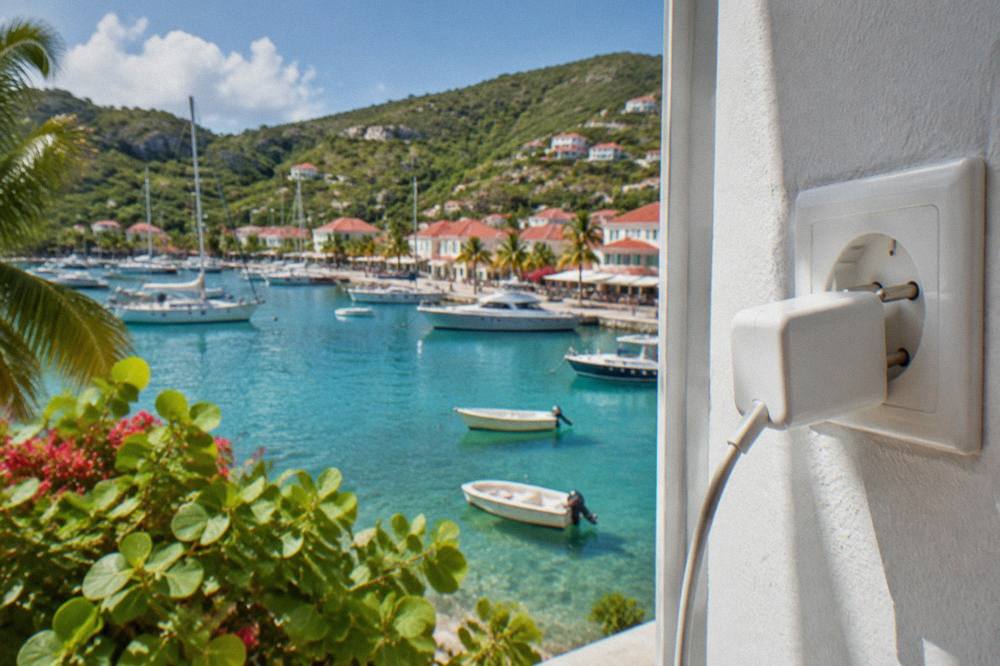
St Barts uses plug types C and E, the two-round-pin system standard in France, and every published guide to the island's fittings agrees on this point. Type C is the simple two-pin Europlug. Type E adds a hole for the earth pin that sits in the socket, the format used across mainland France, so any device sold for the French market fits without an adapter.
Because the island is an overseas collectivity of France, its building fittings, including sockets, follow French norms rather than those of the neighboring islands. That matters for packing more than it might seem. A traveler flying in through St Martin (SXM) or taking the ferry from Philipsburg or Marigot will cross between two different plug worlds in a single morning, since Sint Maarten on the Dutch side leans toward a different heritage in its fittings. The rule of thumb for St Barts itself is simple: if your charger works in Paris, it works in Gustavia.
| Plug type | What it looks like | Where it fits without an adapter |
|---|---|---|
| Type C | Two round pins, no earth connection | Fits both C and E sockets in St Barts |
| Type E | Two round pins plus a hole for the socket's earth pin | Fits E sockets, the standard French wall fitting |
| Type A (US) | Two flat parallel pins | Does not fit; needs an adapter |
| Type B (US) | Two flat pins plus a round earth pin | Does not fit; needs an adapter |
| Type G (UK) | Three rectangular pins | Does not fit; needs an adapter |
One practical note on the sockets themselves. Type E wall fittings in French buildings sometimes sit recessed or close to the skirting, so chunky adapters with thick bodies or trailing power strips can struggle to seat fully. A slim, round-pin adapter or a small travel extension lead solves this in most cases. Villas and hotels on the island are built to French codes, so the fittings in a Gustavia hotel room and a Flamands villa will be the same two formats.
Adapter Needs By Home Region For St Barts
Island sockets accept plug types C and E, the French round-pin standard
| Home plug | Adapter and note | |
|---|---|---|
| France, Germany, Spain, Netherlands | Types C, E, F | Not needed; pins match directly |
| United Kingdom, Ireland | Type G | Yes, UK to round-pin; same adapter as for France |
| United States, Canada | Types A, B | Yes, flat-pin to round-pin; check charger labels |
| Australia, New Zealand | Type I | Yes; One per traveler or a multi-port hub |
| Japan | Types A, B | Yes; same as the North American case |
From the home-region adapter table in this St Barts electricity guide.
Do US Travelers Need A Power Adapter For St Barts?
Yes. Travelers from the United States and Canada need an adapter for St Barts, because North American flat-pin plugs, types A and B, do not fit the island's round-pin type C and E sockets. A basic adapter converts the pin shape only, and for phones, laptops and cameras that is usually all that is required, but check the small print on every charger block before you pack it.
Most modern phone and laptop chargers are designed for international use, and the fine print on the block states the range of electrical systems it accepts. If that label lists Europe's system among its supported inputs, the charger itself is fine and only the pin shape needs converting. Devices with fixed settings, typically older hair dryers, curling irons or straighteners bought for the North American market, are the risk area: an adapter changes the shape of the pins but nothing else, and a fixed-setting appliance may perform poorly or be damaged. The safe approach, used by many villa renters, is to check the appliance label and leave anything unsuitable at home, since villas on the island frequently stock their own.
| What you are bringing from North America | Adapter needed | Extra check |
|---|---|---|
| Phone charger | Yes, flat-pin to round-pin | Read the label on the block for accepted systems |
| Laptop USB-C charger | Yes | Most blocks accept the French system; confirm on the label |
| Camera battery charger | Yes | Confirm the label supports the European system |
| Hair dryer or straightener | Yes | Fixed-setting models are risky; prefer the villa's or hotel's own |
| Electric razor or toothbrush | Yes | Check whether the base accepts round pins via its travel case |
The arrival journey adds its own charging puzzles. Travelers reach St Barts through St Martin, connecting at Princess Juliana airport (SXM) or Grand Case (SFG) before the short hop to Gustaf III airport (SBH), and the ferry terminals at Philipsburg and Marigot have waiting areas where a US-format device has no socket to fit. Packing one adapter in carry-on luggage, not in a checked bag, keeps a phone alive through the transfer day. The St Barts airport guide and the ferry operators and schedule guide cover the arrival routes in detail.
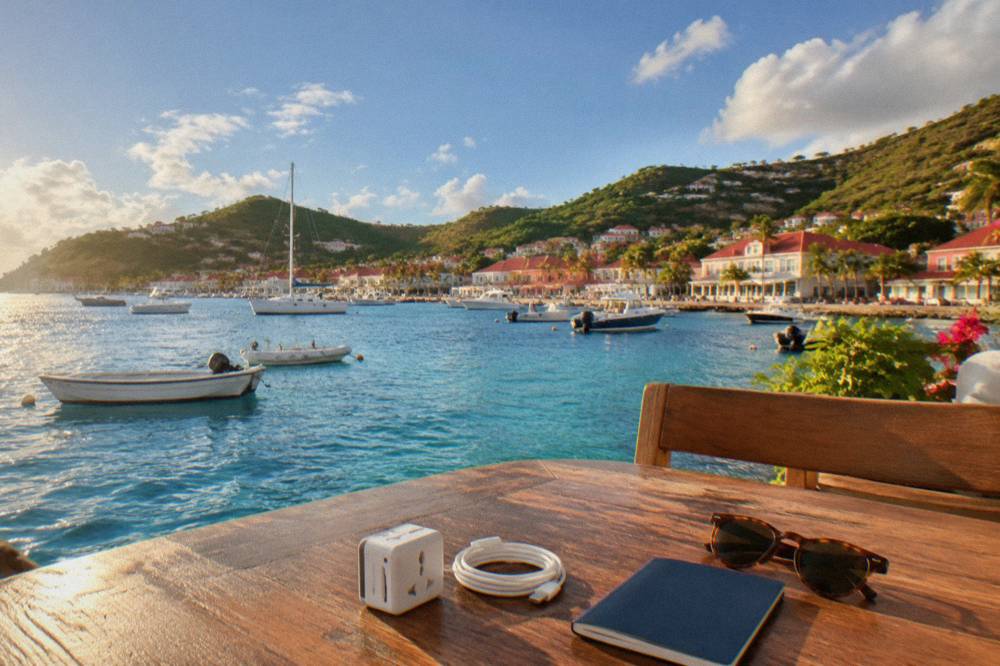
For travelers building a full day on the water into the trip, the charging question extends past the villa. The group sail from St Martin that visits Gustavia, Colombier Beach and Ile Fourchue is a long day out, and the practical approach is to leave with a full battery rather than plan to charge aboard. That trip, its route and its booking details are on the Gustavia, Colombier and Ile Fourchue sail page.
Do UK, EU And Australian Travelers Need An Adapter In St Barts?
Travelers from France and most of continental Europe need no adapter at all in St Barts, since the island's type C and E sockets match their home plugs. UK travelers need an adapter for their three rectangular pins, and Australian and New Zealand travelers need one for their angled pins. Irish travelers follow the UK case. In every case the adapter is a pin-shape converter, and the label on each charger still governs whether it is safe.
The European case is the easiest: a charger bought in Paris, Amsterdam, Berlin or Madrid plugs into a St Barts wall with nothing in between, because the island inherited French fittings along with French law, language and the euro. Australian and Japanese travelers each need their own pin converter. For households traveling as a family, one multi-port USB charger plus a single adapter charges more devices with less weight than four separate adapters, and it sidesteps the recessed-socket problem noted above.
| Home region | Home plug | Adapter for St Barts | Note |
|---|---|---|---|
| France, Germany, Spain, Netherlands | Types C, E, F | Not needed | Pins match directly |
| United Kingdom, Ireland | Type G | Yes, UK to round-pin | Same adapter as for France |
| United States, Canada | Types A, B | Yes, flat-pin to round-pin | Check charger labels |
| Australia, New Zealand | Type I | Yes | One per traveler or a multi-port hub |
| Japan | Types A, B | Yes | Same as the North American case |
A charging strategy for the trip is worth five minutes of planning before departure. Flights into the region are long, and the flying to St Barts from the US guide outlines the gateway routing through St Martin, San Juan, Guadeloupe or Antigua. Airport charging points along that route vary in format, so a charged power bank in carry-on luggage does more for a travel day than any adapter. Once on the island, the same European adapter that served the flight layovers keeps working in the villa.
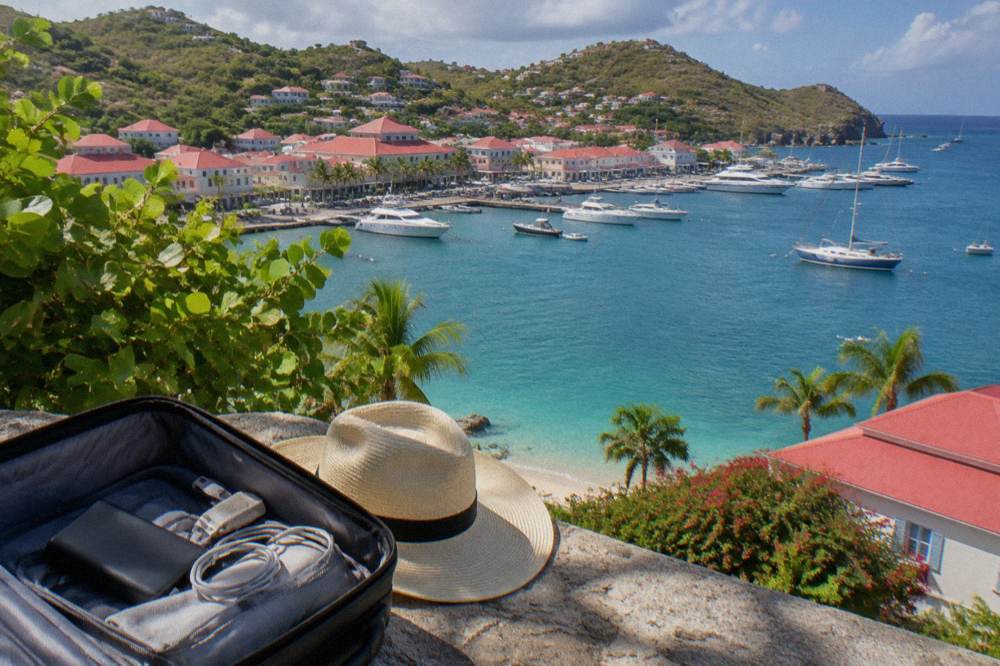
Planning the crossing itself? The charter options below all depart from St Martin or Sint Maarten and include St Barts in their route.
Is The Voltage In St Barts The Same As In The US?
St Barts shares France's electrical system, so it does not match the North American system, and travelers with fixed-setting appliances should treat them as unusable on the island. No specific voltage figure is given. The rule that always holds: read the label on the charger or appliance, confirm it accepts the European system, and rely on multi-voltage electronics, which covers nearly all phones, tablets and modern laptops.
The reason for caution rather than a printed number is that appliance compatibility is decided by the fine print on the device, not by the destination. A charger block marked for international input works everywhere on the island, in hotels, villas and boats, with only a pin adapter. A fixed-setting appliance carries real risk of poor performance or damage, and no adapter prevents that. The pragmatic packing rule, used widely by villa guests, is to bring multi-voltage electronics and rely on the property for anything heat-based, since hair dryers are standard equipment in St Barts accommodation.
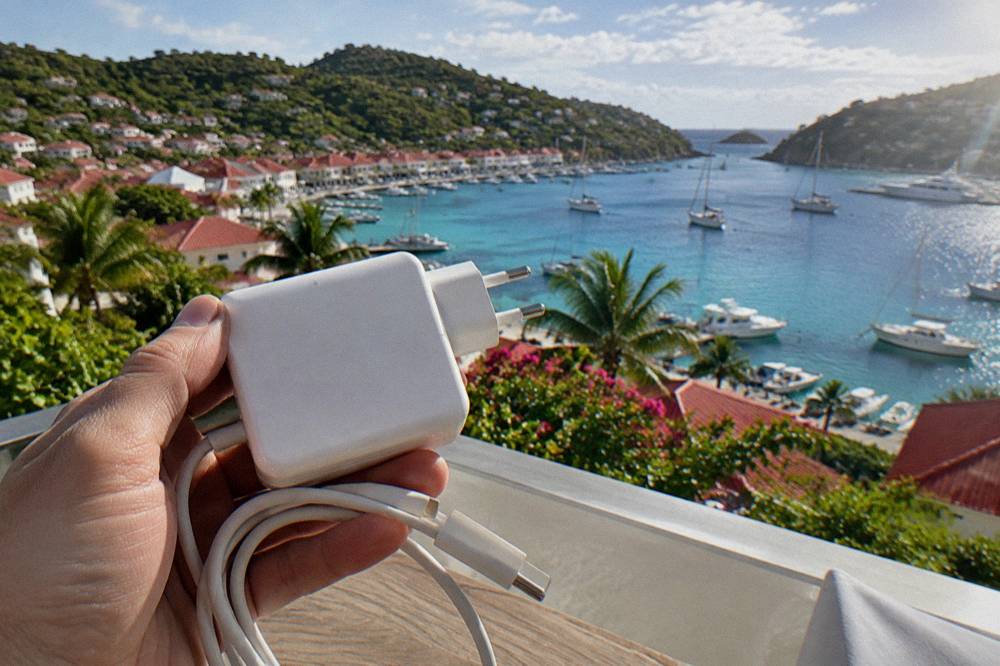
How Do You Keep Devices Charged On A St Barts Boat Day?
The reliable approach is to depart with full batteries, because charging options on boats, ferries and beaches in St Barts cannot be counted on. Bookable charters listed here depart from St Martin or Sint Maarten and run from six to eight hours, and none of them promises device charging as an amenity. A charged power bank, a phone in low-power mode and a dry bag for electronics cover the day.
A boat day is the moment devices work hardest on a St Barts trip: navigation of Gustavia's harbor, photos at Colombier and Ile Fourchue, and coordination at the departure dock in Simpson Bay, Grand Case or wherever the vessel boards. Water is the second risk after battery drain. A dry bag protects a phone and a power bank from spray and the occasional swell on the crossing, which operators do not promise to be smooth. Salt air and sand are hard on charging ports, so packing cables away until back at the villa extends their life considerably.
The marine reserve adds its own electronic consideration: the environment agency's regulatory-zones page restricts drone use in and near the reserve, including Colombier, without prior authorization. A drone traveler should confirm permissions before flying, and a boat day in the reserve is the wrong place to test the rules. The St Barts nature reserve guide covers the protected zones, the 5-knot speed limit and the rules on touching turtles.
What Is Electricity And Power Like In St Barts Villas And Hotels?
Villas and hotels in St Barts are built to French norms, so wall fittings are type C and E throughout, from Gustavia hotel rooms to Flamands and Grand Cul-de-Sac villas. Properties routinely supply hair dryers, and kitchens in villa rentals come with French-fitted appliances that North American devices cannot plug into. Questions about a specific property's fittings are best sent to the villa manager or hotel before arrival.
The villa market is large on the island, with long-established managers including WIMCO, Sibarth and St Barth Properties, and each property's equipment list is confirmed at booking. The practical questions to ask before arrival are simple: whether USB sockets are built into the property, how many wall sockets sit in each bedroom, and whether the kitchen has any flat-pin sockets for visiting devices, which is rare. Guests staying a week or more sometimes bring a French-standard power strip from home, plug it in once, and charge everything from a single point. The St Barts villas and rental guide set covers the accommodation landscape, including the autumn closure pattern in which many hotels close and reopen between mid-October and early November each year.
| Accommodation type | Fittings to expect | What to confirm before arrival |
|---|---|---|
| Hotel room | Type C and E sockets, hair dryer supplied | Number of sockets near the bed; USB availability |
| Full-service villa | French sockets throughout, fitted kitchen | Manager's equipment list; charging points per bedroom |
| Smaller guesthouse | Type C and E sockets | Whether appliances like hair dryers are included |
| Boat or charter stay | Vessel power, format varies by boat | Ask the operator what charging is available aboard |
Car renters meet the same French system in a smaller form. Rental vehicles on the island, from the open-air Mini Moke to small SUVs, are French-market cars, and any in-car charging accessory needs the round-pin fitting or a USB outlet the car already provides. Confirming the car's charging options at the counter, where Avis, Budget and Hertz operate alongside local agencies, avoids a week with a drifting phone battery. The St Barts car rental guide covers vehicle types and the island's narrow, steep roads, where navigation apps get heavy use.
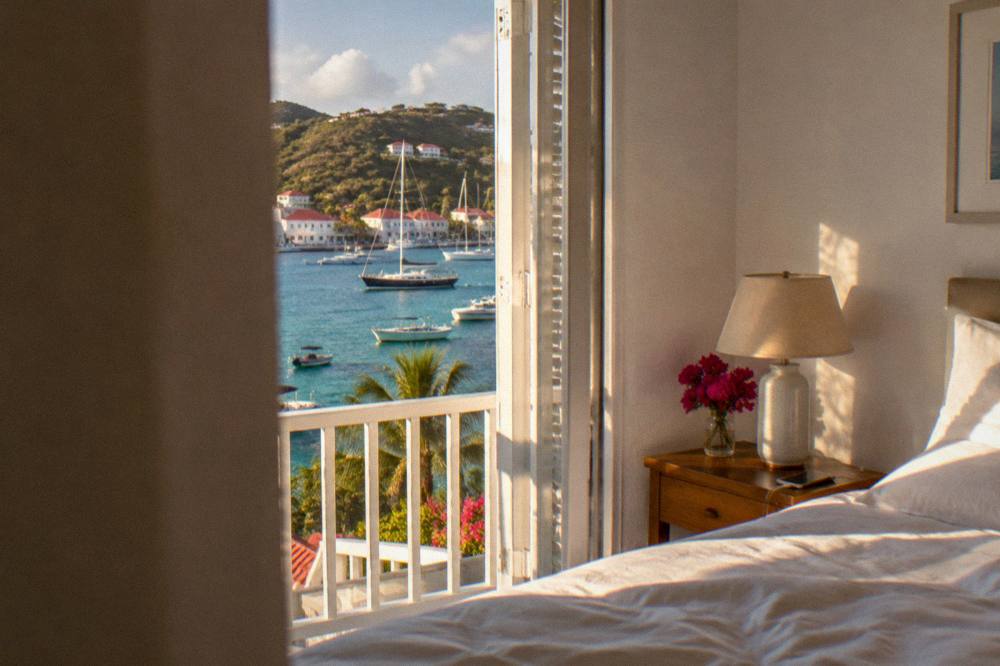
What Should A St Barts Packing List Include For Power?
A complete St Barts power kit is small: one pin-shape adapter per traveler from North America, the UK, Australia or Japan, a multi-port USB charger, a power bank rated for a full phone recharge or more, a short cable set, and a dry bag for boat days. European travelers need only the power bank and cables. Nothing in the kit needs to be island-specific, and everything on the list serves the journey through St Martin as well as the island itself.
The kit earns its place on the first travel day. A typical arrival runs a long-haul flight into the region, a connection at St Martin or another gateway, then either a small-plane hop or the ferry to Gustavia, and power outlets in the right format are not guaranteed at every step. The how to get to St Barts guide maps the full route, and the St Maarten airport to St Barts ferry guide covers the transfer day, which is exactly when a power bank matters most. On the island, the adapter handles evenings in the villa while the power bank covers beach days at Saline, Gouverneur or Colombier, all public beaches with no facilities to plug into.
| Power kit item | Who needs it | Why it earns its place |
|---|---|---|
| Round-pin adapter (C and E) | US, UK, Irish, Australian, Japanese travelers | The island's only socket format |
| Multi-port USB charger | Everyone, especially families | One socket charges several devices in villas |
| Power bank | Everyone | Boat days, beaches and the transfer through St Martin |
| Dry bag | Boat day guests and beachgoers | Protects devices from spray, swell and sand |
| French-standard power strip | Week-long villa guests | Multiplies one wall socket into a charging station |
| Spare short cables | Everyone | Salt air and sand are hard on cable ends |
One closing note on electronics etiquette. The island's beaches are public and generally undeveloped, and the marine reserve bans noise pollution on the water, so a Bluetooth speaker at volume fits neither the reserve's rules nor the beach culture. Headphones, a charged e-reader and a camera do the same job quietly. The St Barts packing list guide and the island's general things to do in St Barts overview round out what to bring and what to plan once the devices are sorted.
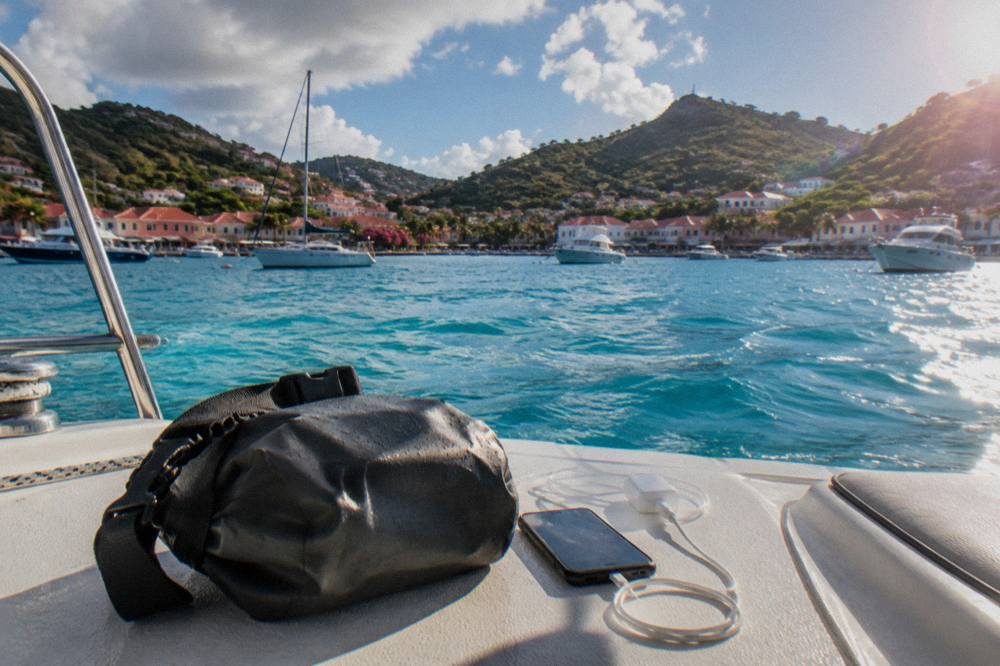
For travelers weighing the on-the-water options, the selection below covers the group sail and two private charters, all departing from St Martin or Sint Maarten.
Common Questions About St Barts Electricity
What plugs does St Barts use?
St Barts uses plug types C and E, the two-round-pin system standard in France. Type C is the simple two-pin Europlug and type E adds an earth-pin hole for the French wall fitting. Devices sold for the French market plug in with no adapter.
Do I need a power adapter for St Barts?
Travelers from the United States, Canada, the UK, Ireland, Australia, New Zealand and Japan need a pin-shape adapter, because their flat or angled pins do not fit the island's round-pin sockets. Travelers from France and most of continental Europe need no adapter at all.
Can I use American appliances in St Barts?
Only if the label on the appliance or charger states that it accepts the European system. Phones, tablets and modern laptop chargers are usually built for international input and need only a pin adapter. Fixed-setting appliances such as older hair dryers are risky, and villas and hotels generally supply their own.
Where can I charge my phone on a boat day in St Barts?
Do not count on charging aboard. The charters listed here run six to eight hours from St Martin or Sint Maarten, and none lists device charging as an amenity. Depart with a full battery, carry a power bank in a dry bag, and keep the phone in low-power mode.
Do St Barts villas have hair dryers?
Hotels and full-service villas on the island routinely supply hair dryers, since properties are fitted to French norms and equipped for international guests. Confirm the equipment list with the villa manager or hotel at booking, the same step that answers socket-count and USB questions.
Are there USB sockets in St Barts hotels?
Some properties have built-in USB outlets and some do not, and the answer varies building by building. The reliable plan is to bring a multi-port USB charger with a round-pin adapter, which works in every type C and E socket on the island.
However the trip is shaped, the power question on St Barts resolves to one sentence: pack for France, not for the Caribbean, and every socket on the island will cooperate.