St Barts Versus St Lucia
St Barthelemy, written St Barts, is a 21-square-kilometre French island built around beaches, boats and a harbour town, and comparing it with a larger resort island such as St Lucia comes down to scale, arrival and what you plan to do all day.
St Barts is a small French overseas collectivity of about 10,700 residents, reached through St Martin by small plane or ferry, with euro currency, no jet airport and a beach-and-boating rhythm; St Lucia is a larger island suited to a resort-based stay, so the choice depends on arrival logistics and trip style.
St Barthelemy, written St Barts, is a small French overseas collectivity in the Caribbean, about 21 square kilometres of hills and public beaches with roughly 10,700 residents and Gustavia as its harbour capital. St Lucia sits further south in the Windward chain and plays in a different league of scale. This comparison, written from the St Barts side, covers the French island, its airport, its ferries, its weather normals and its day-trip list, so the choice between the two becomes a choice about arrival effort and daily rhythm rather than a contest of postcards. For the island-hopping angle around St Barts itself, see the St Barts island hopping guide.
What Kind Of Island Is St Barts?
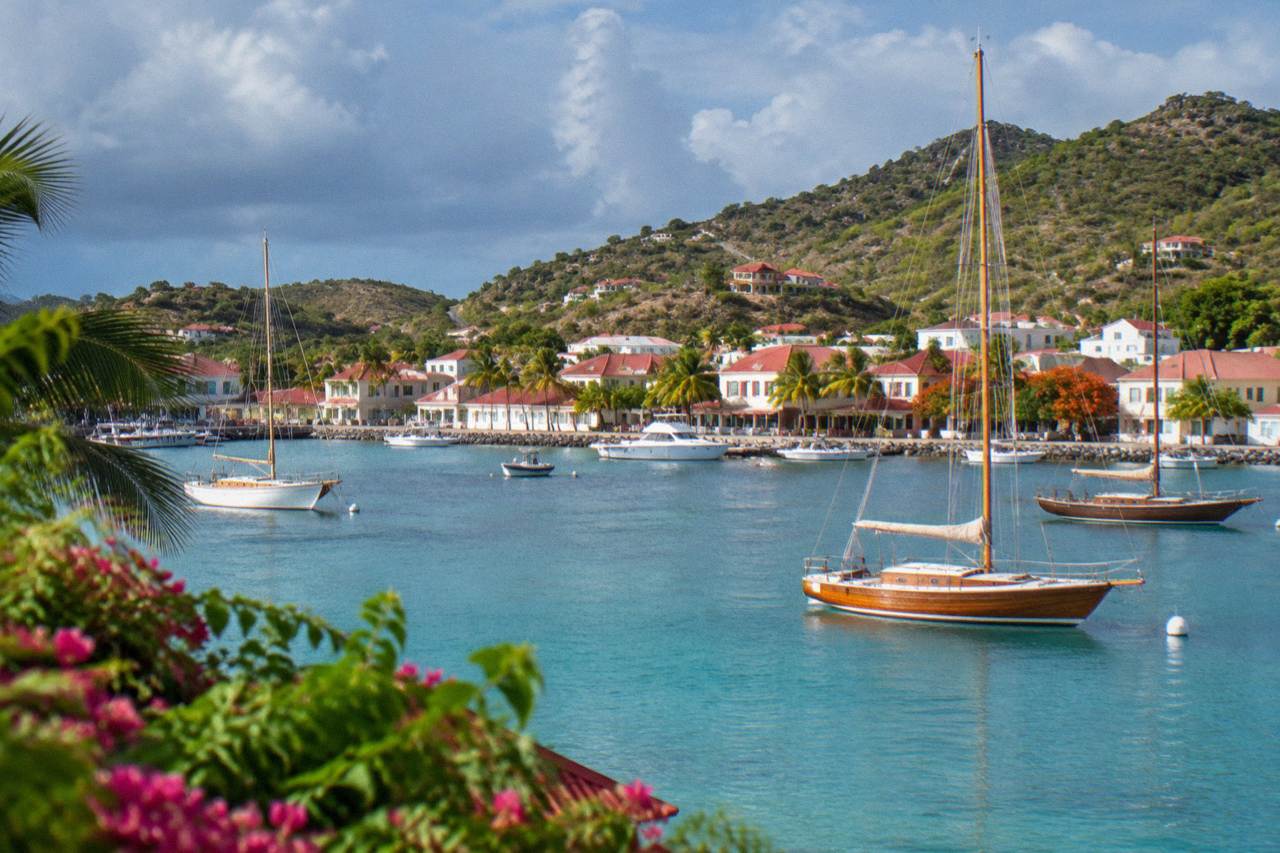
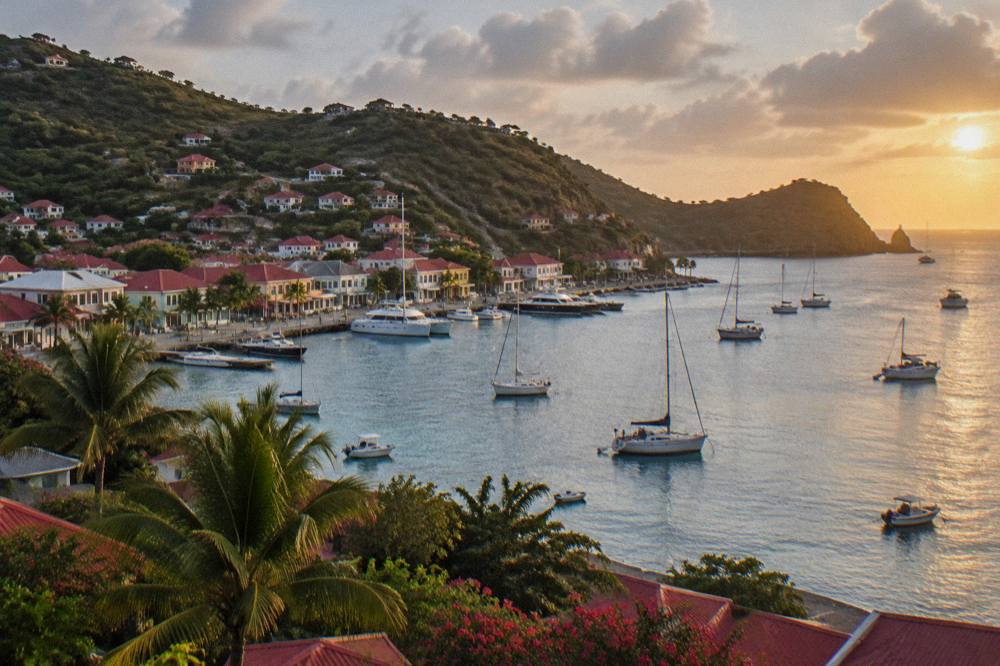
St Barts is a French overseas collectivity since 2007, about 21 square kilometres with about 10,700 residents, a euro currency, French as the official language and English widely spoken, and Gustavia as its capital and harbour town. The tourism committee presents an island of public beaches, red-roofed Gustavia and turquoise water, reached almost entirely through neighbouring St Martin. That scale is the whole argument. Everything on the island is close to everything else, the beaches are public by law, and the rhythm of a stay is built around the water: swimming, sailing and the boat traffic in and out of Gustavia. A larger resort island works differently, with property-based stays and inland driving days; St Barts has almost no inland to speak of, just hills between one bay and the next.
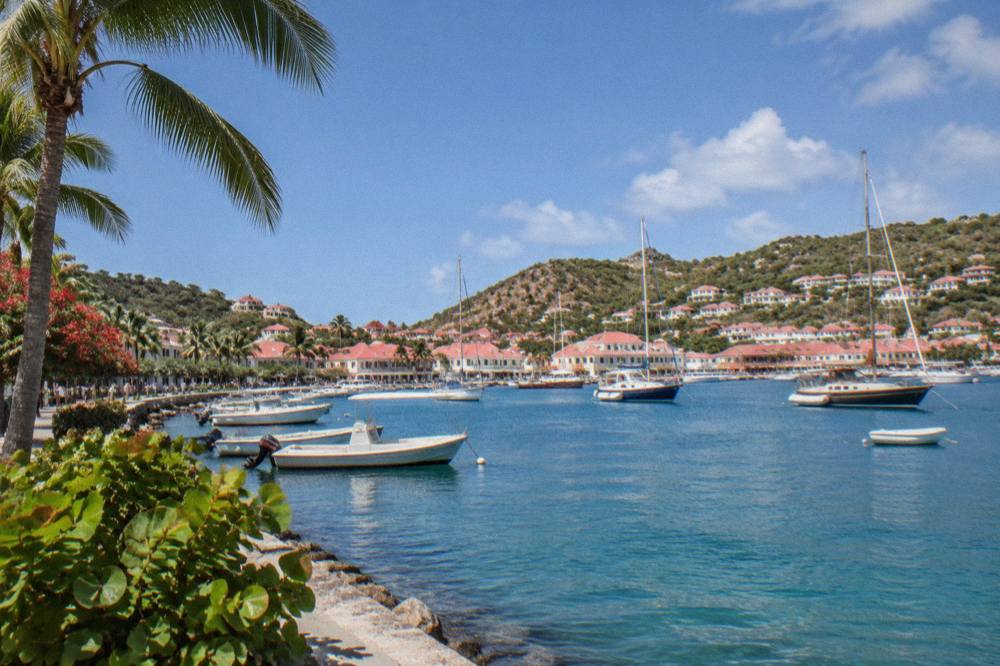
The island's character comes from three fixed facts. First, it is French: the currency is the euro, the collectivity administers itself under Article 74 of the French Constitution, and the emergency numbers are the French ones, 15, 17, 18 and 112. Second, it is small: at about 21 square kilometres, no part of the island is far from the sea. Third, it is a port town first: Gustavia's harbour fills with yachts in season, and cruise passengers arrive by tender, since there is no cruise pier, according to the Port de Gustavia.
| Fact | St Barts (Notes) |
|---|---|
| Status | French overseas collectivity since 2007 |
| Area | About 21 square kilometres |
| Population | About 10,700 |
| Capital | Gustavia |
| Currency | Euro |
| Languages | French official, English widely spoken |
| Airport | Gustaf III (SBH), 646 m runway, turboprops only |
| Entry | Outside the Schengen area |
How Hard Is It To Get To St Barts Versus St Lucia?
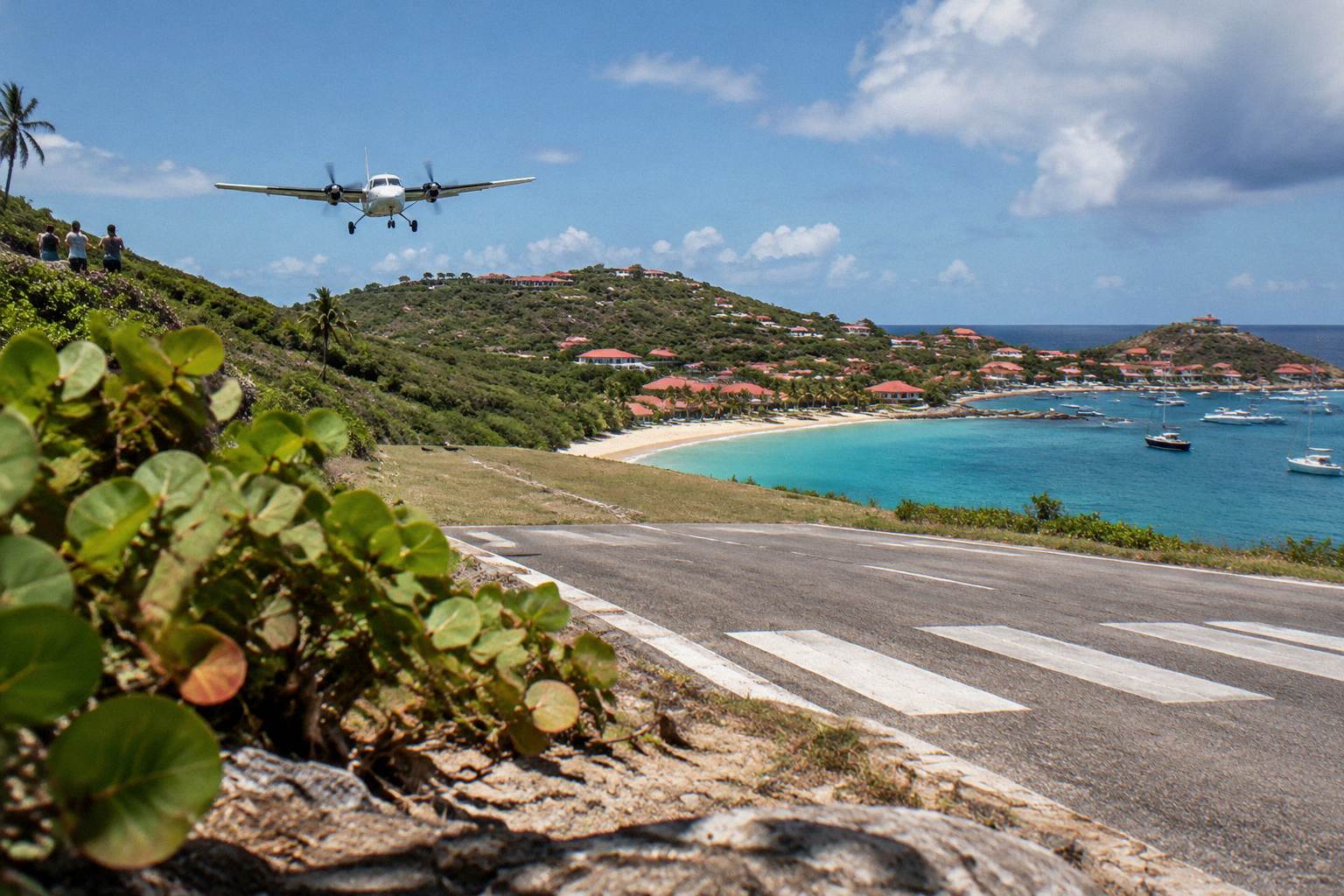
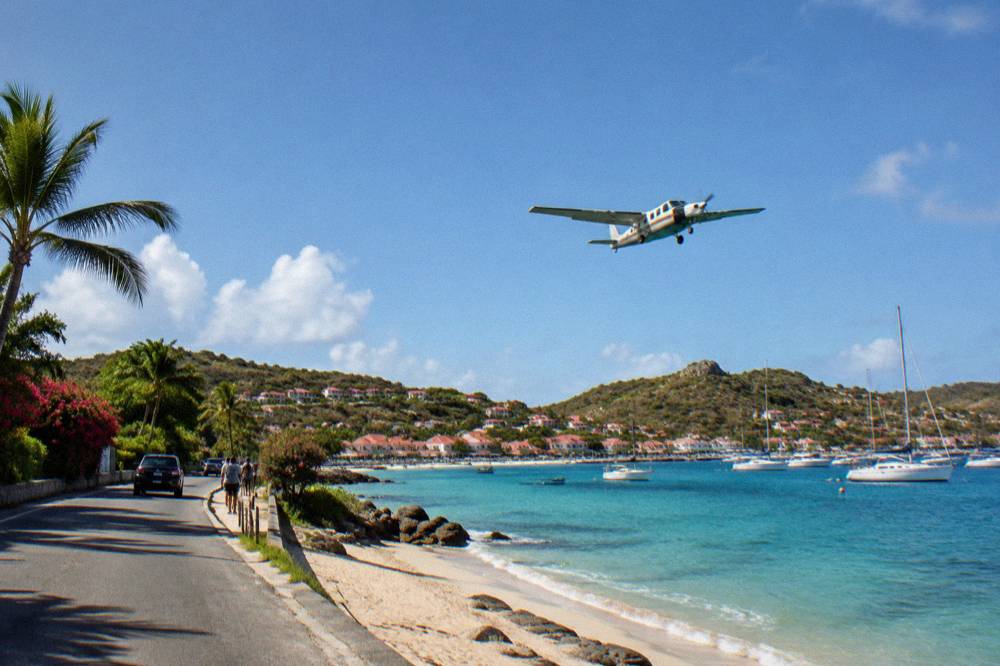
No jet lands on St Barts: the runway at Gustaf III Airport is 646 metres, limited to small STOL turboprops in daylight and visual conditions only, so every arrival passes through a gateway, most often St Martin (SXM), then a small plane or the ferry. St Barth Commuter flies from SXM, Grand Case (SFG) and Pointe-a-Pitre (PTP), Tradewind from San Juan (SJU) and Antigua (ANU), and two ferries, Great Bay Express and Voyager, cross from Sint Maarten and St Martin. A larger island with a full-length runway takes long-haul jets directly; St Barts never will, by design and by physics. The effort of the last hop is part of what keeps the island the size it is, and the tourism committee treats the arrival itself, over the hill at Col de la Tourmente onto the Saint-Jean strip, as an attraction in its own right.
The two ferry operators give the corridor redundancy. Great Bay Express runs from Bobby's Marina in Philipsburg on the Dutch side, a crossing of about 45 minutes according to the operator's page, with check-in opening about 45 minutes before departure and closing 15 minutes before, passport in hand. Voyager runs from the Marigot ferry terminal on the French side, about 50 to 60 minutes across. Neither crossing is promised smooth: the operator pages flag weather cancellations, and the crossing can be rough. Full detail sits in the St Maarten airport to St Barts ferry guide.
| Route To St Barts | Operator | Notes From The Operators' Pages |
|---|---|---|
| Philipsburg (Bobby's Marina) to Gustavia | Great Bay Express | About 45 minutes, passport required |
| Marigot terminal to Gustavia | Voyager | About 50 to 60 minutes, 2 to 3 sailings a day |
| SXM, SFG, PTP to SBH | St Barth Commuter | Small turboprops, short hop |
| SJU, ANU to SBH | Tradewind | Pilatus PC-12 service |
| SXM to SBH | Winair | Twin Otter type serves the airport |
The gateway logic matters for itinerary planning. If St Barts is the goal, the practical pattern is a flight into St Martin, then the ferry or the hop; the St Maarten before or after St Barts guide covers how to split the stay. A visitor weighing St Barts against a bigger island should budget that extra half-day of connection each way, and treat it as the price of a 646-metre runway three minutes from Gustavia.
What Is The Weather Difference For St Barts?
The Meteo-France normals for St Barthelemy, 1991 to 2020, put the mean daily high between 28.5 C in January and 31.7 C in September, with 891.3 mm of rain across the year and October the wettest month at 135.6 mm; February is the lowest-rain month at 38.4 mm, and the Atlantic hurricane season runs 1 June to 30 November with its peak from mid-August to mid-October. In plain terms, St Barts is warm year-round with a modest temperature spread, and the real seasonal variable is rain and storm risk, not heat. Sea temperature runs about 26 C in winter to about 29 C from August to October, warm enough to swim in any month.
The seasonal shape has a practical consequence the climate table cannot show: many hotels and restaurants close each autumn and reopen in waves between mid-October and early November, a recurring pattern rather than a fixed date for any property. A September or early-October trip therefore meets a quieter, partly closed island with the wettest weather in the normals; a December-to-April trip meets the full season. The best time to go season guide works through the trade-offs month by month.
| Month | Mean Daily High C | Rain Mm | Seasonal Note |
|---|---|---|---|
| January | 28.5 | 52.6 | High season, Music Festival 8 to 18 January 2027 |
| February | 28.6 | 38.4 | Lowest rain month in the normals |
| April | 29.8 | 50.9 | Les Voiles sailing week, April |
| July | 31.2 | 80.4 | Hurricane season, lower season rates |
| September | 31.7 | 96.9 | Warmest highs in the normals, deepest closure period |
| October | 31.4 | 135.6 | Wettest month in the normals |
| November | 29.9 | 118.6 | Reopening month, Gourmet Festival 9 to 15 November 2026 |
Figures above are Meteo-France normals, 1991-2020, for the St Barthelemy station. No forecast is implied for any date, and the two dated events, the Music Festival from 8 to 18 January 2027 and the Gourmet Festival from 9 to 15 November 2026, come from their organisers. Everything else on the events calendar, from Les Voiles to the Film Festival, carries unconfirmed 2027 dates.
How Do The Beaches Of St Barts Compare?
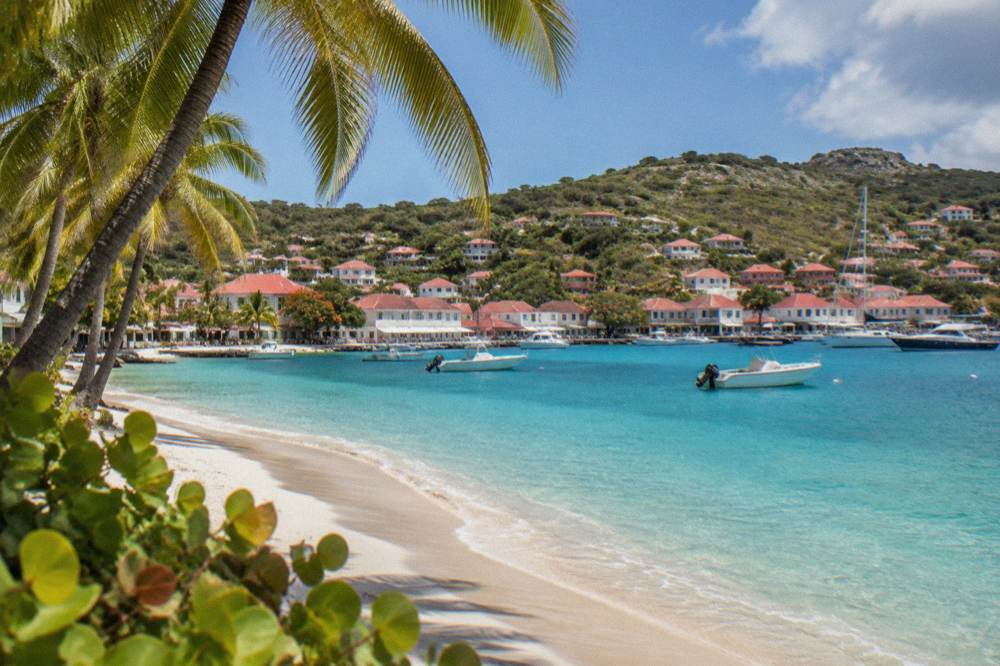
Every beach on St Barts is public, from Saint-Jean and Gouverneur to Saline, Shell Beach, Flamands, Colombier, Grand Cul-de-Sac, Lorient, Toiny, Marigot and Corossol, and the tourism committee's list names them as the island's core attraction; what the island does not offer is a long developed resort strand, because the coast is a string of separate bays, each reached over its own hill. That is the structural beach difference with any larger island: not the sand, which the tourism committee describes in glowing terms, but the shape, a ring of small public coves rather than a strip. Some, like Colombier, sit inside the marine reserve with no road access of the ordinary kind, reached by boat or on foot, which the Colombier Beach page covers in detail.
The marine reserve sets rules a bigger island's hotel beach rarely faces. The environment agency's regulatory-zones page lists a 5-knot speed limit in its zones, a ban on jet skis, seabobs and towed sports, 23 dive sites, no dogs on beaches or in the water, no touching of turtles or coral, no collecting of shells or sand, and restrictions on drones near the reserve. Green and hawksbill turtles are common in the Grand Cul-de-Sac lagoon and around Colombier, and the agency asks that nests and sightings be reported rather than approached. A resort bay elsewhere may permit motorised water sports; on St Barts, in reserve waters, they are simply illegal.
| St Barts Beach | Position On The Island | Access Character |
|---|---|---|
| Saint-Jean | North coast by the airport | Public, beside the runway strip |
| Gouverneur | South coast | Public bay over a hill road |
| Saline | South coast east of Gouverneur | Public, reached on foot from the parking area |
| Shell Beach (Grand Galet) | West of Gustavia | Public, minutes from town |
| Flamands | North-west coast | Public, long bay |
| Colombier | North-west tip | Public, inside the marine reserve |
| Grand Cul-de-Sac | North-east coast | Public, shallow lagoon |
| Lorient | North coast | Public, village beach |
No beach on the list carries a claim here about waves, currents, facilities or crowd levels. The public status, the names, the positions, and the reserve rules that govern the water in front of them are the details covered here. For planning a route around them, the St Barts beach hopping itinerary strings the accessible bays into a realistic day.
Which Island Suits A Day-Trip Or Split-Stay Style?
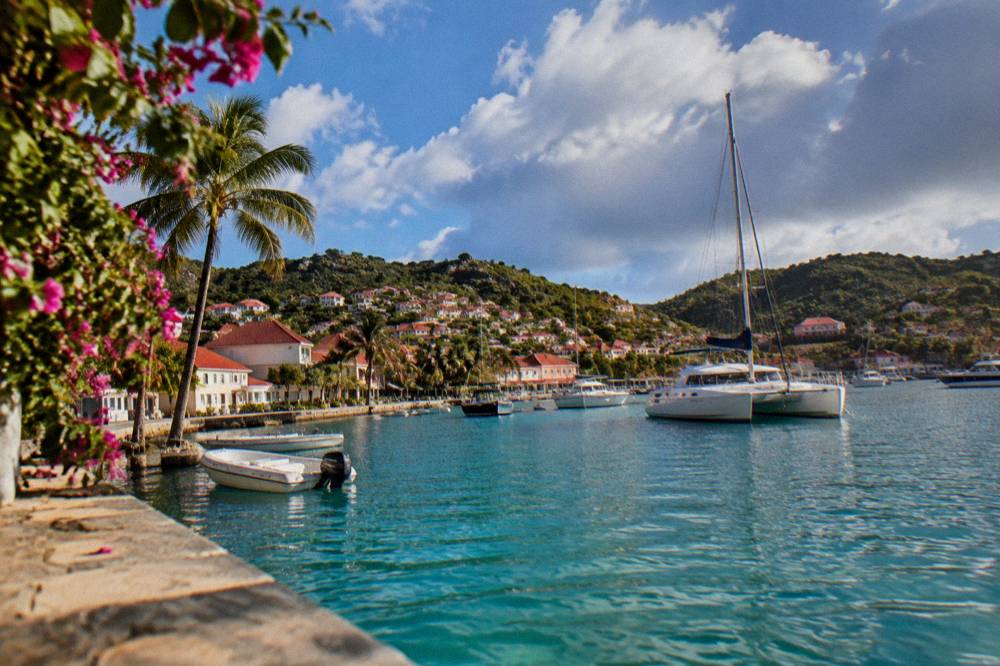
St Barts is built for the day-trip style: every bookable boat tour listed here departs from St Martin or Sint Maarten and visits St Barts, which means the island works both as a destination and as a day out from a cheaper base, with options ranging from a per-person group sail to fully private charters; a larger resort island inverts that logic, since the property is the trip and excursions radiate outward from it. That single structural fact decides many itineraries. A traveller staying on St Martin can sail to Gustavia, Colombier and Ile Fourchue and be back the same evening. A traveller staying on St Barts has no on-island bookable motorised activity at all, because the reserve bans jet skis and the trip list offers none, so the day trips run the other direction, toward Anguilla or Saba.
The flagship product of the trip list illustrates the day-trip model: a seven-hour group sail from St Martin that calls at Gustavia, Colombier Beach and Ile Fourchue, priced per person, running from 12 May to 31 August 2027 on its listing, with the rest of the trip list private charters priced per group. The tour has its own page at Gustavia, Colombier and Ile Fourchue sail, and current dates and pricing render there. The listing also shows its refund terms, which matters for a sea trip in a season with weather risk.
For a group with a larger budget, the private side of the trip list covers the same corridor at the group's own pace. Two of the three private options below depart St Martin or Sint Maarten for a full day around St Barts, and one turns the crossing into an overnight; details and per-group pricing render in each block.
The comparison point is blunt: if the fantasy is a resort base with a spa and a pool and occasional excursions, the bigger island delivers that template; if the fantasy is a harbour town, public bays and a boat deck, the St Barts corridor delivers it, at the cost of the connection through St Martin.
What Does A St Barts Stay Actually Cost In Effort And Time?
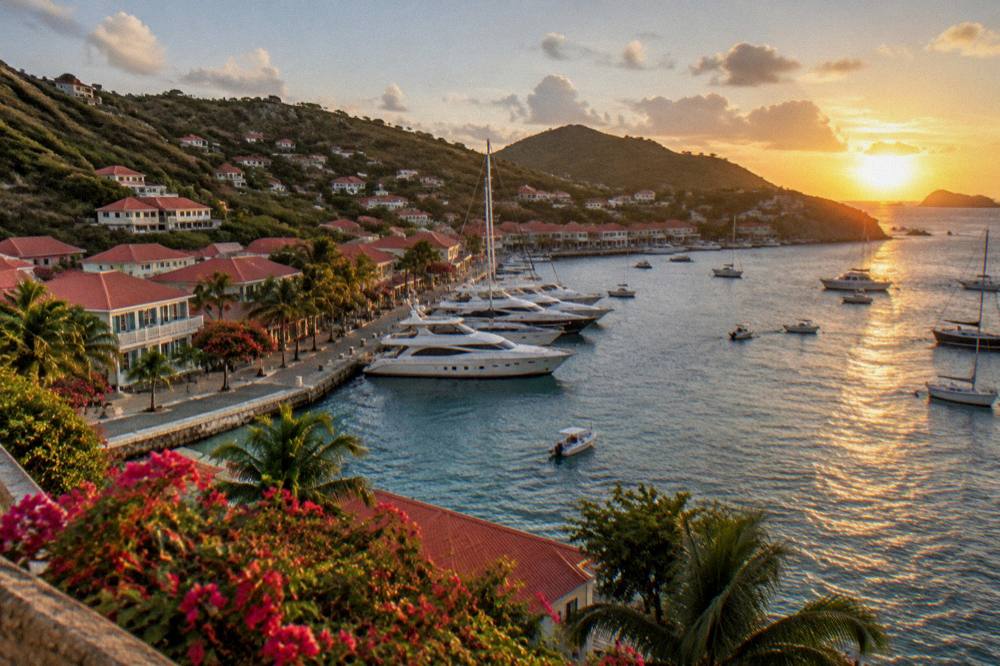
St Barts takes no long-haul jet, prints its local costs in euros, runs an autumn closure pattern across much of its hotel stock, and concentrates everything within about 21 square kilometres, so the effort goes into the arrival and the booking, not into moving around once there; the car question, the closure calendar and the ferry connection are the three planning items that decide whether the island fits a given week. On transport within the island, driving is on the right, roads are narrow and steep with a 50 km/h island-wide limit and 30 km/h in Gustavia and Saint-Jean, and rental counters at the airport include Avis, Budget and Hertz alongside local agencies and Mini Moke operators. The do you need a car question is answered in its own guide.
The closure pattern is the timing trap. A visit between late August and mid-October meets an island in its deepest annual pause, with properties reopening in waves through late October and into November; a villa, of which the island has a large market, stays available year-round and is the standard workaround. On the money side, the only figure that is both fixed and public is the tourist tax, a taxe de séjour collected by accommodations under the collectivity's code, and even that is paid through the lodging provider rather than at the border.
| Planning Item | What To Know |
|---|---|
| Arrival | Via St Martin, small plane from SXM, SFG, PTP, SJU or ANU, or ferry |
| Driving | Right side, 50 km/h limit, 30 km/h in Gustavia and Saint-Jean |
| Rental counters at SBH | Avis, Budget, Hertz, local agencies, Mini Mokes |
| Hotel season | Many close in autumn, reopen mid-October to early November |
| Currency | Euro; card payment widely accepted |
| Entry | Passport, outside Schengen, onward ticket needed |
Time is the hidden line item. The ferry needs a passport, a check-in window of about 45 minutes and a crossing of about 45 to 60 minutes depending on the operator; the flight needs a connection through a gateway airport. Whichever way it is sliced, arriving on St Barts costs half a day more than arriving on an island with a jet runway, and leaving costs the same again.
So Which Should You Choose For Your Trip?
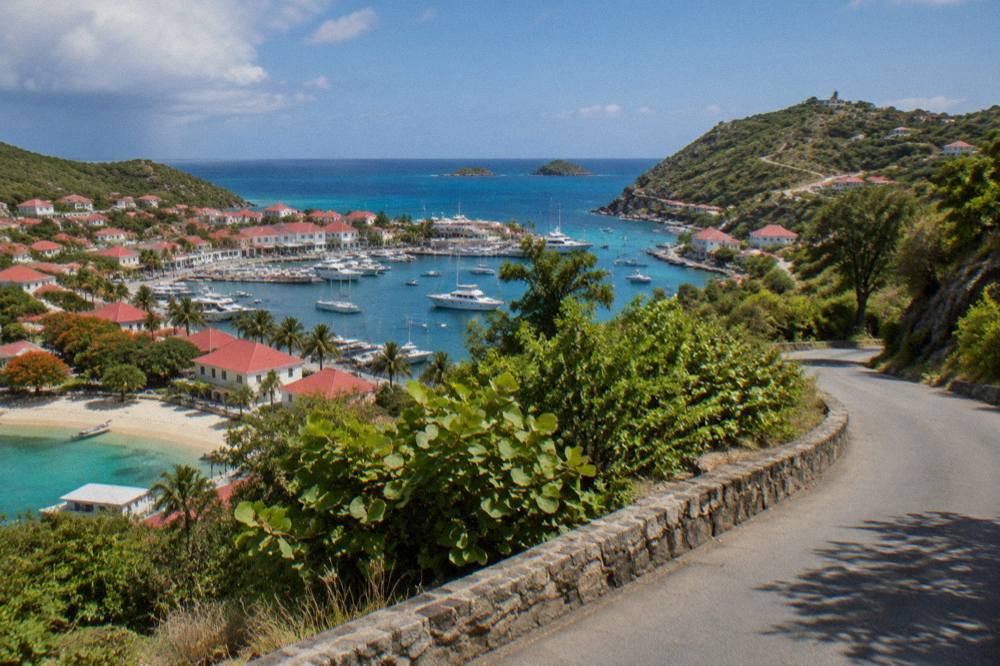
Choose St Barts if the draw is a small French island with public beaches, a harbour capital, a boat-based rhythm and a set of day sails from St Martin, and accept the 646-metre runway, the ferry or hop connection and the autumn closure pattern as the terms; choose a larger resort island if the priority is a single property stay with direct wide-body access, because St Barts structurally cannot offer that and does not try to. The decision is honest at that level of simplicity. St Barts is not competing on scale, spa floors or nonstop flights; its tourism committee sells beaches, Gustavia and the water, and the island's own rules, from the jet-ski ban to the tender-only cruise arrivals, cap exactly the kind of volume that a big resort island is built for.
A useful test is the day plan. If the ideal day is a walk from a quay to a public bay, lunch, and an afternoon on or under the water inside a marine reserve, the French island matches it almost exactly, and the things to do in St Barts overview maps the whole set. If the ideal day is built around one property and its grounds, with excursions as occasional variation, the bigger island is the better fit and no amount of St Barts charm changes the physics of a 21-square-kilometre island.
| If You Want | Better Fit | Why |
|---|---|---|
| Public beaches with no hotel gate | St Barts | Every beach is public |
| Direct long-haul arrival | Larger island | No jet lands at SBH |
| A boat day to a neighbouring island | Either, differently | St Barts boat trips sail from St Martin |
| Motorised water sports | Larger island | Reserve bans jet skis and towed sports |
| A walkable harbour capital | St Barts | Gustavia sits on its quay |
| One resort base for the week | Larger island | St Barts is a multi-bay island |
For the in-between option, splitting a stay between St Martin and St Barts, the St Barts versus St Martin comparison and the St Martin things to do guide cover the gateway island's side without inventing a single figure for it. The pattern that the ferry corridor makes easy is two or three nights in Gustavia wrapped in nights on St Martin, with a boat day in each direction.
Common Questions About St Barts Versus St Lucia
Is St Barts or St Lucia easier to reach?
St Lucia sits on long-haul routes; St Barts does not, since its 646-metre runway takes only small turboprops in daylight. Every St Barts arrival passes through a gateway, most often St Martin, then a small plane or a ferry crossing of about 45 to 60 minutes.
Are The Beaches On St Barts Public?
Yes. Every beach on the island is public, from Saint-Jean and Gouverneur to Saline, Colombier and Grand Cul-de-Sac, and dogs are banned from all of them under a municipal order cited by the environment agency.
Which Island Is Warmer?
Both are warm year-round. The Meteo-France normals for St Barthelemy, 1991-2020, show mean daily highs from 28.5 C in January to 31.7 C in September, a spread of barely three degrees.
Can You Do St Barts As A Day Trip?
Yes. Every boat tour listed here departs from St Martin or Sint Maarten and visits St Barts, including a per-person group sail to Gustavia, Colombier Beach and Ile Fourchue, running 12 May to 31 August 2027 on its listing.
Do Hotels On St Barts Close In Autumn?
Many do. A recurring pattern closes much of the hotel and restaurant stock in the autumn low period, with reopenings in waves between mid-October and early November; villas stay available year-round. Check each property's own page before booking.
Is St Barts Part Of The Schengen Area?
No. St Barts is a French overseas collectivity that sits outside Schengen, so a Schengen visa does not authorize entry and ETIAS, which is not live, does not govern arrival. Check your own government's travel advice for document rules.
The honest summary from the St Barts side of the comparison: the French island wins on public beaches, marine-reserve water, a walkable harbour capital and a day-sail corridor from St Martin, and it concedes on arrival simplicity and single-property resort scale. For more on how the island stacks up against its neighbours, see the guides linked above, including St Barthelemy Travel for the rest of the site.