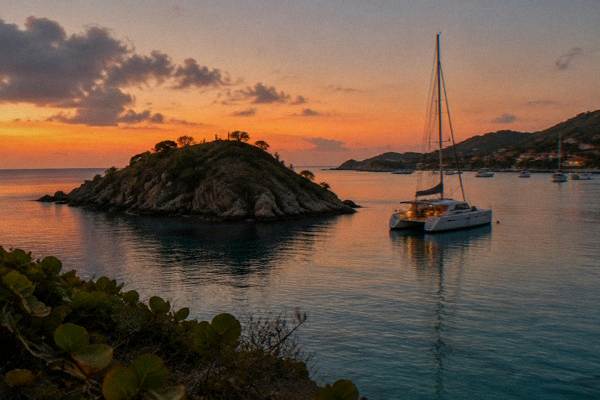
Sailing And Regattas In St Barts
St Barthelemy, better known as St Barts, is one of the Caribbean's defining sailing destinations: a French island of about 21 square kilometres whose harbor capital, Gustavia, fills with yachts each winter and whose regatta calendar draws crews from across the Atlantic.
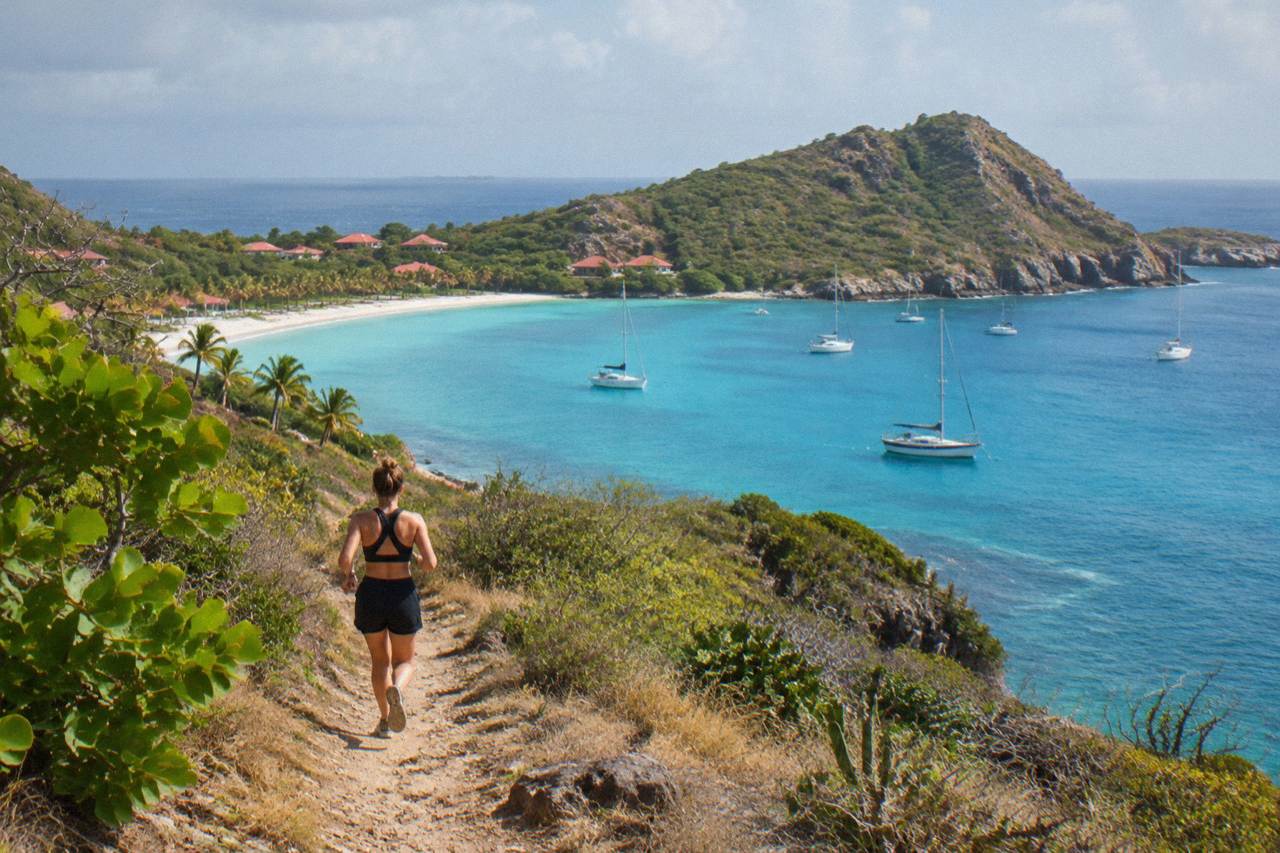
St Barts sailing centers on Gustavia harbor and the surrounding marine reserve, with the Bucket Regatta in mid-March and Les Voiles de St Barth in April as the headline events, and day charters from St Martin or Sint Maarten as the main way to visit the island by boat.
St Barthelemy, written St Barts, is a small French island in the Caribbean that has built its identity around the water. An overseas collectivity of France since 2007, with about 21 square kilometres of hills and roughly 10,700 residents, it is a place where the harbor capital, Gustavia, sets the rhythm: superyachts on the quay in winter, ferries from St Martin at the commercial dock, and a marine reserve that wraps several of the island's best-known bays. Sailing here is not a niche activity but the organizing frame of the island's tourism, its event calendar and its reputation. This guide covers how the sailing scene works, when the regattas run, what rules apply on the water, and how a visitor without a boat of their own can still experience St Barts under sail.
What Is The Sailing Scene Like In St Barts?
The St Barts sailing scene is defined by Gustavia harbor, a natural anchorage that became the island's capital, and by a marine reserve that regulates the bays around it, with the Bucket Regatta in mid-March and Les Voiles de St Barth in April as the two headline sailing events each year. The tourism committee presents the island as a yachting destination first, and the port authority's pages confirm the harbor's role as the center of both commerce and events.
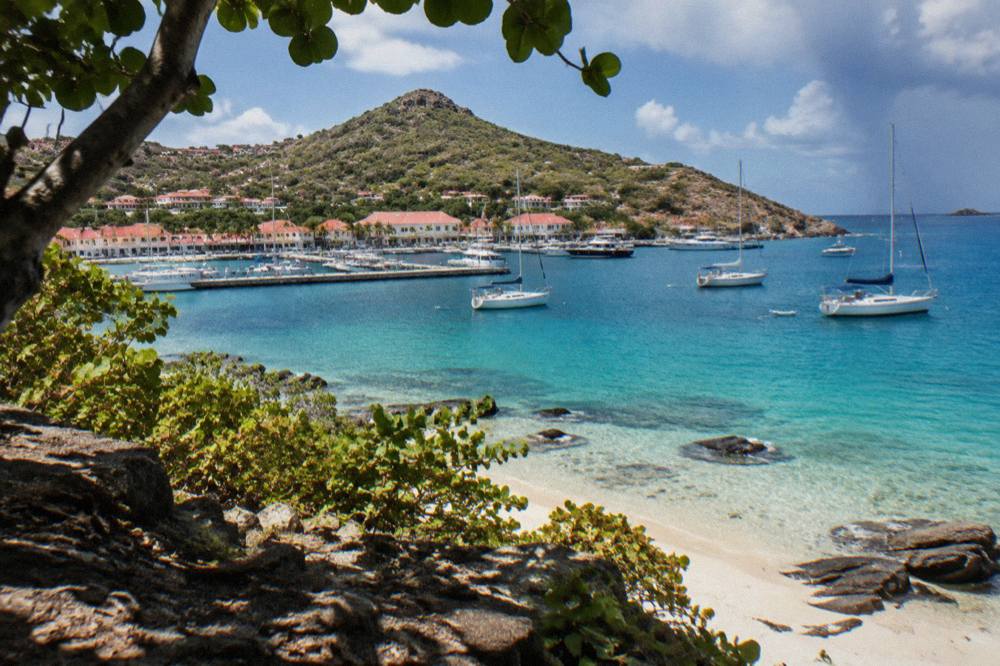
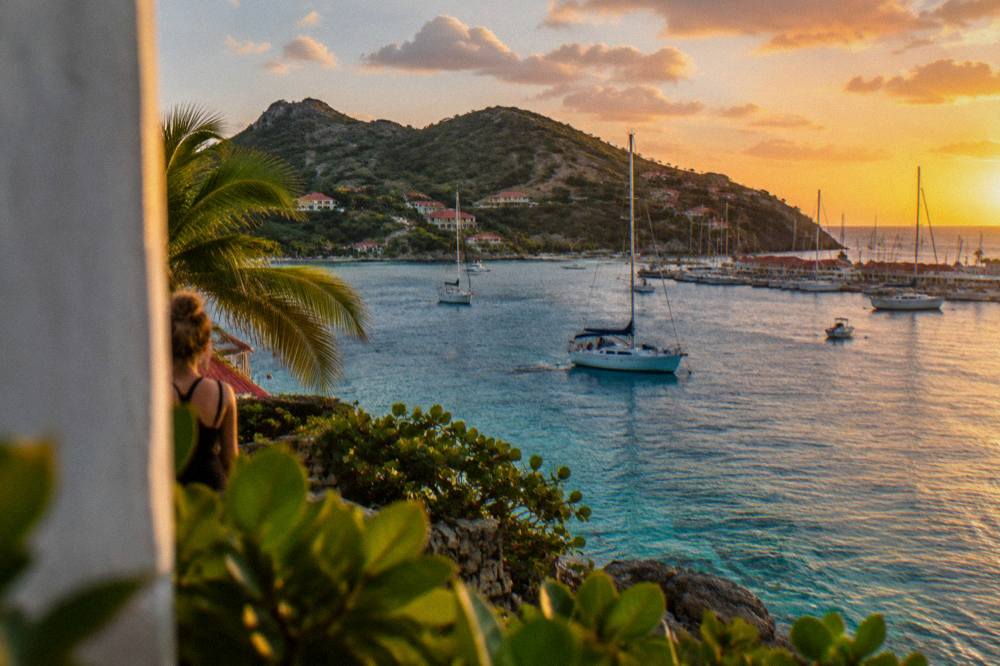
Gustavia wraps around a bay on the leeward side of the island, and nearly everything maritime on St Barts happens within sight of it. The port's own site describes its yachting activity alongside commercial operations: visiting yachts, ferry traffic from St Martin and tender boats from cruise ships that anchor offshore, since there is no cruise pier. The town itself is small, red-roofed and walkable, rising from the quay up the hillside. During the winter season the anchorage and quay fill with vessels, and the port authority's rules govern where and how they tie up.
The second half of the picture is the marine reserve. The Reserve Naturelle Nationale covers five zones around the island, including Colombier Bay and Ile Fourchue, and the environment agency's regulatory-zones page lists the specific rules that apply to every boat entering them. That combination, a busy harbor town surrounded by strictly regulated quiet water, is what shapes a St Barts sailing trip.
For visitors who arrive without a boat, the sailing experience comes in two forms: watching or joining the regatta weeks, and booking a day charter or sail from St Martin or Sint Maarten across the Saint Barth channel. There is no bookable sailing product based on St Barts itself; every tour listed here departs from the Dutch or French side of St Martin. That fact surprises people who assume a sailing destination would sell sailing trips from its own harbor, and it is worth planning around.
When Do The Regattas Take Place In St Barts?
St Barts hosts two major sailing events each season: the St Barths Bucket Regatta in mid-March and Les Voiles de St Barth in April, both based out of Gustavia and both drawing international racing fleets. The Bucket's organiser lists mid-March for 2027, while Les Voiles runs in April with 2027 dates not yet confirmed; the 2026 edition ran 12 to 18 April. Both events fill the harbor with spectator boats and racing yachts.
The Bucket Regatta is the island's flagship superyacht event, sailed by large performance yachts in a format that pairs serious racing with a social program ashore. The organiser's own pages carry the event details, and the 2027 edition appears there in mid-March, with the site itself showing two slightly different date sets on different pages, which is why this guide prints only "mid-March". Around the harbor, the event means a quay lined with yachts and a week in which accommodation across the island, from Gustavia hotels to the wider hotel market, is at its tightest.
Les Voiles de St Barth follows a few weeks later in April. It is a broader regatta, with classes ranging from maxis to smaller racing boats, and it is staged from the same harbor infrastructure. Because the 2027 dates were unconfirmed as of October 2026, April is as precise as any honest guide can be; anyone planning around it should check the event's own channels closer to the time.
The regatta calendar sits deliberately inside the dry, reliably breezy end of the island's year. The Meteo-France normals, 1991-2020, show mean daily highs of 29.0 C in March and 29.8 C in April, with 41.4 mm and 50.9 mm of rain respectively, well below October's 135.6 mm. Hurricane season runs 1 June to 30 November with its peak mid-August to mid-October, so the spring racing schedule sits safely outside it.
| Event | When | Status of 2027 dates | Basis |
|---|---|---|---|
| St Barths Bucket Regatta | Mid-March | Organiser shows mid-March (two date sets on its pages) | Organiser site |
| Les Voiles de St Barth | April | Not confirmed; 2026 ran 12 to 18 April | Organiser reporting |
| St Barth Music Festival | 8 to 18 January 2027 | Confirmed, 43rd edition | Organiser site |
| St Barth Gourmet Festival | 9 to 15 November 2026 | Confirmed | Festival press release |
| New Year's Eve fireworks, Gustavia | Late December | Details not confirmed | No confirmed source |
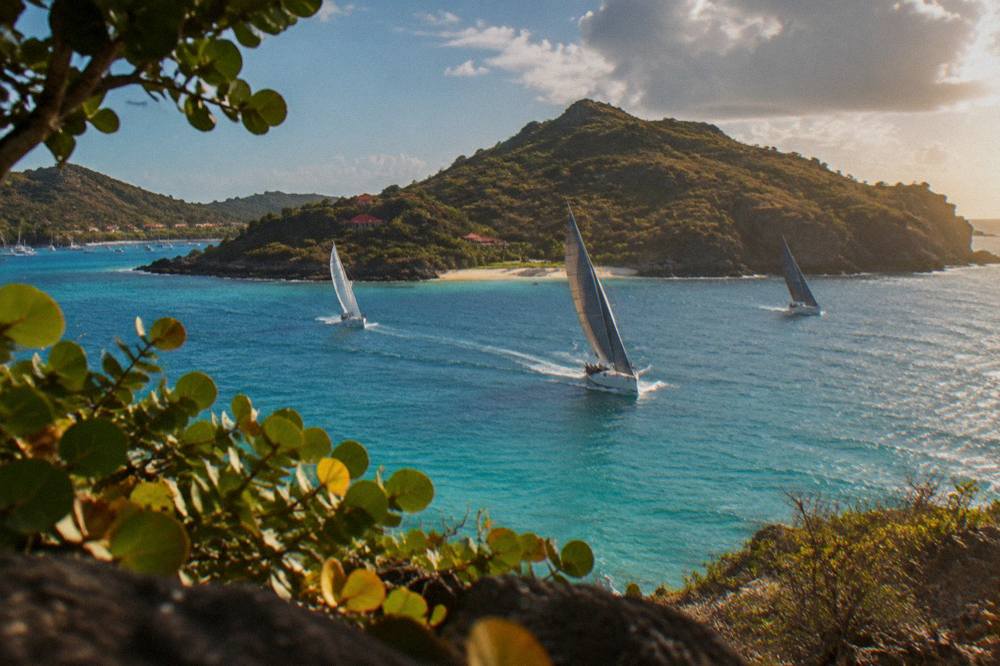
Regatta weeks are also the weeks when the harbor is at its most photogenic from land. The headlands around Gustavia, and the viewpoints described in the sunset and viewpoint guides, look straight down on the race course, so a visitor does not need to be on the water to follow the action.
For anyone who wants to be on the water rather than watching from the quay, the bookable options all leave from the other side of the channel. These three are the core St Barts sailing day trips:
Can You Sail To St Barts From St Martin On A Day Trip?
Yes, and a day sail from St Martin or Sint Maarten is the standard way to visit St Barts by boat: private charters and one per-person group sail cross the channel and stop at Colombier Beach and Ile Fourchue before entering Gustavia. Every bookable product departs from the St Martin side, from ports such as Simpson Bay, Grand Case or Oyster Bay area marinas, never from St Barts itself. The crossing can be rough, and operators do not promise otherwise.
The geography explains the setup. St Barts has no large marina for charter fleets and its airport takes only small turboprops, so the practical base for boat tourism is the neighbouring island, which has both the marinas and the big international airport at SXM. A typical day trip crosses in the morning, spends time in the protected bays north and west of St Barts, calls at Gustavia around midday, and returns in the late afternoon. The marine reserve rules in Colombier and Fourchue bays, covered below, shape where these boats can anchor and how they behave once there.
The per-person option listed here is a group sail and snorkel trip that visits Gustavia, Colombier Beach and Ile Fourchue in one day. Its listing shows operating dates only from 12 May to 31 August 2027, which makes it a summer product rather than a winter one; anyone travelling in the March or April regatta window should look at the private options instead. Five of the six bookable St Barts products are private charters priced per group, which is the dominant model on this route.
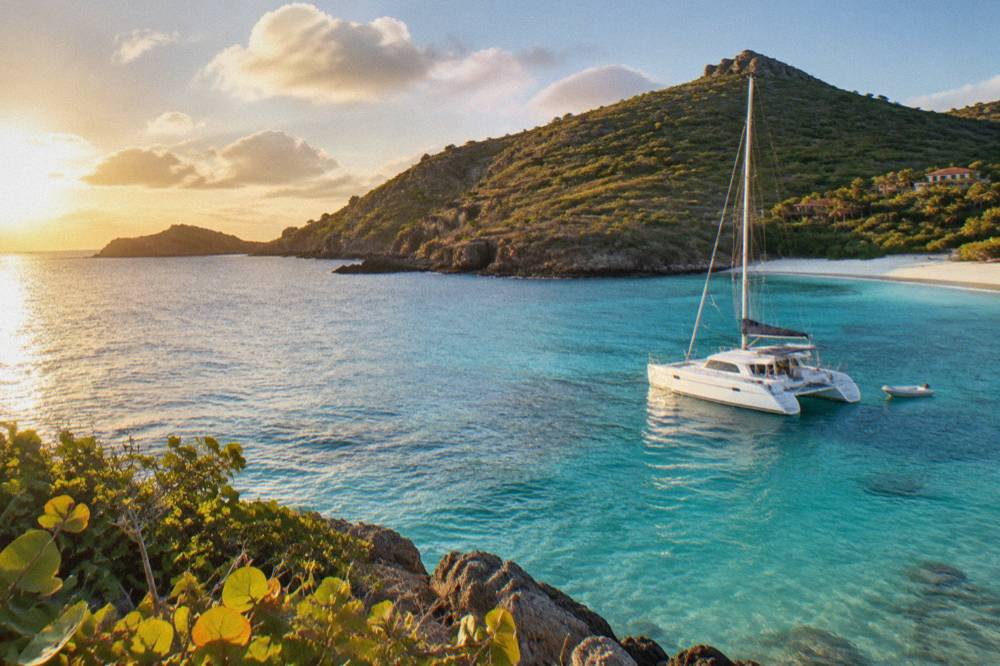
The featured charter on this site, the Private Charter from St Martin to St Barth, is a full-day private trip for up to eight guests departing from the Dutch side. It suits families or groups who want the itinerary shaped around them: more time snorkelling, a longer Gustavia stop, or a slow lunch stop in a reserve bay. See the live listing
If shaping the day around your group sounds right, book a private day charter.
For visitors who are already planning their logistics around the crossing, the ferry operators and schedule guide and the SXM airport to ferry guide cover the scheduled alternatives: Great Bay Express from Philipsburg and Voyager from Marigot, both running to Gustavia in about 45 to 60 minutes on the operators' own figures. The ferry is transport; a charter is the day out. Many travellers do one in each direction.
| Way to reach St Barts by water | Departure point | Who it suits | Notes from the operators |
|---|---|---|---|
| Private charter or sail | St Martin or Sint Maarten ports | Groups, families, anyone wanting a full day | Priced per group; up to 8 or 10 guests depending on the boat |
| Group sail and snorkel | St Martin or Sint Maarten | Solo travellers and couples | Per-person price; listing shows 12 May to 31 August 2027 |
| Great Bay Express ferry | Philipsburg, Sint Maarten | Day visitors on a schedule | About 45 minutes; passport required |
| Voyager ferry | Marigot, St Martin | Day visitors on the French side | About 50 to 60 minutes |
What Rules Apply When Sailing In The St Barts Marine Reserve?
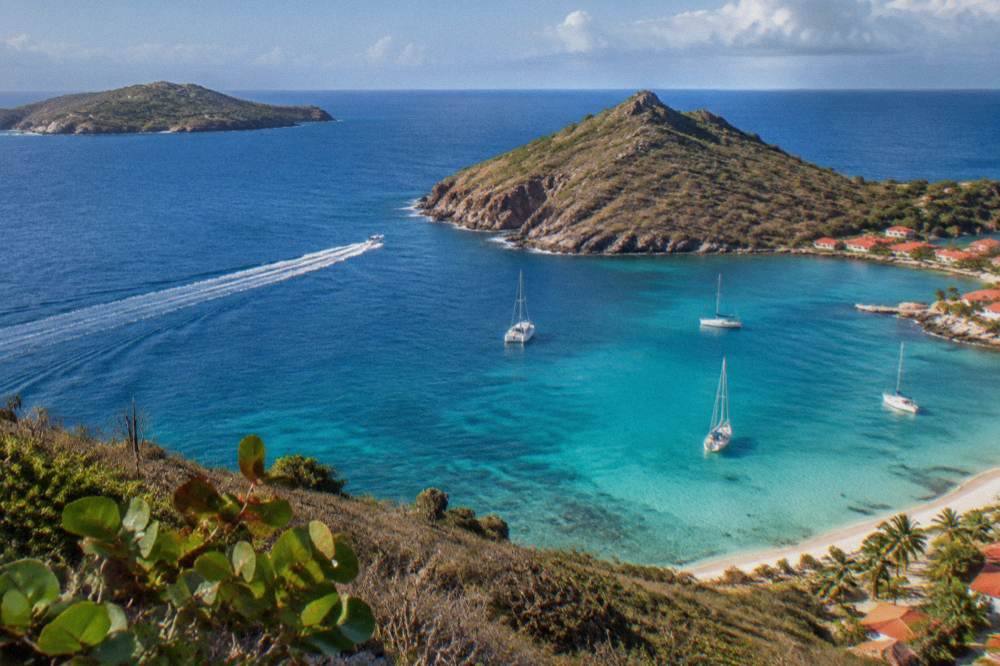
The St Barts marine reserve imposes a 5-knot speed limit inside its zones, bans jet skis, seabobs and towed water sports, prohibits anchoring restrictions in some areas, bars dogs from the beaches and forbids touching turtles, corals or any protected species, according to the environment agency's regulatory-zones page. The reserve lists 23 dive sites and covers five zones including Colombier Bay and Ile Fourchue, with ecological mooring buoys preferred over anchoring.
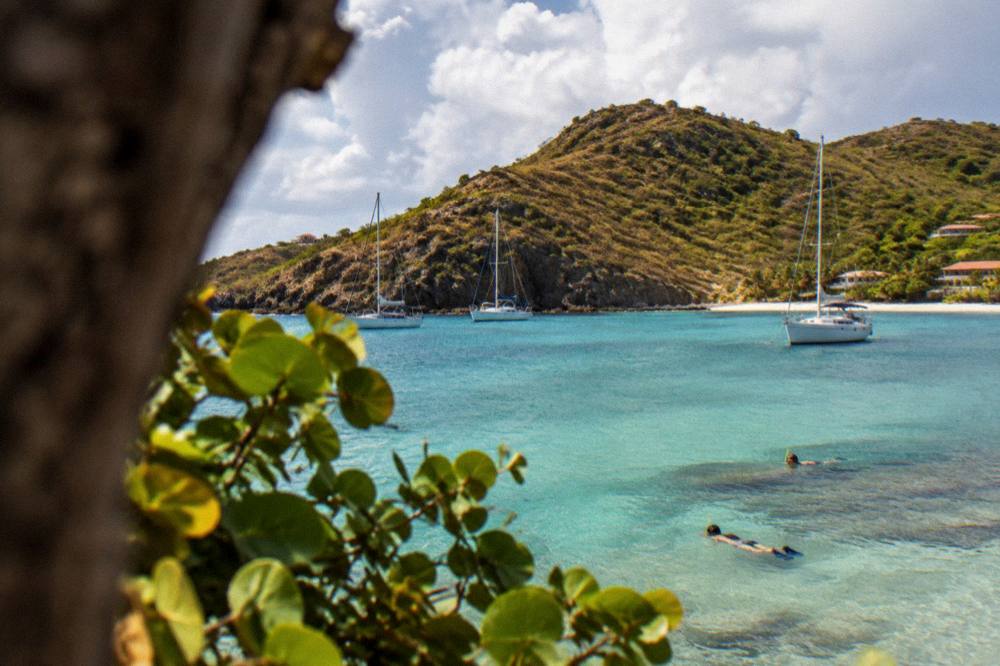
These rules matter to anyone chartering, because the prettiest stops on a St Barts day trip are inside the reserve. In Colombier and Fourchue bays the environment agency's page sets a limit of no vessels over 25 meters, asks boats to use the ecological mooring buoys rather than drop anchor, and caps how long a boat may stay on a buoy. Collecting anything, sand, shells, coral or crustaceans, is banned, as is feeding or chasing marine life. Green and hawksbill turtles are common in the waters around Colombier and the Grand Cul-de-Sac lagoon, and disturbing them, in the water or on the beach, is prohibited.
The island-wide dog rule is stricter than many visitors expect: dogs are banned from all beaches across St Barts under a long-standing municipal order, even on a leash, so a boat dog stays on the boat. Drones are also restricted in and near the reserve without prior authorization, which affects sailors who travel with one for filming.
| Rule | Where it applies | Source |
|---|---|---|
| 5-knot speed limit | All reserve zones on the water | Environment agency regulatory-zones page |
| No jet skis, seabobs, towed sports | Reserve zones | Environment agency regulatory-zones page |
| No touching turtles, corals, protected species | Island-wide waters | Environment agency regulatory-zones page |
| No dogs on beaches | All beaches island-wide | Municipal order, long-standing |
| Mooring buoys preferred, no vessels over 25 m | Colombier and Fourchue bays | Environment agency regulatory-zones page |
| Drones restricted without authorization | In and near reserve zones | Environment agency regulatory-zones page |
For a charter guest the practical effect is simple: the boat slows down as it enters the zone, ties to a buoy rather than anchoring at Colombier, and the crew will be strict about not standing on coral or chasing a turtle for a photo. The nature reserve guide covers the zones in more detail for anyone planning independent time on or under the water.
Where Do Yachts Anchor And Moor Around St Barts?
Visiting yachts anchor off Gustavia or take a berth or mooring on the harbor quay, with the bulk of the fleet concentrated in the harbor itself during the winter season and the regatta weeks, while the reserve bays of Colombier and Ile Fourchue serve as day anchorages with ecological mooring buoys rather than overnight stops for most boats. The port authority governs arrivals, and no public cruise or yacht schedule is published.
Gustavia harbor is a natural anchorage that has been shaped into a working port: ferry berths and a commercial quay on one side, visiting yacht berths and anchorage space on the other. The port's own pages cover its rules and contacts rather than a published arrivals list, so there is no public schedule of which yachts call when. What is documented is the tender operation for cruise ships: vessels anchor outside the harbor and land passengers by tender boat near the town center, because there is no pier capable of docking a cruise ship.
Outside the harbor, the picture is quieter. Colombier Bay, on the island's northwest, is a day anchorage inside the reserve, reached under the 5-knot rule and used via its buoys. Ile Fourchue, the small uninhabited island off the north coast, is likewise a reserve zone with mooring buoys and the same 25-meter vessel limit. Both are staples of the charter day-trip itinerary. The rest of the coast is a mix of public beaches and headlands; all beaches on St Barts are public, however steep the access.
What Is A Private Charter To St Barts Actually Like?
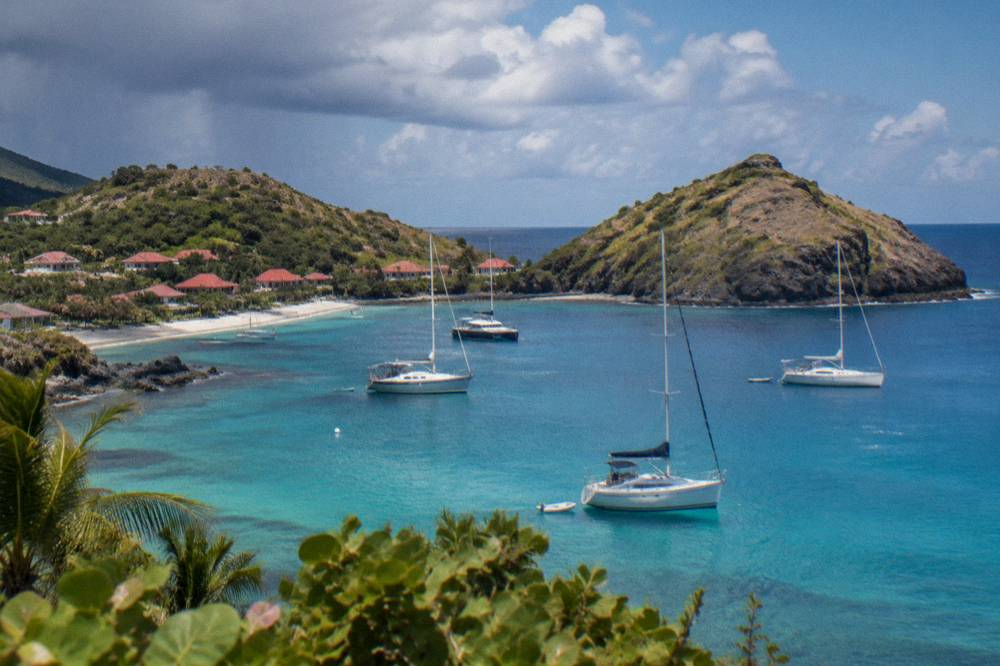
A private charter to St Barts is a full-day, per-group product: the boat, its captain and crew, fuel and itinerary are yours for the day, typically for 6 to 8 hours with a group of up to 8 or 10 depending on the vessel, crossing from a St Martin or Sint Maarten port in the morning and returning by evening. Five of the six bookable St Barts products work this way, and the itinerary usually pairs a reserve bay snorkel stop with time ashore in Gustavia.
The day has a reliable shape. The crossing takes under an hour on most departures, the first stop is usually Colombier or Fourchue for swimming and snorkelling inside the reserve, and the middle of the day is spent in Gustavia, where the harbor puts everything within a short walk: the shell of Fort Gustaf, the shops described in the shopping guide, and the beach at Shell Beach (Grand Galet) just over the headland. The return leg runs in the late afternoon.
What varies is the boat and the emphasis. The trip list spans a classic sailboat charter, a motor yacht style private charter, a Nikki Beach oriented trip that pairs the crossing with the beach club experience, and a two-day, one-night catamaran itinerary that turns the day trip into a short cruise with an overnight stop. Prices, ratings and exact durations all render from each product's live listing rather than from fixed figures, so comparing the options on their own pages is the honest way to choose.
The two-day catamaran deserves its own word because it solves the biggest complaint about the day trip: the Gustavia stop feels short. With a night aboard, the evening harbor and a sunrise swim in a reserve bay become part of the trip, and the second day adds a second bay before the return crossing. Its listing prices the whole boat for up to four guests, which positions it for couples and small families rather than large groups.
| Bookable product type | Group model | Typical shape of the day | Best for |
|---|---|---|---|
| Private sailboat charter | Per group, up to 8 | Sail across, reserve bay stop, Gustavia ashore time | Sail enthusiasts |
| Private motor charter | Per group, up to 8 or 10 | Fast crossing, two stops possible, Gustavia lunch | Families, mixed groups |
| Nikki Beach charter | Per group | Crossing plus beach club stop | Groups wanting a scene |
| 2-day catamaran | Per group, up to 4 | Overnight cruise with two days of stops | Couples, small families |
| Group sail and snorkel | Per person | Shared day trip, Gustavia, Colombier, Fourchue | Solo travellers, couples |
How Does The Weather Shape A St Barts Sailing Trip?
St Barts is warm enough to sail year-round, with Meteo-France normals from 1991 to 2020 showing mean daily highs from 28.5 C in January to 31.7 C in September, but the season is defined by rain and hurricane risk: October is the wettest month at 135.6 mm against February's 38.4 mm, and hurricane season runs 1 June to 30 November, peaking mid-August to mid-October. The sea stays warm, about 26 C in winter to about 29 C from August to October.
The charter and regatta calendar follows that logic. The Bucket in mid-March and Les Voiles in April sit in the driest, most reliably breezy part of the year. The Gourmet Festival in November marks the reawakening of the season after the autumn quiet, when hotels and restaurants that close each year reopen in waves between mid-October and early November. The one per-person group sail's listing dates, 12 May to 31 August 2027, sit squarely in the quieter shoulder and summer window, when private charters still run but the harbor is far less full.
The crossing itself is the other weather factor. The channel between St Martin and St Barts can be choppy, and operators and ferry lines alike warn that sailings depend on conditions; no operator promises a smooth crossing, and this guide will not either. Anyone prone to seasickness should plan the day around the morning departure, when conditions are more often settled.
| Month | Mean daily high (C) | Rain (mm) | Season note |
|---|---|---|---|
| January | 28.5 | 52.6 | High season; Music Festival 8 to 18 Jan 2027 |
| March | 29.0 | 41.4 | Bucket Regatta, mid-March |
| April | 29.8 | 50.9 | Les Voiles de St Barth |
| July | 31.2 | 80.4 | Hurricane season under way |
| September | 31.7 | 96.9 | Peak hurricane period; island quiet |
| October | 31.4 | 135.6 | Wettest month; hotels reopen mid-month |
How Do You Plan A Sailing Trip Around The Regatta Weeks?
Plan a regatta-week trip to St Barts by fixing accommodation and transport long before the event: the Bucket in mid-March and Les Voiles in April concentrate demand in Gustavia and the surrounding areas, ferries and flights from St Martin fill, and the bookable charter day trips from St Martin or Sint Maarten are themselves in demand as spectator platforms. Confirm 2027 regatta dates with the organisers before booking anything non-refundable, since Les Voiles dates were not confirmed.
Accommodation is the first constraint. The island's hotel stock skews small and upscale, and the autumn closure pattern means the season is fully open by regatta time, with properties such as Eden Rock, Cheval Blanc and Le Guanahani, becoming Airelles Le Guanahani on 1 November 2026, all operating. The 5-star hotels guide and the boutique hotels guide map the options; villas, managed by firms such as WIMCO, Sibarth and St Barth Properties, are the other main route and stay available year-round.
Transport is the second. Flights into St Martin, then the small plane or ferry across, are covered in the how to get to St Barts guide; the short SBH runway takes only small turboprops in daylight, so late arrivals are not possible. During regatta weeks, the day charters across the channel are best booked ahead rather than arranged on arrival, and that is doubly true for a private boat, since the fleet available for day work shrinks when regatta logistics absorb it.
The third piece is what to do ashore between races. Gustavia carries the event social life, and the harbor headlands carry the viewing. The New Year's Eve guide covers the other big harbor spectacle of the season, the late-December fireworks over the quay, which like the regattas turns the anchorage into the show.
For the on-the-water options, the same three products that anchor this guide are the ones to compare for a regatta-week or any-season sailing day:
One last planning note: pair the sailing day with a realistic view of what the island is. St Barts is about 21 square kilometres of hills, and everything described here, the harbor, the reserve bays, the regatta village, sits within a short drive of everything else. A morning on the water and an afternoon in Gustavia is not a compromise itinerary; it is the itinerary the island is built around. For more on what fills the shore-side hours, see the things to do in St Barts collection from St Barthelemy Travel.
Common Questions About Sailing In St Barts
When are the St Barts regattas?
The St Barths Bucket Regatta runs in mid-March and Les Voiles de St Barth runs in April. The Bucket's organiser shows mid-March for 2027; Les Voiles 2027 dates were not confirmed, and the 2026 edition ran 12 to 18 April.
Can you charter a boat to St Barts for the day?
Yes. Private charters and one per-person group sail cross from St Martin or Sint Maarten, stop in the reserve bays such as Colombier and Ile Fourchue, and call at Gustavia before returning the same day. Every bookable product departs from the St Martin side, never from St Barts itself.
Where do sailing boats anchor at St Barts?
Most boats anchor off Gustavia or take a harbor berth, while Colombier Bay and Ile Fourchue serve as day anchorages inside the marine reserve, where ecological mooring buoys are preferred over anchoring and vessels over 25 meters are not permitted.
Can you anchor at Colombier Beach?
Colombier is inside the marine reserve, where the environment agency prefers ecological mooring buoys over anchoring and applies a 5-knot speed limit. Boat-based visitors swim and snorkel there on day trips under these rules.
Is the crossing from St Martin to St Barts rough?
It can be. Operators and ferry lines both state that sailings depend on sea conditions, and no operator promises a smooth crossing. Conditions vary day to day and the crossing is about 45 to 60 minutes on the operators' figures.
What is the best time of year for St Barts sailing?
The March to April window pairs the Bucket Regatta and Les Voiles with the driest part of the year: Meteo-France normals, 1991-2020, show 41.4 mm of rain in March and 50.9 mm in April, against October's 135.6 mm. Hurricane season runs 1 June to 30 November with its peak mid-August to mid-October.