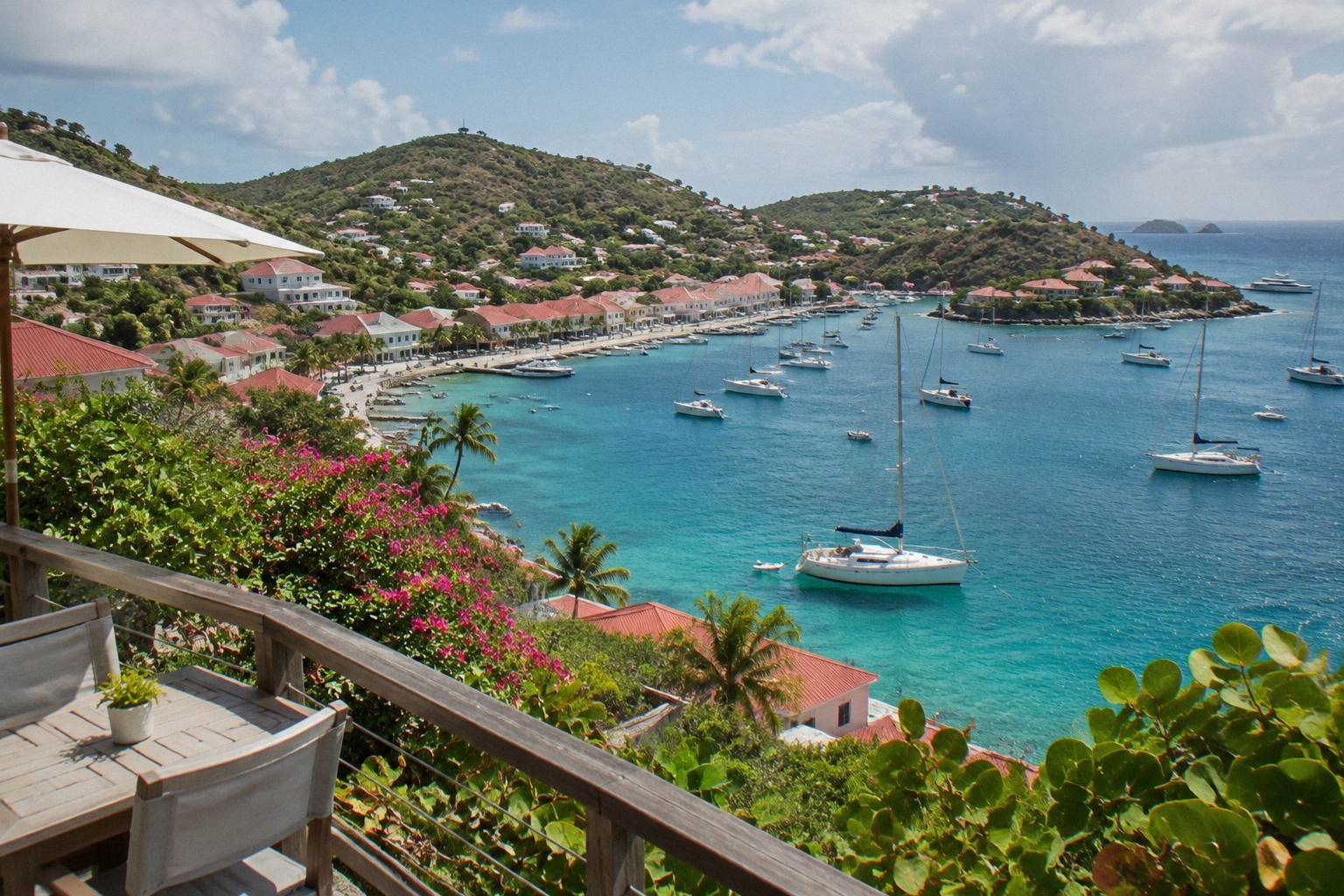
Language In St Barts
St Barthelemy, usually written St Barts, is a French overseas collectivity in the Caribbean where French is the official language and English is widely spoken in shops, hotels and around the harbour.
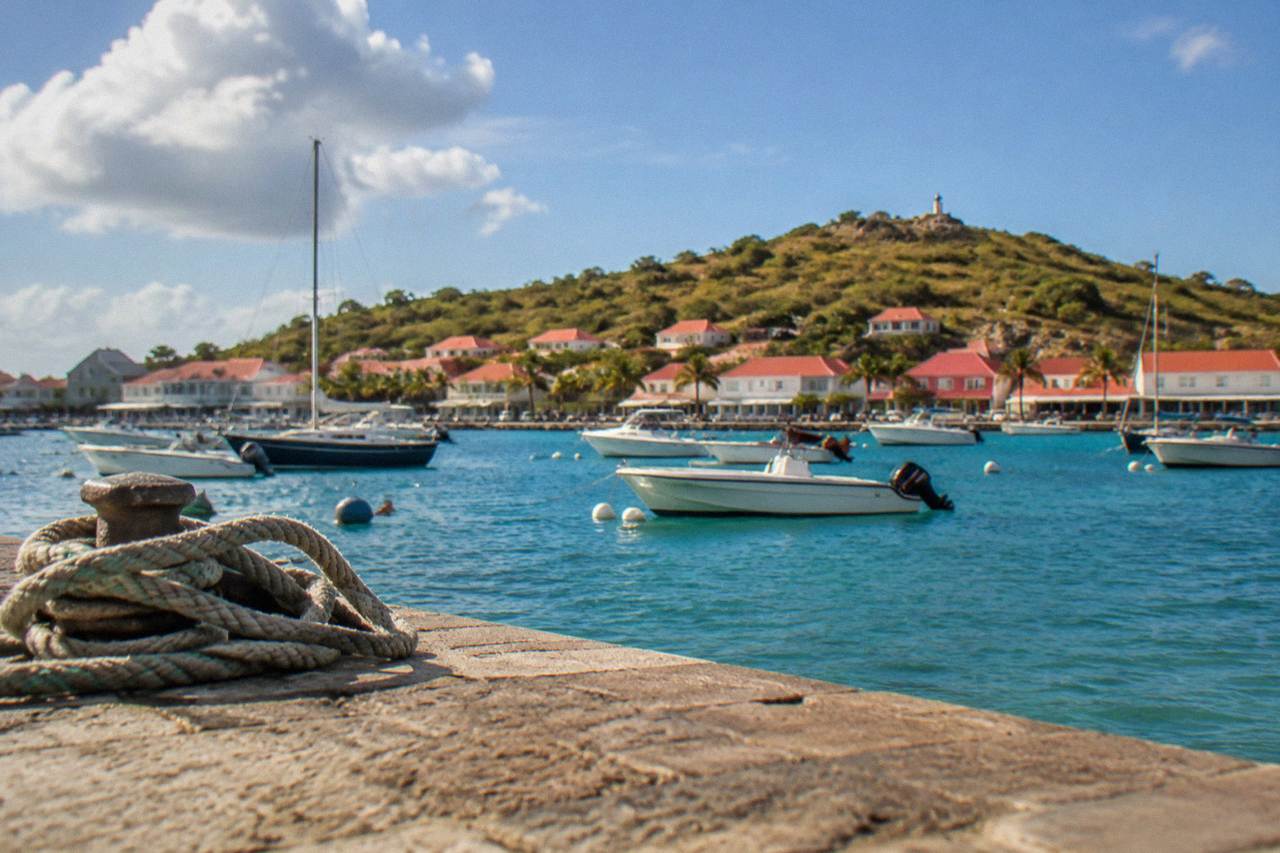
French is the official language of St Barts, an overseas collectivity of France since 2007, and English is widely spoken across the island's tourism businesses, restaurants and shops, so English-speaking travellers can get by comfortably while a few French greetings are appreciated.
St Barthelemy, written St Barts in everyday use, is a French overseas collectivity in the Caribbean, and that political fact settles the language question before anything else: French is the official language of the island's administration, schools and signage. In practice the island is one of the most bilingual corners of the French Caribbean, because the tourism committee states plainly that English is widely spoken, and the harbour economy of Gustavia runs on visitors from North America year after year. This guide, from the editorial team behind St Barthelemy Travel, covers language in St Barts: where French dominates, where English carries the day, the local vocabulary that survives in place names, and the small courtesies that make transactions smoother in shops and restaurants.
The short version, and the reason this page exists: you do not need French to enjoy St Barts, but you will hear it, read it and occasionally need to decode it, from ferry announcements to bakery counters to the paperwork at a villa rental. A handful of phrases goes a long way, and understanding why the island speaks the way it does explains a lot about its place between the French and Dutch halves of neighbouring St Martin. The broader question of what language they speak in St Barts has its own answer page on this site; this guide goes wider, into pronunciation, street names and the island's linguistic layers.
What Language Do They Speak In St Barts?
French is the official language of St Barts, used in government, schools, courts and official signage, while English is widely spoken across the island's hotels, restaurants, shops and tour operators, according to the tourism committee. A local French Antillean Creole is also spoken regionally, and many residents switch between all three depending on context, so an English-speaking traveller encounters little friction in practice.
The island's status explains the arrangement. St Barts has been an overseas collectivity of France since 2007, when it separated from Guadeloupe's administrative structure, and French law and language follow from that status. The population is about 10,700 residents on roughly 21 square kilometres, and French is the language of daily life for them: the territorial council works in French, school instruction is in French, and the island's official website publishes in French first.
English's strength on St Barts is economic and geographic rather than official. The tourism committee's own material is published in English as well as French, hotel and villa staff routinely answer the phone in English, and the island sits a short hop from St Martin and Sint Maarten, where English dominates the Dutch side around Philipsburg. Decades of North American visitors have made bilingual service a baseline expectation in the visitor economy, not a bonus.
A third layer exists: Saint-Barthelemy French Antillean Creole, a regional variety spoken in the island community. It appears in casual speech and in some family and fishing contexts, and it is distinct from metropolitan French in vocabulary and rhythm. Travellers are unlikely to need it, but hearing it is part of the island's sound, and a few of its words survive in place names and boat talk around the harbour.
| Language | Status On St Barts | Where You Will Hear Or Use It |
|---|---|---|
| French | Official language, per the island's status as a French collectivity | Signage, administration, schools, menus, local radio, everyday resident speech |
| English | Widely spoken, per the tourism committee | Hotels, villas, restaurants, shops, tour operators, marina services |
| French Antillean Creole | Regional spoken variety | Resident conversation, some place names and fishing vocabulary |
| Swedish traces | Historical, not spoken | Street names and architecture in Gustavia from the Swedish period |
Do You Need To Speak French To Visit St Barts?
No, French is not needed for a visit to St Barts, because English is widely spoken in the island's hotels, restaurants, shops and excursion businesses, and the tourism committee publishes its own visitor information in English. Road signs and menus lean French, so a translation app covers the gaps, and basic greetings in French are received warmly even where English would have worked.
The practical texture of a trip bears this out. Arrival is the most French-heavy moment for many travellers: whichever way you come, by small plane through St Martin or by ferry, announcements and signage follow French conventions, and the ferry operators' check-in staff handle both languages. Once on the island, the visitor-facing economy flips to whatever the guest speaks. Villa managers, hotel front desks and the international rental brands at Gustaf III Airport operate comfortably in English.
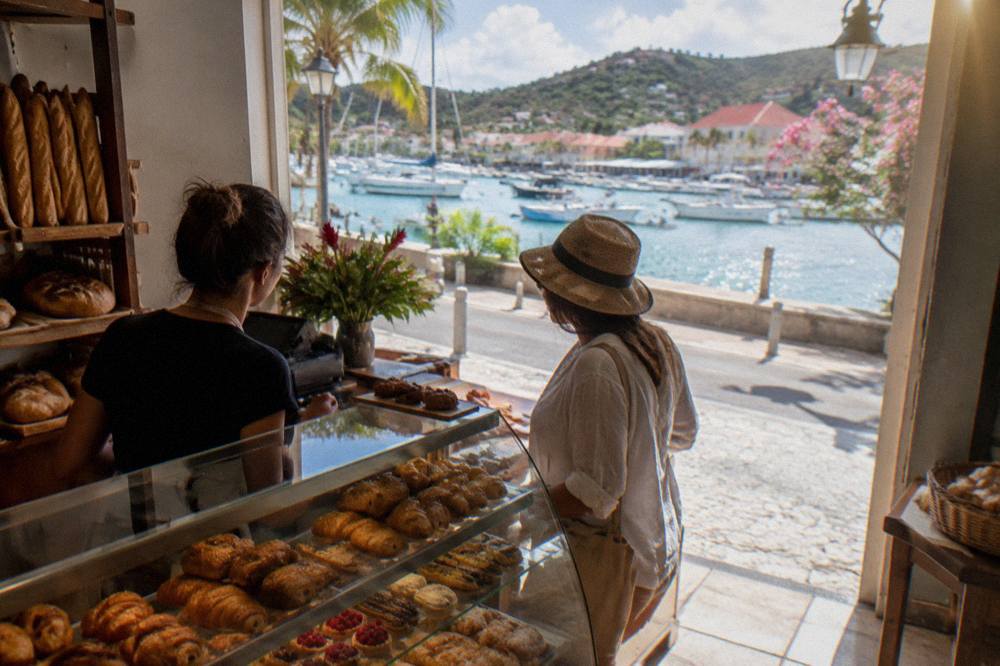
The places where a few French words genuinely help are the ones residents frequent: the bakery counter, the small grocery, the pharmacy, a taxi rank in Gustavia. Service will still switch to English the moment hesitation appears, but opening with "bonjour" is the convention, and skipping a greeting before launching into a request reads as abrupt in a French-speaking community. The pattern is consistent across the French Caribbean: greet first, transact second.
It is also worth knowing what French you will read without needing to speak any. Menus, price tags and shop windows are typically in French, sometimes with English subtitles in tourist areas. Recognising a dozen food and shopping words does most of the work, and a phone camera with live translation handles the rest. Numbers are the one area worth practising, because prices are in euros and a spoken total at a market stall may arrive in French.
What French Phrases Help Most On St Barts?
A short list covers nearly every interaction on St Barts: bonjour and bonsoir for greetings, s'il vous plait and merci for please and thank you, parlez-vous anglais to ask for English, l'addition for the bill, and au revoir when leaving, and using them signals respect in a community whose official language is French. English then takes over, because the island's visitor economy works bilingually.
The greeting deserves emphasis above everything else on the list. In France and its territories, entering a shop without saying bonjour is a real social misstep, and St Barts follows that convention in its French-speaking spaces. Bonjour works from morning through late afternoon; bonsoir replaces it in the evening. Pair it with merci, s'il vous plait and au revoir and you have covered the courtesy loop that matters most.
For logistics, a handful of question frames carry disproportionate weight. Parlez-vous anglais, do you speak English, is the honest opener. Combien costs how much. Ou est, where is, handles directions. Je voudrais, I would like, is the polite way to order anything at a counter. None of this needs perfect pronunciation; effort is the currency, and it is consistently met halfway.
| French | English | When To Use It |
|---|---|---|
| Bonjour / Bonsoir | Hello / Good evening | Entering any shop, restaurant or elevator-sized social space |
| Merci (beaucoup) | Thank you (very much) | Everywhere, repeatedly |
| S'il vous plait | Please | Any request at a counter or table |
| Parlez-vous anglais? | Do you speak English? | Before switching languages |
| Je voudrais... | I would like... | Ordering food or asking for an item |
| Combien? | How much? | Markets and counters with handwritten prices |
| Ou est...? | Where is...? | Directions in Gustavia or on trails |
| L'addition, s'il vous plait | The bill, please | Ending a restaurant meal |
| Au revoir | Goodbye | Leaving any business |
| Excusez-moi | Excuse me | Getting attention politely |
Numbers round out the kit. Prices on St Barts are in euros, and a spoken total at a bakery or snack counter may come in French: un, deux, trois for one through three, dix for ten, vingt for twenty, cinquante for fifty, cent for a hundred. Reading prices is easy since numerals are universal; hearing them is where the practice pays off.
Why Does St Barts Have Swedish Street Names?
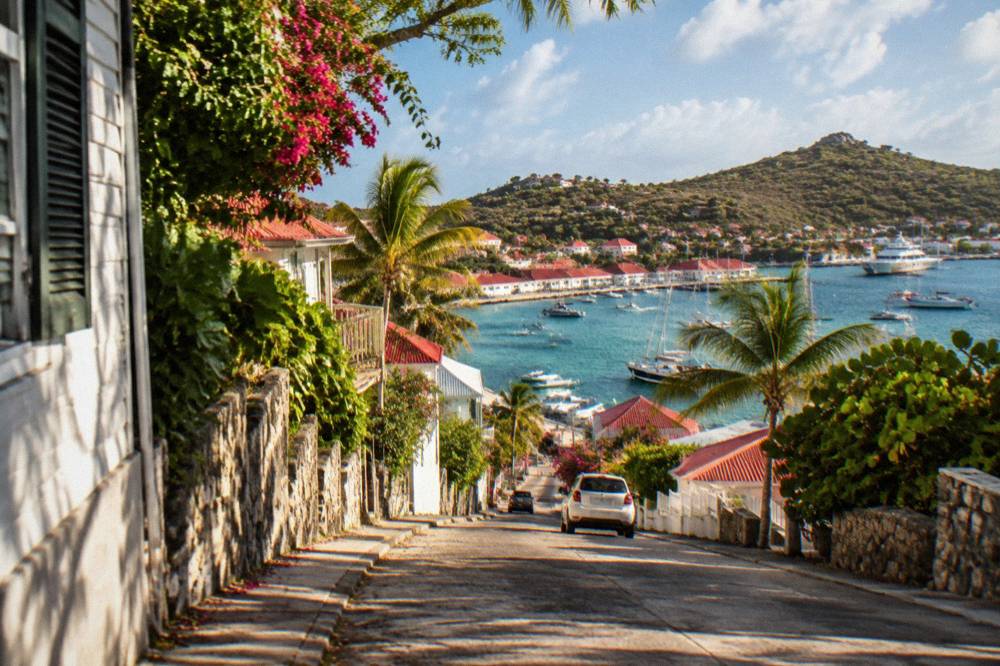
Gustavia's street names and some of its architecture carry traces of a Swedish period in the island's past, before the town returned to French administration, and the name Gustavia itself honours the Swedish crown. The Swedish era left no living language behind, but its names survive in the harbour capital's signage and map, which is why a French island reads partly Scandinavian on paper.
The detail matters for orientation more than conversation. Walking Gustavia, a visitor meets street names and harbour references that are neither French nor Creole, and knowing the historical reason turns confusion into a piece of the map. The island's museums cover this era, and the Swedish history guide on this site goes deeper into the Swedish chapters than any phrasebook will.
For language purposes, the Swedish layer is decorative: nobody on St Barts speaks Swedish, and no traveller needs a Swedish word. What the traces do is explain why the island's official identity is firmly French while its heritage is deliberately plural, and that pluralism is part of why English sits so easily alongside French today. An island that has changed flags keeps a practical attitude toward whatever language the arriving visitor brings.
That same pluralism shows up on the water. A day trip that visits Gustavia, Colombier Beach and Ile Fourchue is a working bilingual environment, with crews from the St Martin area moving between French and English for guests all day, and harbour protocol in Gustavia conducted in French over VHF. For travellers who want to hear the island's two working languages in their natural habitat, the harbour and the boats in it are the place to listen.
How Does Language Work Getting To St Barts?
Arriving in St Barts means passing through French-language environments regardless of route: gateway flights land at St Martin, San Juan, Guadeloupe or Antigua, then a small STOL turboprop from carriers such as St Barth Commuter or Tradewind, or a ferry from Great Bay Express in Philipsburg or Voyager in Marigot, completes the trip, with signage and announcements in French once the French side begins and English common throughout the visitor chain.
The geography creates the bilingual funnel. Travellers fly into St Martin, where Princess Juliana Airport on the Dutch side runs in English and Dutch-influenced signage, and then connect. The small planes operated by St Barth Commuter from St Martin, Grand Case, and Pointe-a-Pitre, and by Tradewind from San Juan and Antigua, serve Gustaf III Airport, a 646 m runway that takes only small turboprops in daylight conditions. On those hops the crew's working language is French, with English used freely for guests.
The ferry routes mirror the split. Great Bay Express departs Bobby's Marina in Philipsburg, on the Dutch side where English is dominant, and crosses to Gustavia in about 45 minutes. Voyager departs the Marigot ferry terminal on the French side, where French signage prevails, and takes about 50 to 60 minutes. Both operators' pages publish in English and French, and check-in staff at both terminals handle English routinely, though announcements at the quays may come in French first. The St Barts ferry operators and schedule guide on this site covers the crossings in full.
Entry formalities are the most French-language moment of arrival for many visitors. St Barts is outside the Schengen area, passport checks follow French overseas rules, and the officers at Gustavia work in French with ready English. The formalities themselves are covered in detail on the how to get to St Barts page; for language, the only preparation that matters is having documents ready and not worrying when the stamp conversation happens in French first.
| Leg Of The Journey | Primary Language You Meet | Practical Note |
|---|---|---|
| Gateway airport, St Martin Dutch side | English dominant | Airlines and transfers work bilingually |
| Marigot, French side | French signage, English accepted | Ferry terminal announcements may be French first |
| Great Bay Express ferry, Philipsburg | English first, French crew | Check-in closes before departure; passports required |
| Voyager ferry, Marigot | French first | Operator pages publish in both languages |
| Small plane to Gustaf III Airport | French crew, English for guests | STOL turboprops only, daylight operations |
| Arrival control in Gustavia | French official language | Officers switch to English as needed |
What Is The Local Vocabulary On St Barts?
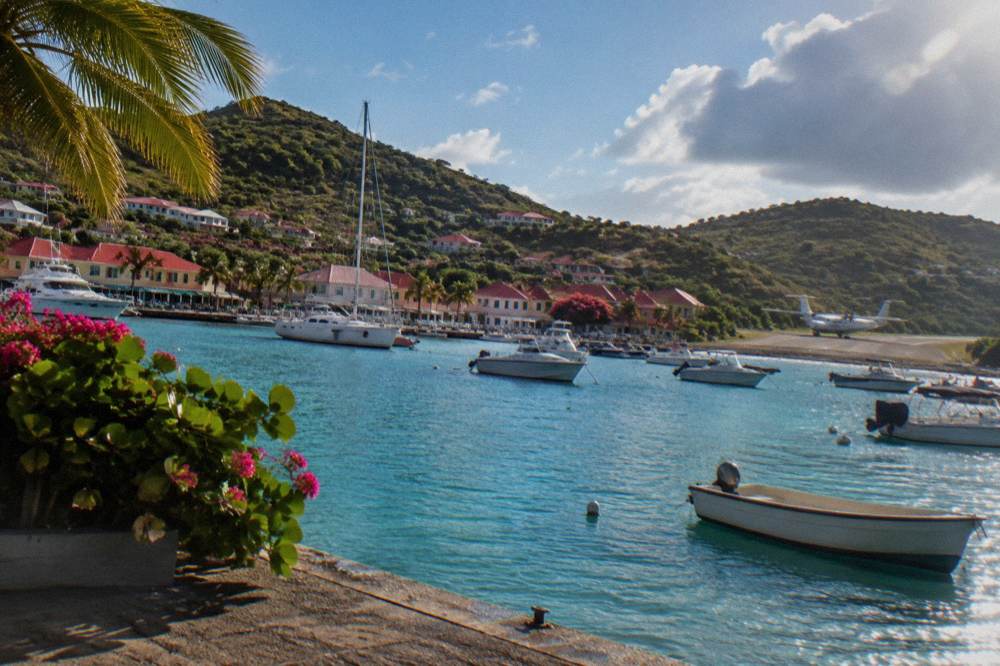
St Barts place names mix French, Creole and maritime terms, and a small local vocabulary helps with maps and menus: anse means cove or beach, plage means beach, ile means island, morne means hill, grand and petit mean large and small, and quartiers are the island's traditional neighbourhoods rather than villages, so reading a St Barts map is mostly a two-dozen-word exercise in French geography.
The beach names are the best example. Anse de Grande Saline is the cove of the great salt pond; Colombier and Gouverneur keep historical names; Grand Cul-de-Sac describes the shape of its bay in plain French; Ile Fourchue means the forked island. Once the pattern clicks, the island's map stops being a list of foreign words and becomes a description of the landscape itself, and finding your way between Lorient, Corossol, Flamands and Toiny becomes straightforward. Other pages covering the same trip are gathered on St Barthelemy Travel.
The quartier system is the other piece worth knowing. St Barts is organised into traditional quartiers, neighbourhoods, rather than towns, and Gustavia functions as the harbour capital around which the quartiers sit. Addresses on the island often reference the quartier first, which matters for villa rentals, taxis and deliveries. Asking for directions by quartier name in even hesitant French works better than reading out a street address, because the street grid in the hills is not where the local mental map lives. Getting around by car, which the St Barts car rental guide covers, makes the quartier vocabulary doubly useful on island roads.
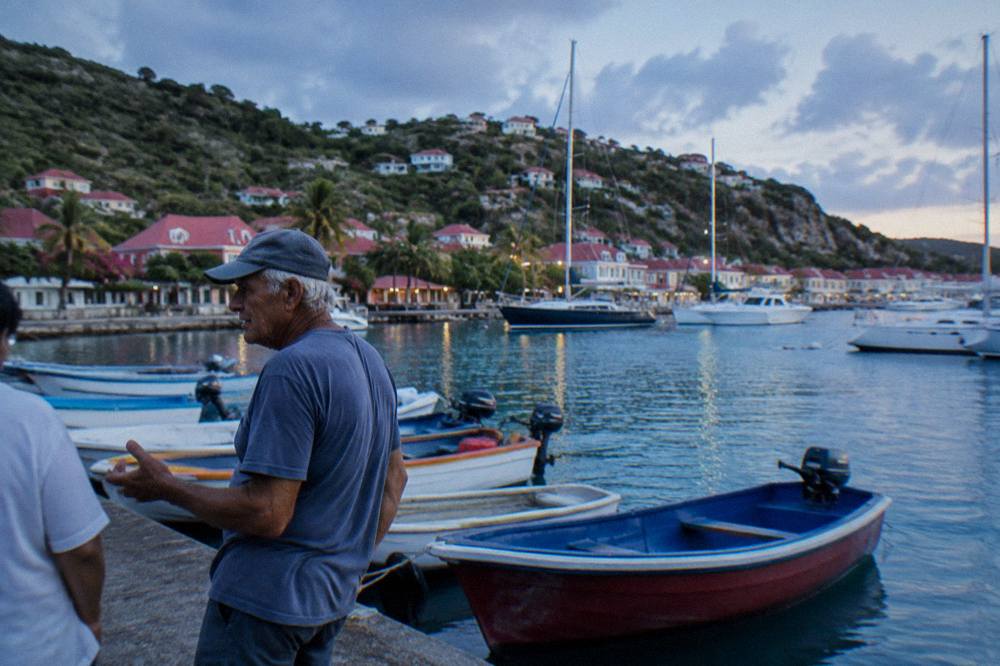
Creole and maritime words surface around the harbour and in fishing contexts. Local French Antillean Creole contributes vocabulary to everyday speech, and the fishing community that still works out of Corossol and Gustavia uses its own terms for boats, winds and catches. None of it is required knowledge for a visitor, but recognising that a word is Creole rather than bad French prevents a very common moment of confusion at the quayside.
| French Or Creole Word | Meaning | Where You Will See It |
|---|---|---|
| Anse | Cove or bay | Anse de Marigot, Anse des Cayes, dozens of map labels |
| Plage | Beach | Plage des Flamands, Plage de Colombier |
| Ile | Island | Ile Fourchue, the marine reserve islet |
| Grand / Petit | Large / Small | Grand Cul-de-Sac, Petit Cul-de-Sac |
| Quartier | Neighbourhood | Addresses and villa listings across the island |
| Morne | Hill | Ridge names in the island's interior |
| Cul-de-sac | Dead-end bay | The sheltered bays on the north coast |
| Gustavia | The harbour capital | Named for a Swedish king, still the island's hub |
Is English Enough For Restaurants And Shopping In St Barts?
English is enough for restaurants and shopping in St Barts, because the island's visitor-facing businesses operate bilingually and the tourism sector serves a heavily North American clientele, though menus and price tags are usually written in French first, so the real skill is reading rather than speaking, and a translation app plus the courtesy words covers essentially every transaction.
Restaurants illustrate the pattern well. The island's dining scene is French-influenced in style, and menus typically name dishes in French with descriptions that may or may not be translated in high season. Staff, however, move to English without prompting, and in the beach clubs and hotel tables around Gustavia and Saint-Jean the default is often English from the first word. The island's seasonal rhythm matters here too: many restaurants close each autumn and reopen in waves between mid-October and early November, and the reopening period is when bilingual staff rosters settle for the winter.
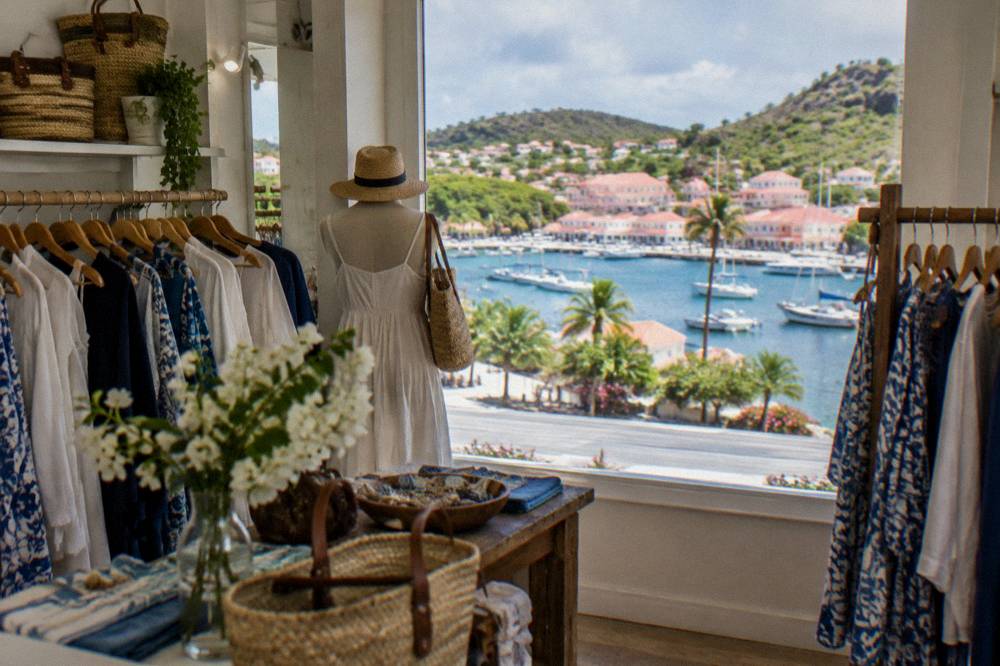
Shopping in Gustavia runs the same way. The boutiques around the harbour serve an international clientele, and English is the working language of the luxury retail floor, with French among colleagues. The St Barts shopping guide on this site covers the retail landscape, and questions about allowances and paperwork are handled in whichever language the customer started with. A receipt, naturally, will be printed in French, which is worth a glance before leaving the counter.
The grocery and self-catering layer is more French. Villa guests shopping for a week will meet French packaging, French aisle signage and price labels in euros, with produce priced by the kilogram rather than the pound. Nothing here requires conversation beyond checkout pleasantries, but it is the setting where a traveller's few French words get their heaviest use, and where the courtesy greeting habit pays its dividend.
How Does Language Differ Between St Barts And St Martin?
St Barts is officially French and bilingual in practice, while its neighbour St Martin is split between a French side centred on Marigot and a Dutch side, Sint Maarten, centred on Philipsburg where English is the everyday language, so a single trip can pass through three linguistic zones and English remains functional in all of them, with French dominant only on the French-administered portions.
The split shapes travel logistics. Many St Barts itineraries route through Princess Juliana Airport on the Dutch side, where English is universal, then transfer by road to Marigot on the French side for the Voyager ferry, or to Philipsburg for Great Bay Express. In a single morning a traveller can hear Dutch-influenced English at the airport, French at the Marigot terminal, and both on the crossing to Gustavia. The contrast is one of the region's quiet pleasures and a useful reminder that the border between the two halves of St Martin is invisible on the ground.
On St Barts itself the linguistic environment is calmer and more uniformly French-official than on either half of its neighbour, because the island has no internal border and one administration. Where St Martin lives with two governments and two school systems, St Barts runs on one, and the English spoken there is a service accommodation rather than an official second language. Practically, this means signage, forms and official notices on St Barts will be in French, full stop, while oral service flexes.
For travellers combining the islands, the language kit is the same everywhere: greetings and courtesies in French for the French zones, English everywhere for substance, and patience at counters where the first sentence may come in the wrong language for you and be instantly re-run in the right one. The island-hopping itineraries collected on the things to do in St Barts overview cover the routes; the language overhead on all of them is near zero.
What About Language On Boats And Tours Around St Barts?
Crews on the boat trips that visit St Barts from St Martin and Sint Maarten operate in English and French interchangeably, because the departures from Simpson Bay, Cole Bay, Anse Marcel and Grand Case serve an international clientele, while harbour and marine-reserve communications around Gustavia are conducted in French, so guests hear both languages on a normal day on the water.
The departure ports tell the story. Trips leave from points on both sides of the St Martin border, and the crews are typically Caribbean professionals who grew up moving between English-speaking Sint Maarten and French-speaking St Martin. Guests board in whichever language suits them, and the safety briefings on well-run vessels are given in both. Once underway toward Gustavia, Colombier or Ile Fourchue, French reappears on the VHF and in reserve-related instructions.
The marine reserve adds its own vocabulary. The environment agency's regulatory-zones page sets the rules for the protected waters: a 5-knot speed limit in reserve zones, no jet skis, no dogs on beaches, and no touching turtles among the protected species. A captain announcing these rules in French first and English second is a normal sound on a boat anchored off Colombier, and the place names themselves, Fourchue, Colombier, Grand Galet, arrive in French.
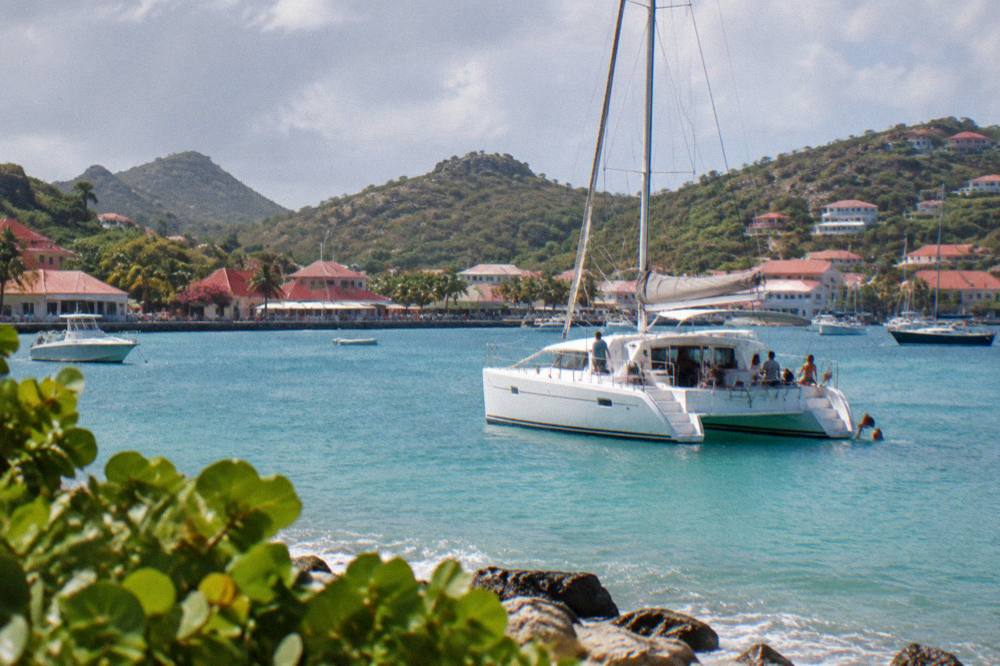
For choosing among the boat options, the pattern is consistent across the trip list: private charters priced per group and the per-person group sail all depart from St Martin or Sint Maarten, and all work bilingually. The private options suit families or groups who want the day's language, pace and stops set entirely by themselves, while the per-person sail, which its listing runs from 12 May to 31 August 2027, mixes travellers. Either way, language will not be the deciding factor; the sea state and the itinerary will be.
Does St Barts Have Its Own Accent Or Dialect?
Yes, St Barts has a recognisable local way of speaking: residents speak French with the island's own Antillean colouring, a French Antillean Creole is spoken in the community, and long-established island families carry distinct surnames and expressions that mark them as Saint-Barths rather than metropolitan French speakers, though none of this affects visitors, who will hear accents ranging from Parisian French to Caribbean English across a single day in Gustavia.
The island's population is small, about 10,700 residents, and its families have deep roots, which is exactly the condition in which local speech varieties persist. The Creole spoken in the French Antilles is part of that continuity, used at home and among neighbours rather than in official settings. Visitors encounter it mainly as texture: a faster, sung French at the fish quay in Corossol, an English word inside a French sentence, a greeting that follows island rhythm rather than Parisian one.
What surprises some first-time visitors is the range of English accents too. The island's workforce draws on St Martin, Guadeloupe, mainland France, North America and beyond, so the English heard at a hotel desk may carry a French accent, a Caribbean accent or a North American one in the same hour. The tourism economy is genuinely multilingual rather than French-with-English-bolted-on, and the visitor's experience of language on St Barts is accordingly relaxed.
There is etiquette in this mix worth naming. Residents appreciate the greeting convention, and they equally appreciate not being tested: launching awkward schoolboy French at someone who speaks perfect English, or vice versa, is a small comedy the island has seen before. The working method is simple: bonjour first, then speak naturally, and let the other person choose the language.
What Other Practical Basics Pair With Language On St Barts?
Language sits inside a small set of practical facts: the currency is the euro for local costs, time is UTC-4 with no daylight saving, plug types are C and E, and emergency numbers include 112 alongside the French numbers 15, 17 and 18, all of which the tourism and government pages confirm, so a traveller who has the courtesy words, euros in mind and 112 in the phone has the practical layer covered.
The currency point interacts with language most often at checkout. Prices are quoted and paid in euros for local costs on the island, while any bookable excursion on this site renders its price in US dollars from the operator's listing, and the two are never converted on this page. Hearing a euro total spoken in French at a counter is the single most common French-number moment of a trip, which is why the number words earn their place in the phrase table above.
The time zone is straightforward: St Barts sits at UTC-4 year round, with no daylight saving shift, so the island's clocks stay put while North American and European visitors' home clocks move around them. That matters for ferry check-in times and small-plane connections through St Martin, both of which are quoted in local island time. Plug types C and E cover charging, and the electricity page on this site treats that in full.
Emergency numbers follow the French system, and the overseas territories page lists 15 for medical, 17 for police and 18 for fire, with 112 as the European emergency number that also works. Writing 112 into a phone before arrival is the standard advice for any destination, and on a French territory it is doubly sensible. Beyond that, the practical pages of this site handle money, weather and safety in detail.
| Month | Mean Daily High (C) | Mean Daily Low (C) | Rain (mm) |
|---|---|---|---|
| January | 28.5 | 23.5 | 52.6 |
| February | 28.6 | 23.3 | 38.4 |
| March | 29.0 | 23.5 | 41.4 |
| April | 29.8 | 24.2 | 50.9 |
| May | 30.7 | 25.1 | 61.7 |
| June | 31.2 | 25.9 | 56.0 |
| July | 31.2 | 26.0 | 80.4 |
| August | 31.6 | 26.3 | 79.6 |
| September | 31.7 | 26.2 | 96.9 |
| October | 31.4 | 25.8 | 135.6 |
| November | 29.9 | 25.0 | 118.6 |
| December | 28.9 | 24.1 | 79.2 |
The climate table, from the Meteo-France normals 1991-2020 for the St Barthelemy station, is included because season shapes the language experience in one specific way: the autumn closure window, when many hotels and restaurants shut and reopen between mid-October and early November, is when the island's resident French is most audible and its visitor English thinnest. By late November, with the Gourmet Festival running 9 to 15 November 2026 and the season filling in, the bilingual machinery is back at full strength.
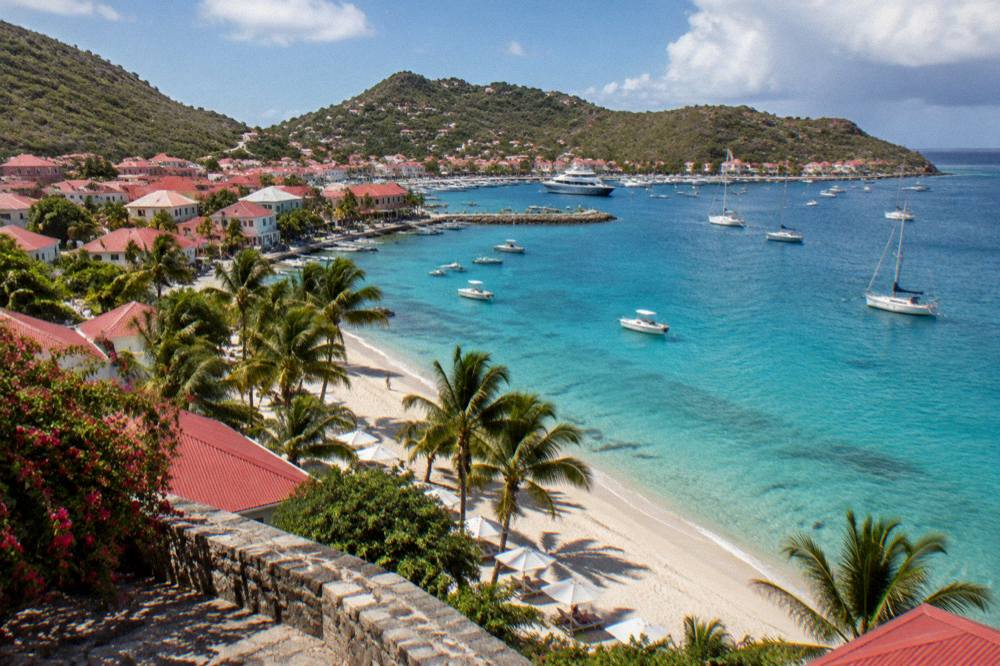
Common Questions About Language In St Barts
What language do they speak in St Barts?
French is the official language of St Barts, used in government, schools and signage, and English is widely spoken across the island's tourism businesses, restaurants and shops, per the tourism committee. A French Antillean Creole is also spoken within the local community.
Do I need to speak French to visit St Barts?
No. English is widely spoken in hotels, villas, restaurants, shops and tour operators, and the visitor economy works bilingually. Menus and signs lean French, so a translation app helps, and greeting people with bonjour is the courtesy that matters most.
Is St Barts French or Dutch?
St Barts is French, an overseas collectivity of France since 2007. Its neighbour St Martin is the island that is split, with a French side around Marigot and a Dutch side, Sint Maarten, around Philipsburg where English is the everyday language.
Do they speak English in Gustavia?
Yes. Gustavia is the island's harbour capital and its most visitor-facing town, with boutiques, restaurants and marine services that operate comfortably in English, even though official signage in the town is in French.
What does anse mean on St Barts maps?
Anse means cove or bay in French, and it prefixes many of the island's beach names, such as Anse de Grande Saline and Anse des Cayes. Reading a St Barts map is largely a matter of knowing a few French geography words like anse, plage and ile.
Is Creole spoken on St Barts?
Yes, a Saint-Barthelemy French Antillean Creole is spoken regionally and within the local community, alongside French and English. Visitors are unlikely to need it, but it is part of the island's everyday sound, especially around the harbour and fishing quays.
The pattern that runs through every answer on this page is the one the tourism committee states outright: French official, English everywhere in service. Say bonjour, carry euros in mind, keep 112 in the phone, and the language question on St Barts answers itself, whether you arrive by ferry from Marigot or by small plane over the hill at Gustaf III.