St Barts In March
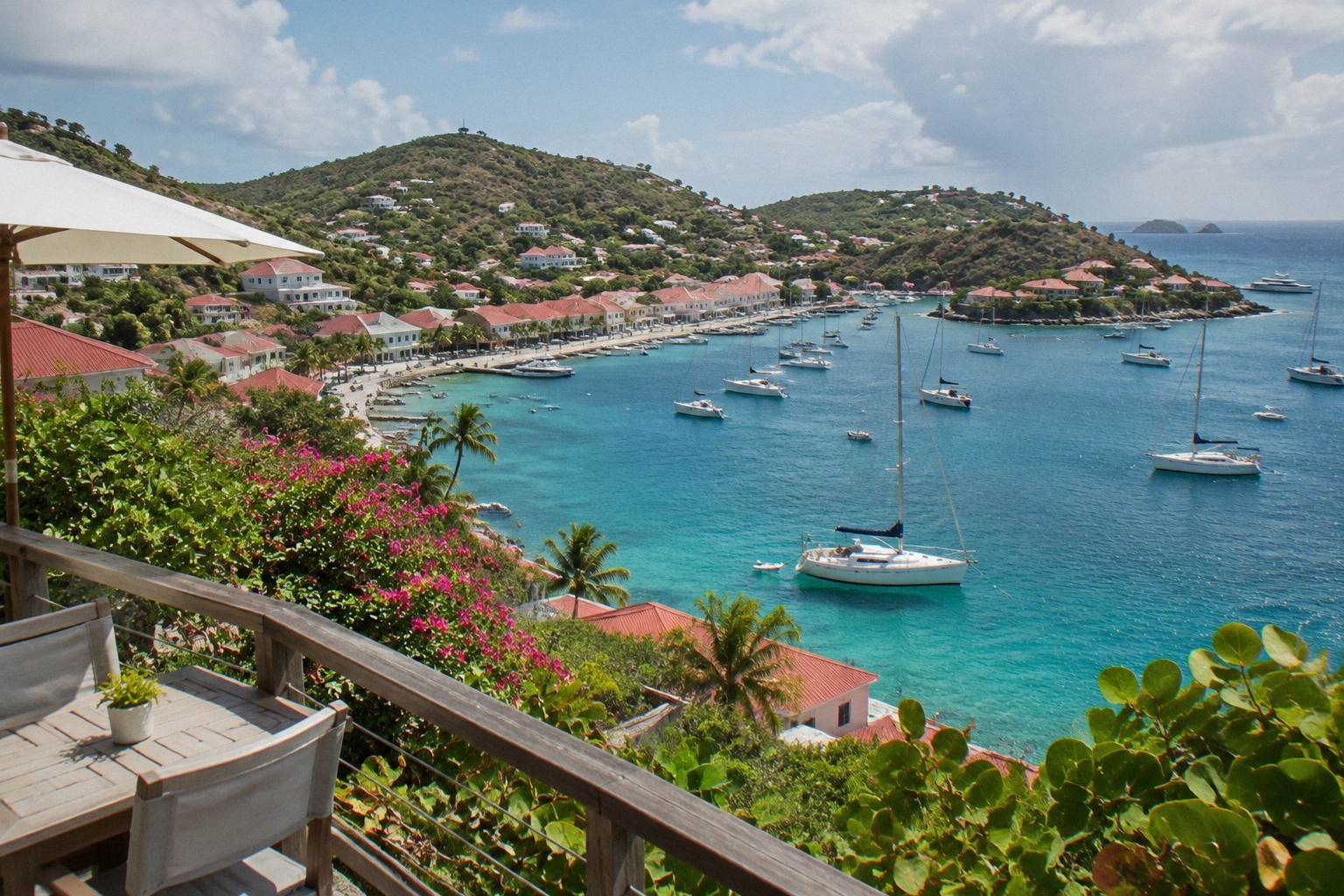
St Barthelemy, the small French Caribbean island known as St Barts, sits in the middle of its high season in March, with the driest stretch of the Meteo-France climate record behind it and superyacht racing in Gustavia harbor.
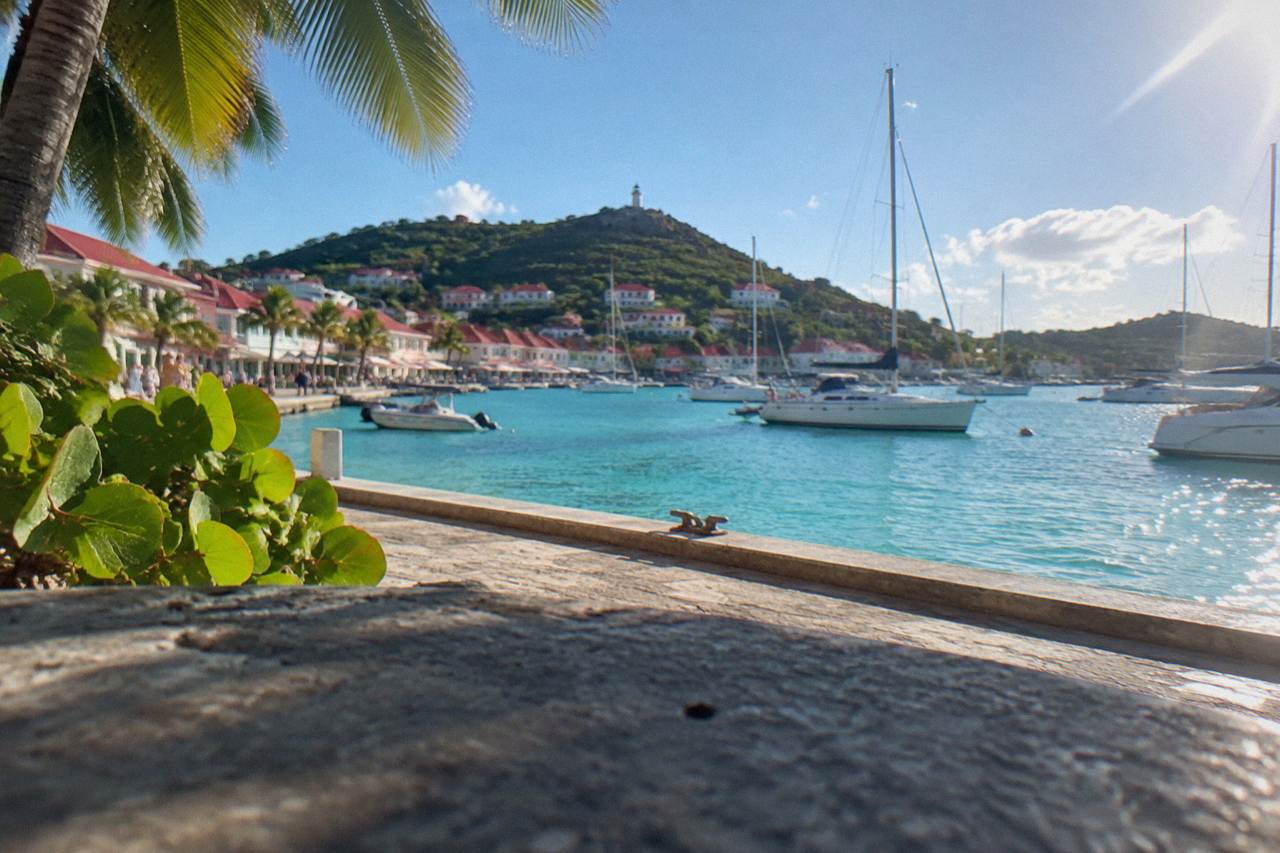
March in St Barts is warm and dry: the Meteo-France normals for 1991 to 2020 give a mean daily high of 29.0 C, a mean nightly low of 23.5 C and 41.4 mm of rain for the month. The island is fully open for high season, and the St Barths Bucket Regatta, a superyacht race based in Gustavia, takes place in mid-March.
St Barthelemy, better known as St Barts, is a French overseas collectivity in the Caribbean, and March places it in the heart of the dry, busy half of its year. The Meteo-France climate normals for 1991 to 2020 put the mean daily high for March at 29.0 C and the month's rainfall at 41.4 mm, which follows February, the month with the lowest rain total in the whole table at 38.4 mm. It is also the month of the St Barths Bucket Regatta, the superyacht race that fills Gustavia harbor in mid-March. This guide sets out the numbers, the open-and-closed picture, the marine reserve rules that shape any day on the water, and the practical decisions a March trip involves.
What Is The Weather Like In St Barts In March?
The Meteo-France climate normals for 1991 to 2020 give St Barts a March mean daily high of 29.0 C, a mean nightly low of 23.5 C and 41.4 mm of rain across the month, which makes March one of the drier months in the island's record. The wind blows steadily from the east and northeast in this season, and the tourism committee describes March as part of the island's high season. Hurricane season does not apply: it runs 1 June to 30 November.
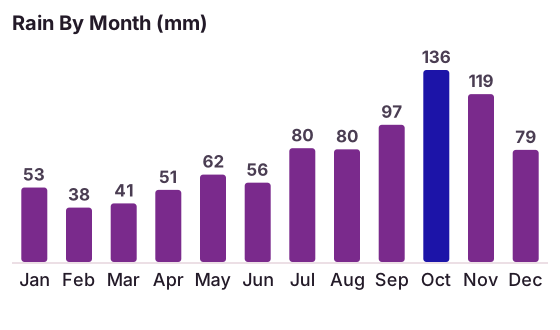
Those figures deserve a little context, because the island's climate is remarkably flat across the year. The mean daily high never falls below 28.5 C in any month and never rises above 31.7 C, so March sits near the middle of a narrow band rather than at an extreme. What changes month to month is rain. The normals total 891.3 mm a year, with October the wettest month at 135.6 mm and February the least rainy at 38.4 mm. March, at 41.4 mm, sits just above February, and the numbers then climb steadily through spring toward the late-summer peak.
| Month | Mean Daily High | Mean Nightly Low | Rainfall |
|---|---|---|---|
| January | 28.5 C | 23.5 C | 52.6 mm |
| February | 28.6 C | 23.3 C | 38.4 mm |
| March | 29.0 C | 23.5 C | 41.4 mm |
| April | 29.8 C | 24.2 C | 50.9 mm |
| May | 30.7 C | 25.1 C | 61.7 mm |
The table above is drawn from the Meteo-France normals, 1991 to 2020, for the island's long-running Gustavia-area weather station. One practical reading: a March day starts warm, climbs toward the day's high in the early afternoon, and gives back only a few degrees overnight. Rain, when it comes, is usually brief; the monthly total is a sum of passing showers rather than a description of a wet week.
Is March High Season In St Barts?
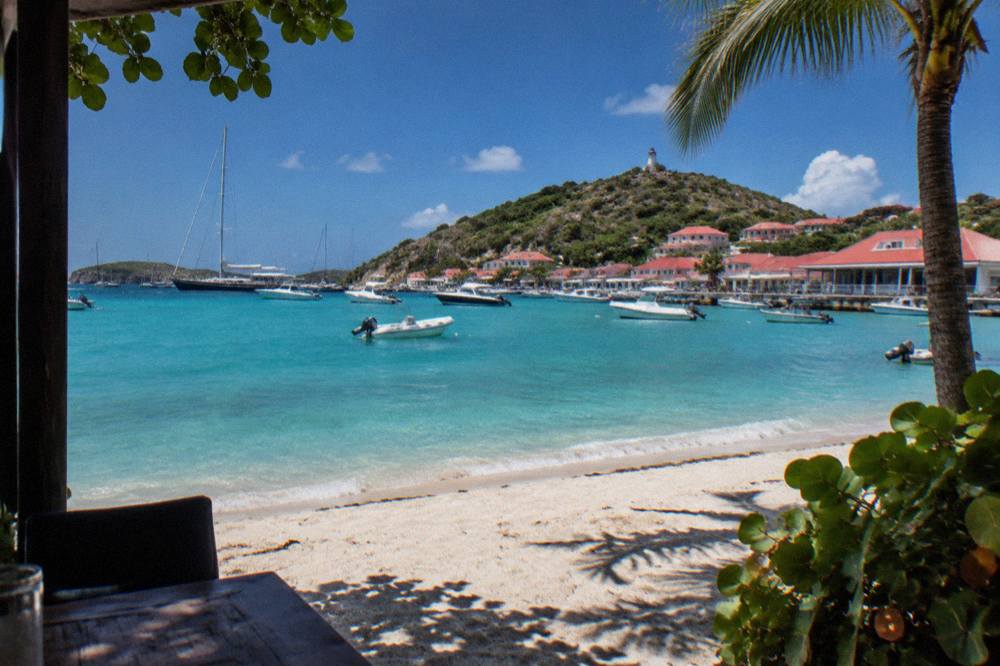
Yes, March sits inside the island's November-to-April high season, and it is one of the months when the hotels and restaurants that close each autumn are reliably open again. The seasonal closure pattern runs from roughly mid-August, with reopenings spread between mid-October and early November, so by March every major property is operating. The St Barths Bucket Regatta in mid-March adds a further pulse of activity around Gustavia harbor.
The closure pattern matters for planning, and it matters more in autumn than in spring. Many hotels and restaurants on the island close each year for maintenance and the hurricane-season peak, and the reopening wave falls between mid-October and early November. By March this is a settled state: the island is running at its full seasonal complement of places to stay and eat. The trade-off is that high season is when demand for rooms, cars and restaurant tables is at its strongest, and booking ahead is the standard advice.
| Season | Months | Character |
|---|---|---|
| High season | Roughly December to April | Drier normals, hotels and restaurants fully open, event calendar at its fullest |
| Shoulder | May and June, and again in November | Warm, somewhat higher rainfall figures, quieter after the winter wave leaves |
| Low season | Roughly July to October | Warmest and wettest normals, hurricane season 1 June to 30 November, annual hotel closures |
Two March-specific events shape the calendar. The St Barths Bucket Regatta takes place in mid-March, with superyachts racing out of Gustavia under the organiser's own race program. Further into spring, the St Barth Music Festival runs 8 to 18 January, and the Gourmet Festival 9 to 15 November 2026, so a March visit catches the regatta rather than either festival. For everything the island offers across the year, the things to do on St Barts overview covers the full list.
March is also a strong month for the boat trips that cross from St Martin, and several run on the water through the whole season:
What Are The Best Things To Do In St Barts In March?
March's reliable weather suits the three things the island is built around: its public beaches, its walking paths, and days on the water. All of the island's beaches are public and free to access, the tourism committee lists them from Saint-Jean and Gouverneur to Colombier and Grand Cul-de-Sac, and the marine reserve's rules, including a 5-knot limit in its zones and a ban on touching turtles, shape every boat day. Boat trips listed here depart from St Martin or Sint Maarten.
The beaches need no ticket and no booking. The tourism committee's beaches section names Saint-Jean, Gouverneur, Saline, Shell Beach (Grand Galet), Flamands, Colombier, Grand Cul-de-Sac, Lorient, Toiny, Marigot and Corossol, and every one of them is public. What a March visitor should know beyond the names is the rule set that governs them: the territorial environment agency's pages state that dogs are prohibited on all beaches island-wide under a standing municipal order, and that within the marine reserve's zones there is no touching or feeding of protected species, no collecting of coral, shells or sand, and no jet skis, seabobs or towed motorized devices.
| Rule | Where It Applies |
|---|---|
| 5-knot speed limit on the water | Marine reserve zones, including Colombier Bay |
| No touching, chasing or feeding turtles, corals, rays | All reserve waters |
| No dogs, even on a leash | All beaches island-wide |
| No jet skis, seabobs or towed sports | Reserve zones |
| No collecting coral, shells or sand | Reserve zones |
For a fuller walk through the shoreline, the guide to beaches by coast lays out which stretch of the island suits which kind of day, within the limits of what the public record actually says about each beach.
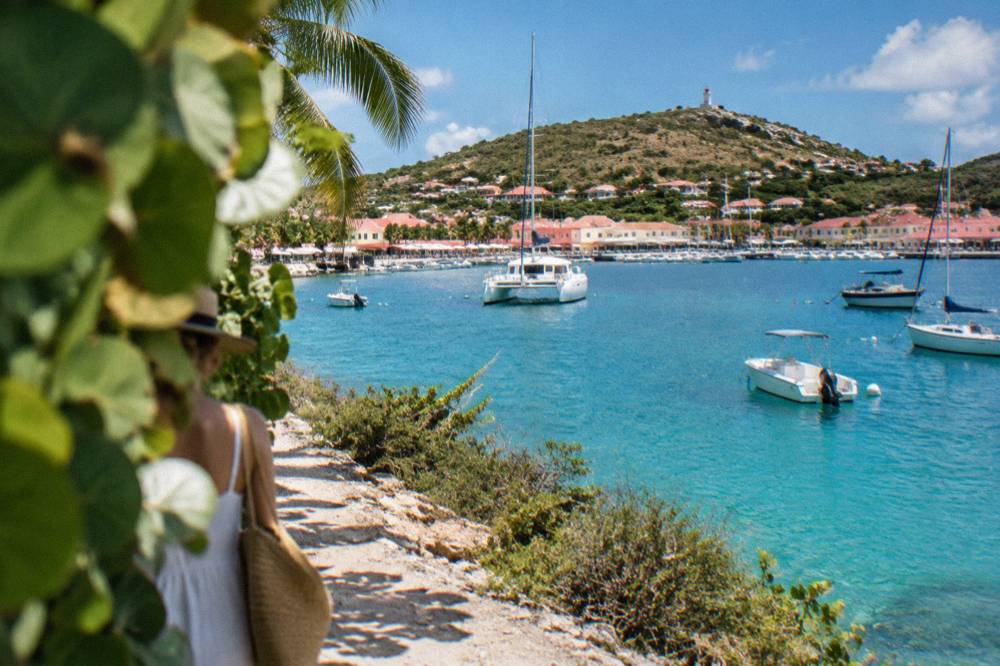
On the water, the one per-person group product listed here, a day trip to Gustavia, Colombier Beach and Ile Fourchue, is seasonal in a specific way: its listing runs it from 12 May to 31 August 2027, which means a March visitor who wants that exact route by sea is looking at the private options instead. The private sailboat charter from St Maarten runs year-round as a listed product, and the overnight catamaran gives the island a night at anchor:
The regatta itself is a spectator event as much as a racing one. The Bucket's racing program is based in Gustavia, and the harbor's quays are the natural place from which to watch the fleet, which pairs well with a walk through the town's own sights, from the harbor and its forts to the small museums that hold the island's Swedish-era record.
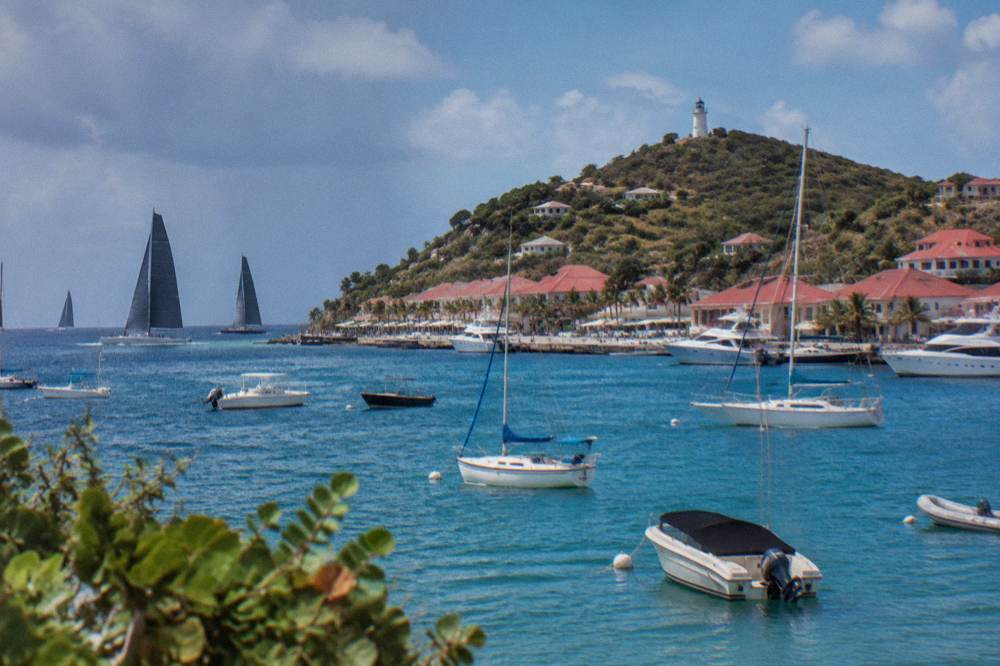
Is The St Barths Bucket Regatta In March?
Yes, the St Barths Bucket Regatta takes place in mid-March, with the organiser's schedule showing the 2027 edition in that window. It is a superyacht regatta raced out of Gustavia harbor, and its racing program is published on the organiser's own site. The tourism committee lists it among the island's headline annual events, alongside the Bucket's spring companions on the sailing calendar.
The regatta's place in March is stable across recent editions, and the organiser's published material is the place to check each season's exact racing days. For a visitor, the practical effect is concentrated in Gustavia: the harbor fills with large racing yachts, and the quays and hillsides above town become viewing points. The other fixed points of the spring sailing calendar, Les Voiles de St Barth, sit in April, with dates for 2027 not yet confirmed by the organiser, so March's sailing spectacle is the Bucket's alone.
For trips built around the racing rather than around beaches, the boats that cross from St Martin can be timed to it:
A note on scale: the harbor's cruise and yacht traffic is regulated by the collectivity, and cruise ships tender passengers ashore rather than docking, there being no cruise pier. The port authority does not publish a public call schedule, so no month-by-month arrival list exists to plan around.
How Warm Is The Sea Around St Barts In March?
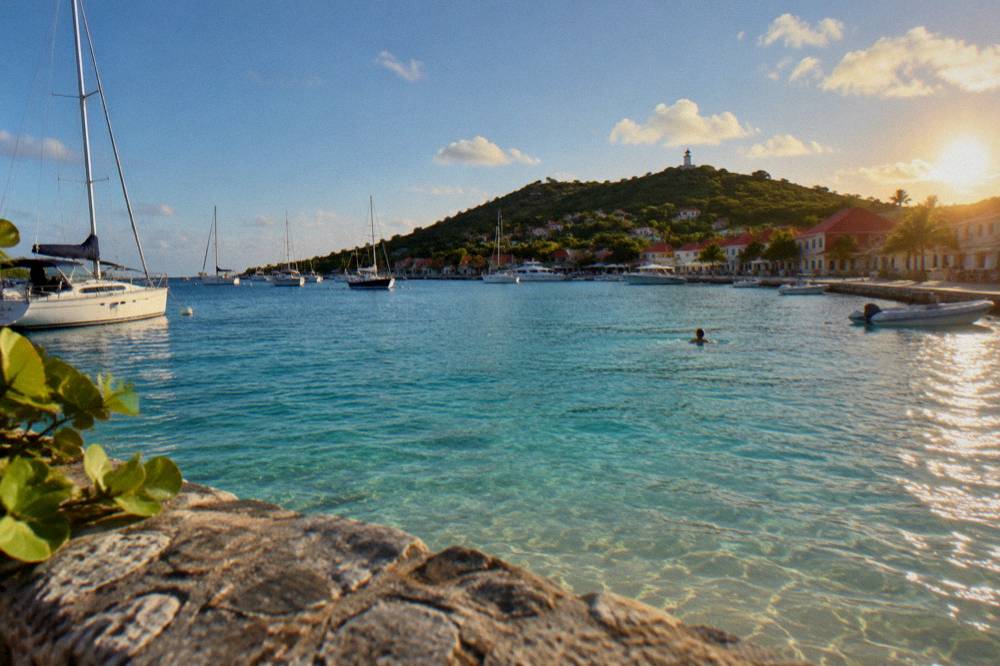
The sea around St Barts is warm in March, at roughly 26 C, and stays warm all year, rising to about 29 C from August to October. Those sea-temperature figures come from a secondary climate source and are rounded, so the honest phrasing is "about 26 C". The Meteo-France station normals cover air temperature and rain only, not sea temperature.
What this means in practice is that swimming needs no acclimatisation in March, and that the same water supports the turtle and coral life the marine reserve protects. Green and hawksbill turtles are the two species the environment agency's beach and reserve pages name as present around the island, including in the Grand Cul-de-Sac lagoon and around Colombier, and the rule against touching or disturbing them applies to swimmers and boaters alike. Reporting a nest or sighting goes to the environment agency, whose beach page carries the contact.
| Month | Approximate Sea Temperature | Approximate Air Mean High |
|---|---|---|
| January | About 26 C | 28.5 C |
| March | About 26 C | 29.0 C |
| June | About 28 C | 31.2 C |
| September | About 29 C | 31.7 C |
| November | About 28 C | 29.9 C |
What Should You Pack For St Barts In March?
Pack for a warm, dry, breezy month: light clothing, swimwear, sun protection and a layer for evenings that the normals put at a mean low of 23.5 C. Sturdy shoes matter more than visitors expect, because the island's roads are narrow and steep and its walking paths, including the coastal path to Colombier, are unpaved. An adapter for plug types C and E is needed for European sockets, and no visa applies to short stays for US, UK, Canadian and EU citizens.
The electricity point comes with a firm caveat: plug types C and E are the socket standard, and the voltage figure is not one this site prints, so check your own devices' ratings before travel. Entry rules carry a similar discipline. The territory is outside the Schengen area, ETIAS does not govern entry and is not live, and passport-validity requirements differ by nationality, so the standing advice is to read your own government's travel advice for St Barthelemy before flying rather than relying on a single number of months.
| Packing Item | Why For March |
|---|---|
| Reef-safe sun protection | Mean daily high of 29.0 C, steady trade winds that mask the sun's strength |
| Walking shoes | Unpaved coastal paths and steep streets in Gustavia |
| Light evening layer | Mean nightly low of 23.5 C, breezy harbor front |
| Plug adapter, types C and E | French socket standard on the island |
| Passport, and onward ticket | Entry requirements for the territory, outside Schengen |
For longer-form packing reasoning, including how the island's dress culture works, the St Barts weddings guide and the shopping guide below both touch on what people actually wear in high season.
How Do You Get To St Barts In March?
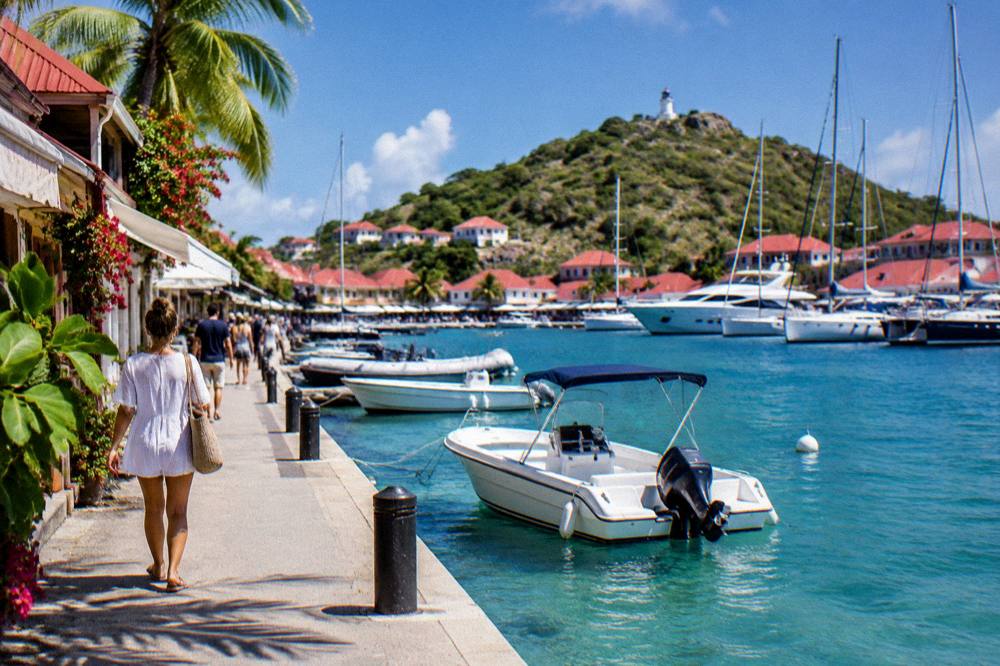
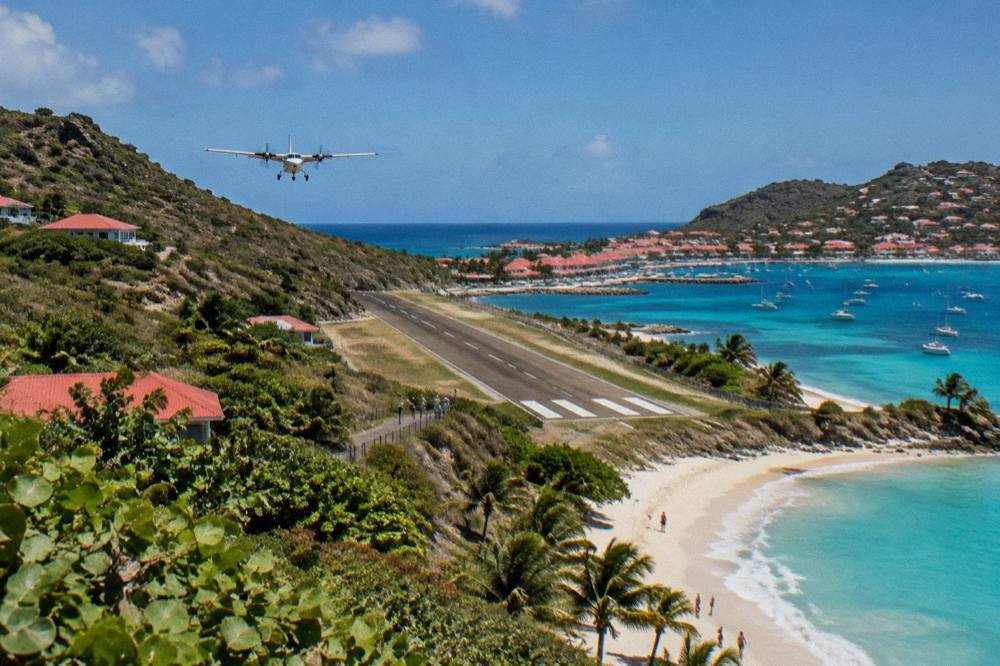
Nearly everyone reaches St Barts through St Martin: flights land at Princess Juliana airport on the Dutch side, and the final leg is either a small plane into Gustaf III Airport or a ferry to Gustavia. The airport's 646 m runway takes only small STOL turboprops in daylight and visual conditions, so no jet lands on the island. St Barth Commuter flies from SXM, Grand Case and Pointe-a-Pitre, Tradewind from San Juan and Antigua, and Winair serves the island from SXM.
The ferry picture has two operators, both with published services to Gustavia. Great Bay Express runs from Bobby's Marina in Philipsburg on the Dutch side, a crossing of about 45 minutes, and Voyager runs from the Marigot ferry terminal on the French side, about 50 to 60 minutes. Both operators' own pages are the place for live times, and the crossing can be rough; no smooth passage is promised by either. Fares are shown in the operators' booking systems.
| Route | Carrier Or Operator | Notes |
|---|---|---|
| SXM to SBH | St Barth Commuter, Winair | Small STOL turboprops, daylight operations only |
| Grand Case (SFG) to SBH | St Barth Commuter | A short hop from the French-side airport |
| San Juan (SJU) to SBH | Tradewind | Pilatus aircraft on the route |
| Antigua (ANU) to SBH | Tradewind | Seasonal service |
| Philipsburg to Gustavia | Great Bay Express ferry | About 45 minutes, from Bobby's Marina |
| Marigot to Gustavia | Voyager ferry | About 50 to 60 minutes |
The full mechanics, including what the famously short runway means for the approach over the Col de la Tourmente, are covered in the guide to getting to St Barts and the St Barts airport guide. On the island itself, a rental car is the usual way to move, and the car rental guide covers the counter options at the airport, where Avis, Budget and Hertz operate alongside local agencies and Mini Moke specialists.
Where Should You Stay In St Barts In March?
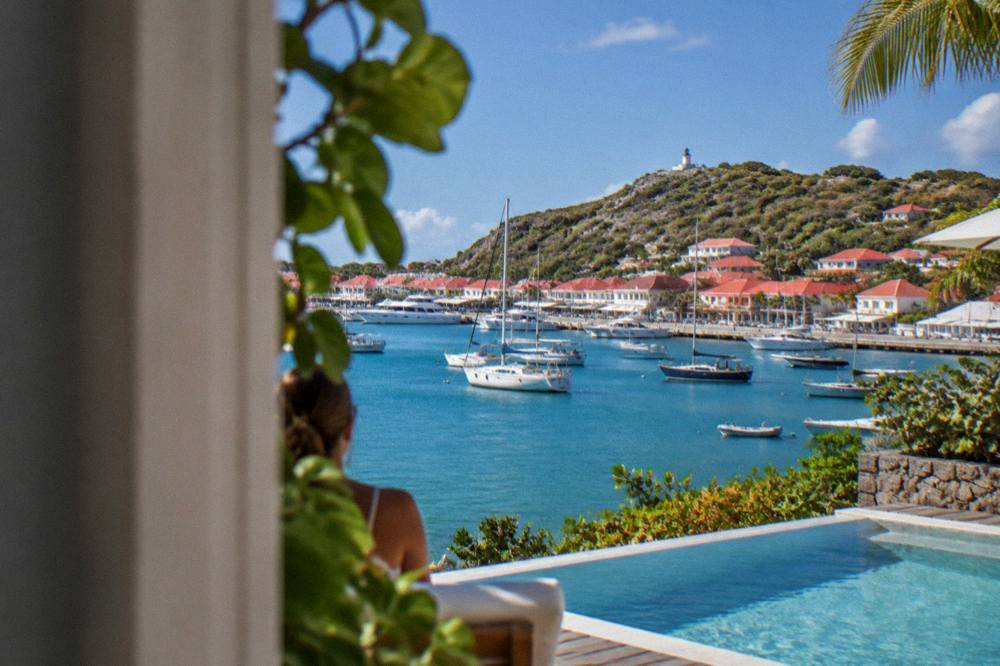
In March the whole accommodation spectrum is open, because the autumn closure wave has long passed and the reopenings between mid-October and early November are complete. The named properties from the island's hotel set, including Eden Rock, Cheval Blanc, Le Toiny, Le Sereno, Hotel Manapany, Hotel Christopher, Le Barthelemy and Le Village, are all operating in high season, and the villa market is active year-round through managers including WIMCO, Sibarth and St Barth Properties.
The choice between hotel and villa comes down to how the trip is shaped rather than to price tiers. A hotel places a visitor walking distance from a beach, a restaurant scene and a concierge; a villa, booked through the island's established managers, trades that for space and a kitchen. Rates vary by season, and each property's own booking page shows them. The hotels guide and the luxury hotels guide carry the named properties with the details that matter for a March booking.
For a March trip planned around the water rather than the shore, the boats below round out the options that cross from St Martin, including a private charter with a full day around the island:
Whether March is the right month depends on what a visitor wants from the island: the regatta and the full high-season operation, or the quieter shoulder that follows in May. The numbers say the weather is close to constant; the calendar, from the New Year's Eve guide through to the regatta and beyond, is what actually changes.
Common Questions About St Barts In March
What Is The Weather Like In St Barts In March?
The Meteo-France climate normals for 1991 to 2020 give a mean daily high of 29.0 C, a mean nightly low of 23.5 C and 41.4 mm of rain for March, making it one of the drier months of the island's record.
Is March A Good Month To Visit St Barts?
March sits inside the November-to-April high season: the Meteo-France normals are dry, the hotels and restaurants that close each autumn have all reopened, and the St Barths Bucket Regatta takes place in mid-March.
What Event Happens In St Barts In March?
The St Barths Bucket Regatta, a superyacht race based in Gustavia harbor, takes place in mid-March, with the organiser's schedule the source for each edition's exact racing days.
How Warm Is The Sea In St Barts In March?
The sea is warm, at about 26 C in March according to a secondary climate source, rising to about 29 C from August to October.
Are All Hotels Open In St Barts In March?
Yes, the pattern of autumn closures and reopenings between mid-October and early November is complete long before March, so the island's hotels operate through the high season.
Can You Take A Boat Trip To St Barts In March?
Yes. Ferry operators Great Bay Express from Philipsburg and Voyager from Marigot serve Gustavia year-round, and the private boat products listed here depart from St Martin or Sint Maarten. The per-person group sail's listing runs it only from 12 May to 31 August 2027, so in March the water options from St Martin are the private charters.