Internet And Wi-Fi In St Barts
St Barthelemy, usually written St Barts, is a small French island in the Caribbean, and its internet picture is simpler than most destinations: one airport, one harbour capital, and a short list of practical questions worth answering before you fly.
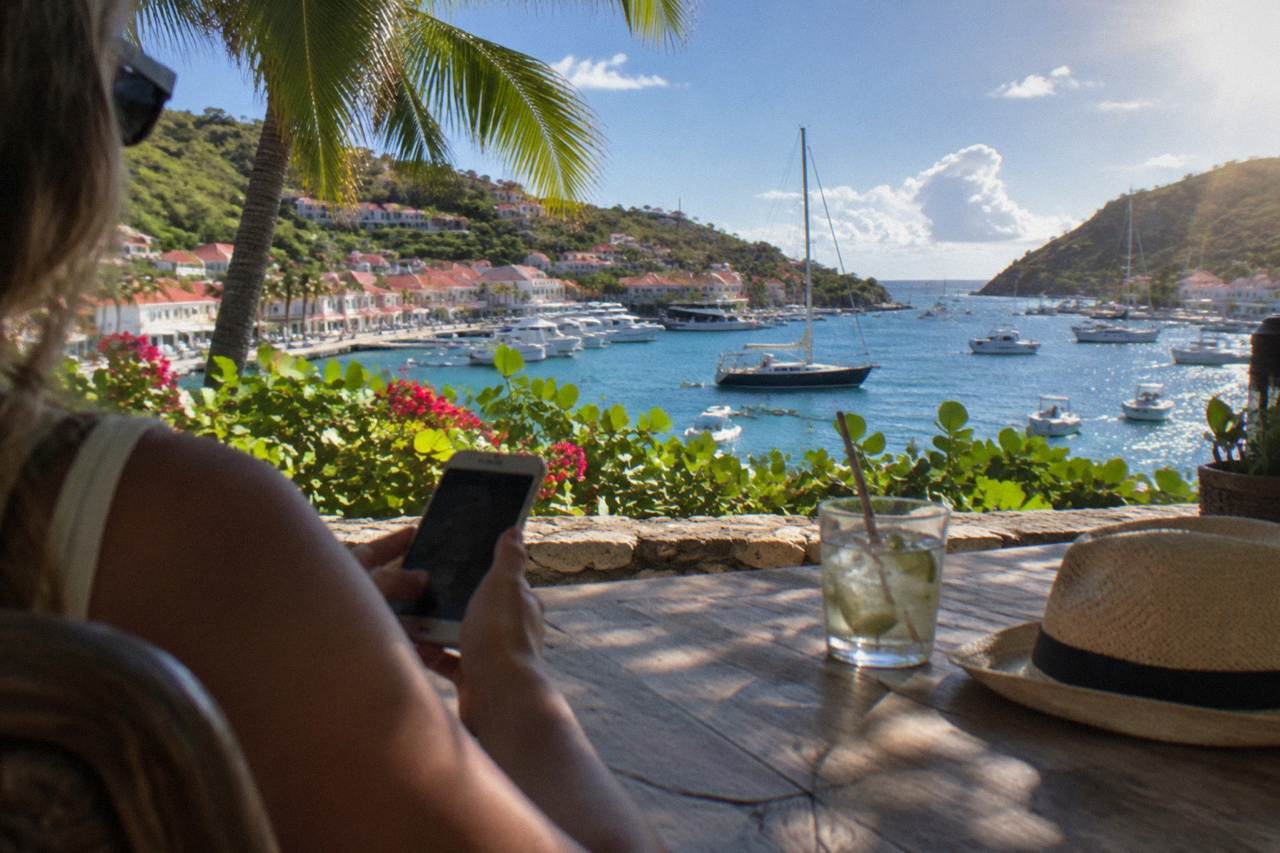
St Barts is served under the French telecom system, hotels and villas provide connections whose speeds and coverage each property publishes, so confirm with your accommodation, sort a data plan before arrival, and download offline maps for the ferry and boat days.
St Barthelemy, usually written St Barts, is a French island in the Caribbean of about 21 square kilometres with roughly 10,700 residents, and its internet story is a compact one. The island has one airport, Gustaf III (SBH), one harbour capital, Gustavia, and a landscape of hills that any radio signal has to cross. This guide from St Barthelemy Travel sets out what is actually settled fact about connectivity here, what depends entirely on your hotel or villa, and what is worth arranging before you leave home, because the honest answer is that several of the details people search for are not published in any verifiable form.
What Kind Of Internet Can You Expect In St Barts?
St Barts operates under the French telecommunications system as an overseas collectivity of France, and fixed connections at hotels and villas are provided by the properties themselves, so the practical answer is to confirm the connection at your own accommodation before booking. No coverage map, average speed figure or provider comparison for the island exists, and any specific number would be a guess rather than a fact.
What can be stated plainly is the frame around the question. St Barts has been an overseas collectivity of France since 2007, with Gustavia as its capital, the euro as its currency, and French as the official language with English widely spoken. Telecoms on the island therefore sit inside the French system, which matters for two practical reasons: European-style regulation governs how services are sold, and the island's small size, about 21 square kilometres, means the network of interest is a single compact grid serving a resident population of about 10,700, not a nationwide sprawl.
What cannot be stated plainly is anything numerical. No island-wide speed figure, coverage percentage, provider market share or fibre rollout map is available for this destination. A page that quotes megabits per second for St Barts is estimating. The reliable approach is three steps: ask your hotel or villa manager directly what the connection supports, arrange your own mobile data as a fallback, and download what you need before you arrive, because the arrival day itself is the worst moment to be hunting for a signal.
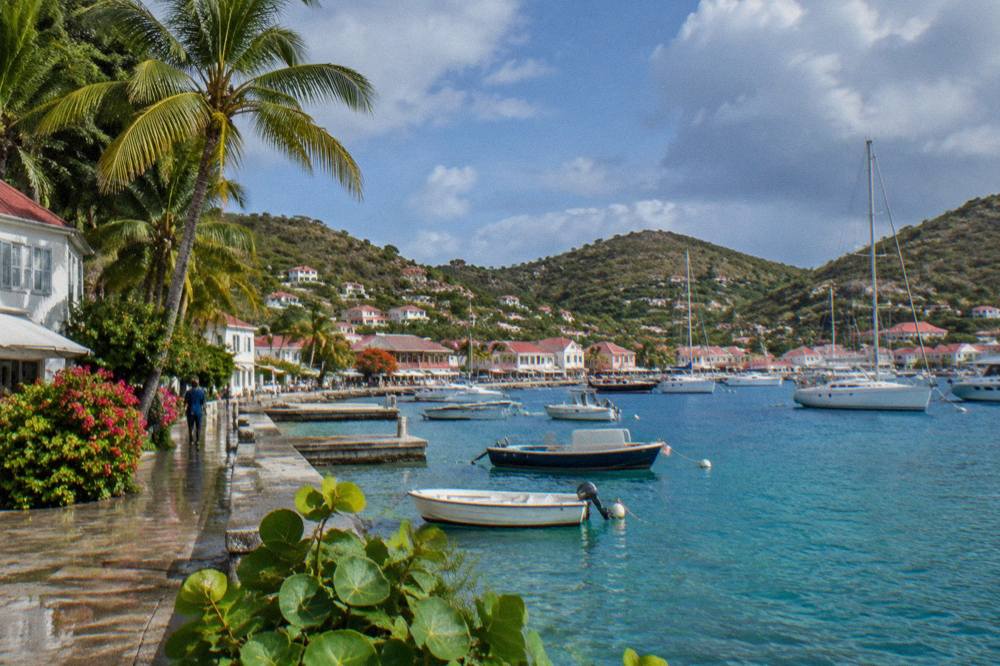
Is Hotel And Villa Wi-Fi Reliable In St Barts?
Wi-Fi is a standard offering at St Barts hotels and villas, but the speed, the coverage across the property and any limits are set property by property, and no amenity claim beyond the existence of a connection can be made here. Villa managers such as WIMCO, Sibarth and St Barth Properties list their homes individually, so the right question to ask before booking is what the connection at that specific house supports.
The hotel side of the island is well documented on the accommodation pages of this site. The properties themselves range from harbour hotels in Gustavia to beachfront resorts at Saint-Jean, Flamands and Grand Cul-de-Sac, and each publishes its own amenity list. If a connection matters to your trip, for remote work calls or for streaming in the evening, the move that costs nothing is an email to the property asking two questions: is Wi-Fi available in the rooms rather than only in common areas, and is it sufficient for video calls. Properties answer this question directly because it is a common one.
The villa side works the same way. A large villa market exists on the island, with WIMCO, Sibarth and St Barth Properties named as established managers, and villa listings describe their own connections. A villa on a hillside in Vitet or Pointe Milou is a different building from a beach house at Lorient, and the router situation follows the building, not the brand. Booking through a manager rather than a faceless listing has an advantage here: there is a named person to ask, and a concierge who already knows the house.
One seasonal note belongs in this section. Many hotels and some restaurants close each autumn for maintenance and reopen in waves between mid-October and early November, so replies to connectivity questions sent in September may be slower simply because the front office is thin. That is a pattern of the island's calendar, not a comment on any property.
A day on the water is one of the signature uses of a St Barts holiday, and the group sail above, which departs from St Martin or Sint Maarten rather than from St Barts itself, is the per-person option listed here. The wider choices, including private charters and an overnight catamaran, are gathered in the band below.
Do SIM Cards And E-SIMs Work On St Barts?
A phone that works in France does not automatically work on St Barts on the same terms, because the island is outside the Schengen area and its telecom conditions are set separately, so the sensible advice is to arrange a data plan before you fly and to confirm its territorial coverage with the provider.
The entry situation explains part of this. St Barts sits outside the Schengen area, and entry rules are set by French authorities under a 2012 order rather than by Schengen systems; ETIAS does not govern entry and was not operational. Telecom packages follow their own map, and a plan sold for "Europe" may or may not list the French Caribbean. The check takes a minute: open the provider's coverage page, search the territory by name, and screenshot the answer.
For travellers from the United States, Canada or the United Kingdom, the practical sequence is the same everywhere. First, ask your home carrier what the island costs on your current plan, since international roaming in the Caribbean varies enormously between plans. Second, if the answer is unattractive, an eSIM bought before departure is the usual alternative, activated while you still have a reliable connection at home. Third, keep the physical SIM as a fallback. No price can be quoted here for any of these options, because prices change constantly anyway.
The table below is the checklist version of that sequence.
| Step | Where To Do It | What To Confirm | Why It Matters On St Barts |
|---|---|---|---|
| Check roaming terms | Before departure, with your home carrier | Whether the plan covers the French Caribbean specifically | The island is outside Schengen and "Europe" plans may exclude it |
| Buy an eSIM | At home, on a solid connection | That the provider lists St Barthelemy in its covered territories | Activation on arrival day is unreliable |
| Ask the hotel or villa | At booking, by email | Wi-Fi in rooms, not just common areas, and whether it suits video calls | Properties set their own connections |
| Download offline maps | The night before you fly | Map area covers Gustavia, the beaches and St Martin ports | Boat day trips depart from St Martin or Sint Maarten |
| Save key documents | Same evening | Ferry booking, addresses, phone numbers stored offline | Arrival involves a small airport and ferry terminals |
Can You Work Remotely From St Barts?
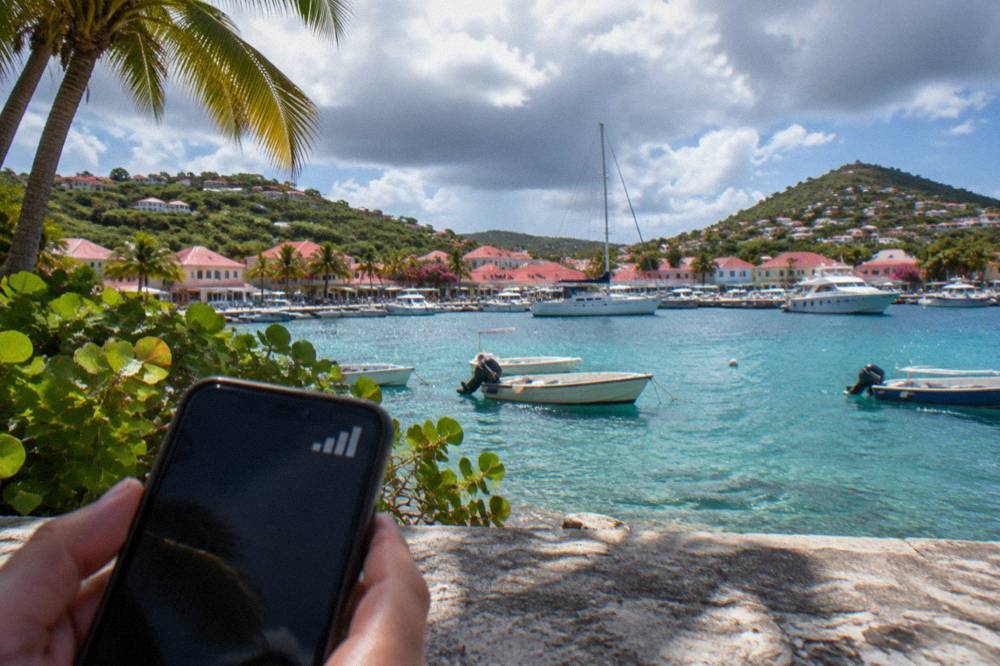
Remote work from St Barts is realistic with preparation: villas and hotels provide connections whose capabilities each property states, the time zone is UTC-4 year round with no daylight saving, and the two structural limits are the island's autumn closure calendar, when many hotels close for weeks, and the fact that no internet speed on the island is published, so video-call suitability must be confirmed property by property.
The time zone is the most concrete fact in this section and the one remote workers plan around. St Barts sits at UTC-4 all year, with no daylight saving shift, which puts the island one hour ahead of New York in winter and aligned with it during the weeks when the US is on daylight saving time and the island is not. For a morning call with Europe, the island is six hours behind Paris in winter. Nobody needs a fast connection to check a clock, but everybody needs to know the clock before scheduling.
The harder limit is seasonal, not technical. Villas stay available year round, which makes them a strong base for an extended working stay, but the hotel and restaurant calendar thins from late August through mid-October, with reopenings in waves between mid-October and early November. A remote worker planning a September base should be looking at villas rather than hotels for that reason alone, quite apart from connectivity. The St Barts villas question is covered on the accommodation guide, which also notes which properties follow the autumn closure pattern.
A working trip also has to reckon with how the island is reached. There are no jets at St Barts: the runway at Gustaf III is 646 metres, served only by small turboprops in daylight, visual conditions. Arrivals come through gateway airports at St Martin, San Juan, Guadeloupe or Antigua, then a small plane or the ferry. That arrival chain, covered in detail on how to get to St Barts, is the moment when offline preparation pays for itself, because it can involve two legs, a terminal transfer and a sea crossing in one day.
What About Internet On Arrival Day At SBH?
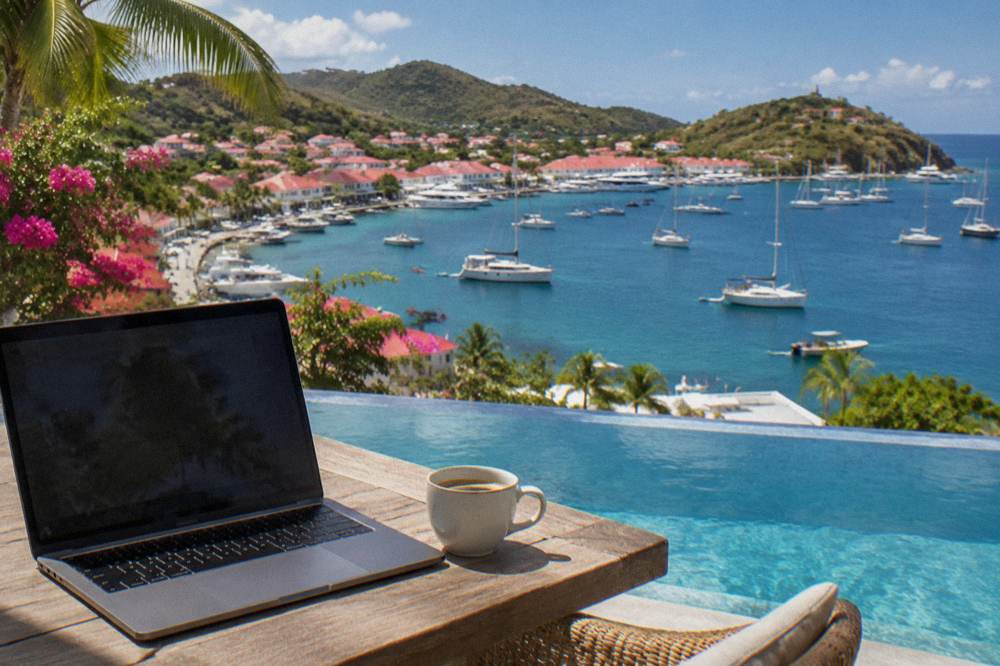
Arrival day is the day to be offline-ready rather than online-dependent: Gustaf III Airport is a single small terminal for turboprops, the ferry terminals at Philipsburg and Marigot are equally compact, and none of the three publishes a Wi-Fi or charging detail in the material behind this guide, so boarding passes, bookings and addresses should be stored where they open without a connection.
The airport itself is famous for its approach, and its size shapes the arrival experience. The runway is 646 metres, operations are daylight and visual only, and the aircraft are small STOL turboprops flown by carriers including St Barth Commuter from St Martin, Grand Case and Guadeloupe, and Tradewind from San Juan and Antigua. Winair also serves the island from St Martin. All of that is documented on the St Barts airport guide. What is not documented anywhere verifiable is a public Wi-Fi network at the terminal, a charging bank or a SIM vending point, and a small airport on a small island is the wrong place to discover a gap.
The ferry arrival runs through the same logic. Great Bay Express runs from Philipsburg on the Dutch side, a crossing of about 45 minutes, and Voyager runs from Marigot on the French side, about 50 to 60 minutes; the operators' own pages carry the current schedules and check-in rules, with check-in well before departure and a passport required. If the plan is SXM airport to the St Barts ferry, the transfer between Princess Juliana airport and the ferry terminal is another stretch of the day best navigated with offline maps already loaded.
One thing that does not need a connection on arrival: money. The currency is the euro, cards are the ordinary way to pay in a French territory, and the emergency numbers, 15 for medical, 17 for police, 18 for fire and 112 as the general European emergency number, are worth storing in the phone before departure, in the phone's own emergency fields, where they work even with the screen locked.
| Contact | Number | Use |
|---|---|---|
| Medical emergencies (SAMU) | 15 | Ambulance and urgent medical help |
| Police and gendarmerie | 17 | Law enforcement |
| Firefighters | 18 | Fire and rescue |
| General emergency | 112 | Works across French territories |
Does Weather Affect Connectivity In St Barts?
The Atlantic hurricane season runs from 1 June to 30 November with its peak from mid-August to mid-October, and severe weather is the one force that realistically interrupts power and networks on any Caribbean island, including this one; outside those events the climate is steadily warm, with mean daily highs of 28.5 C in January and 31.7 C in September according to the Meteo-France normals for 1991-2020, and rain averaging 891.3 mm a year, heaviest in October at 135.6 mm.
That is a lot of numbers in one sentence, so the table below spreads them out. The practical reading for a connected trip is straightforward. October is the wettest month of the normals, and it sits inside the hurricane season peak, which is also when many hotels are closed anyway. The high season months of December through April combine the lowest rainfall of the year with the fullest open calendar of hotels, restaurants and events, which is why they are the months most working travellers and holidaymakers choose.
| Month | Mean Daily High (C) | Mean Daily Low (C) | Rain (mm) |
|---|---|---|---|
| January | 28.5 | 23.5 | 52.6 |
| February | 28.6 | 23.3 | 38.4 |
| March | 29.0 | 23.5 | 41.4 |
| April | 29.8 | 24.2 | 50.9 |
| July | 31.2 | 26.0 | 80.4 |
| October | 31.4 | 25.8 | 135.6 |
| November | 29.9 | 25.0 | 118.6 |
Meteo-France normals, 1991-2020, for the St Barthelemy station. The full monthly table and the season-by-season reading are on the site's weather pages, including the best time to go guide links across the season material.
Two further practical notes follow from the climate. Electricity on the island uses plug types C and E, the French standard, so travellers from North America need adapters for chargers, and a charged power bank covers the long arrival day described above. And no storm or outage can be predicted for a date; the only sound preparation is the offline checklist, plus travel insurance, which the planning basics pages on this site discuss alongside the island's main draws.
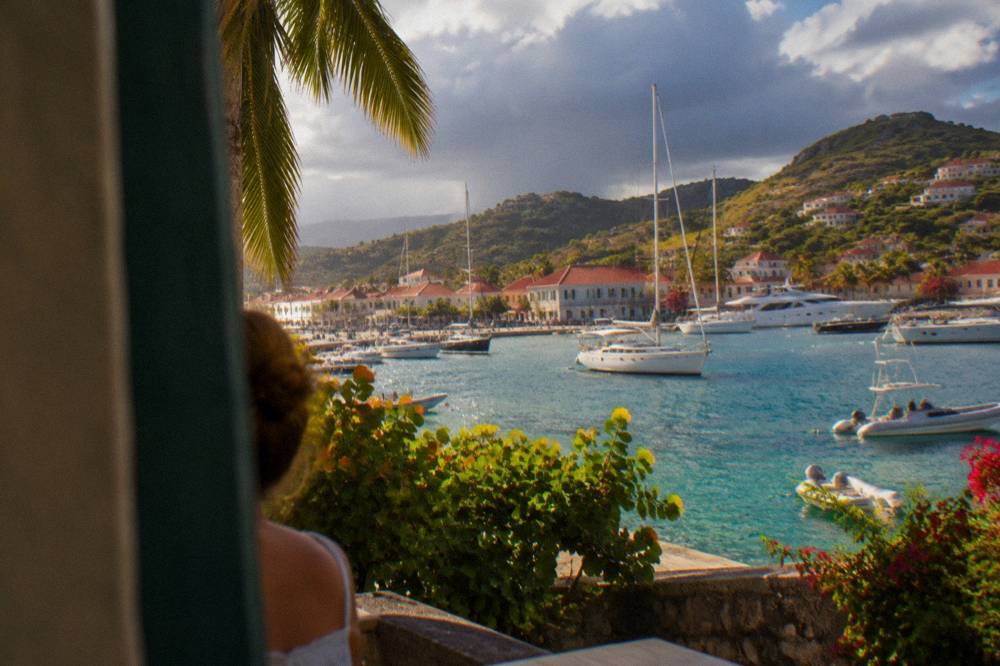
How Do You Stay Connected On Boat Day Trips From St Martin?
Every bookable boat tour that serves St Barts departs from St Martin or Sint Maarten, from ports such as Simpson Bay, Cole Bay, Anse Marcel and Grand Case, and a day on the water is a day spent deliberately offline, so meeting points, departure times and the operator's contact details should be saved to the phone the night before, with screenshots rather than live links.
This is the part of a St Barts trip where connectivity planning changes shape. The island's day trips, including the group sail that anchors the trip list, all leave from the neighbouring island, which means the morning starts with a transfer on St Martin before the boat itself. A saved screenshot of the meeting point, the booking reference and a phone number does not need a signal, does not need a password, and survives a wet deck better than a browser tab does.
The private options above and below cover the same waters on different terms, and the details, prices and durations render from live data on each card rather than from this page. The snorkelling itself is governed by rules worth knowing before you swim: the environment agency's regulatory-zones page lists a 5-knot speed limit inside the marine reserve's zones, a ban on jet skis, 23 dive sites, and a flat prohibition on touching turtles, with dogs banned from the beaches. None of that needs an internet connection to respect, but reading it once before the trip is the difference between a good swim and a fine.
The underwater rules have one more connection to the online world: drones. The environment agency prohibits drones in and near the reserve without authorization, which includes Colombier, so the aerial footage plan should be checked against that rule rather than against a whim on the boat.
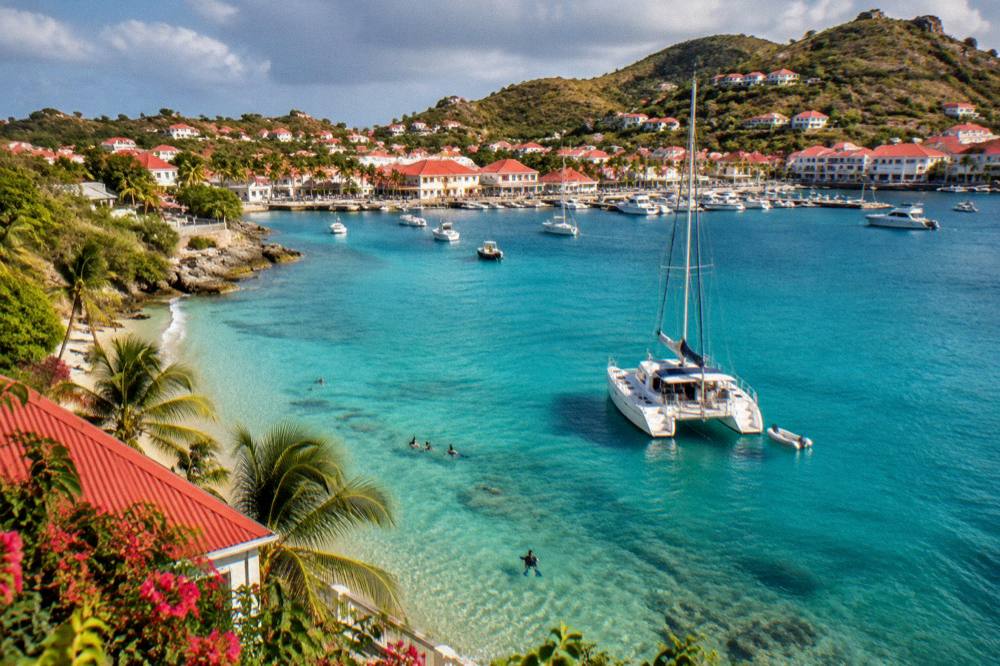
What Should You Download Before You Fly To St Barts?
The night-before download list for St Barts is short and specific: an offline map covering both islands, the ferry or flight bookings, the accommodation address in French where the listing gives one, the emergency numbers, and any walking routes you plan to follow, because the island's beaches and open public places are free and no guided walking tour is listed here, so a self-guided plan has to work from the phone.
That last point deserves its own sentence. There is no walking tour product on this island, free or paid, and the beaches and open public spaces are the island's free attractions. A traveller who wants to walk Gustavia's harbour front, the fort sites at Fort Karl and Fort Gustaf, or the Colombier trail, does it self-guided, which makes offline maps more useful here than in destinations with bookable guided walks. The Colombier hike pages and the island's trail material sit elsewhere on this site, but the phone preparation is the same.
The download table below is the complete pre-departure routine in one place.
| Download | Covers | Best Saved As |
|---|---|---|
| Offline map, St Barts | Gustavia, Saint-Jean, Flamands, Saline, Colombier, Grand Cul-de-Sac | Phone map app offline area |
| Offline map, St Martin and Sint Maarten | Philipsburg, Marigot, Simpson Bay, Grand Case, both airports | Same app, second area |
| Ferry or flight booking | Reference code, operator phone number, departure terminal | Screenshot and PDF |
| Accommodation confirmation | Property name, address, manager's phone | Screenshot and PDF |
| Emergency numbers | 15, 17, 18, 112 | Phone's emergency information fields |
| Trail notes | Colombier route, harbour walks | Saved notes or screenshots |
Electricity again belongs in a pre-departure sentence, because chargers are part of connectivity: plug types C and E, the French pattern, and no adapter means a phone that dies midway through the arrival chain.
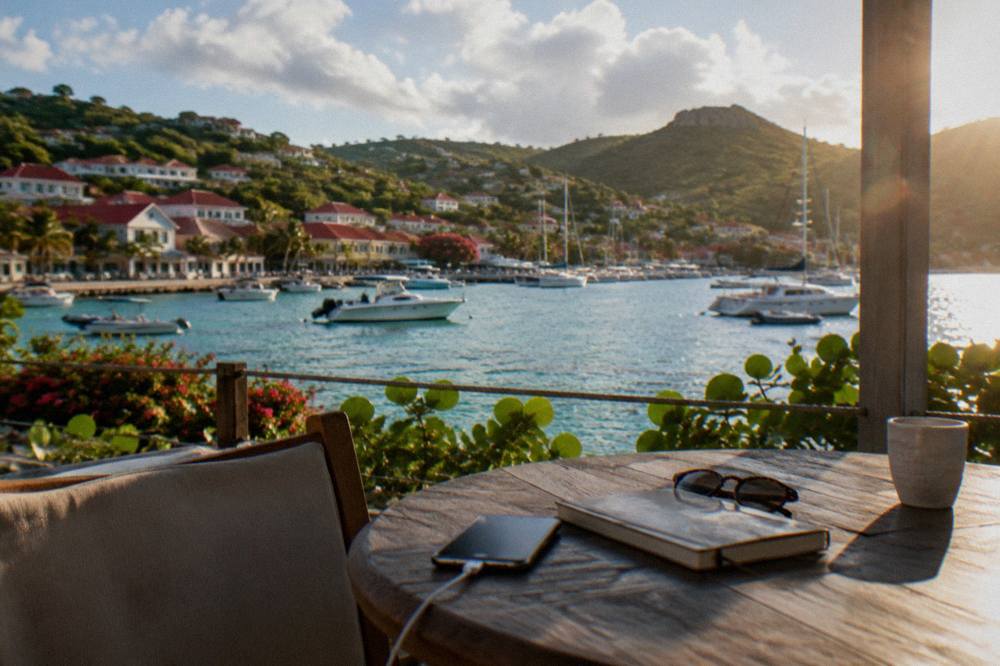
Are There Events When Being Online Matters More In St Barts?
Two dated events anchor the island's calendar, the St Barth Music Festival from 8 to 18 January 2027 and the St Barth Gourmet Festival from 9 to 15 November 2026, and both are periods when bookings, ferry seats and dinner reservations move faster than usual, so a working phone with saved confirmations is worth more during them than in a quiet week.
The sailing calendar has the same effect on the harbour. The St Barths Bucket Regatta takes place in mid-March, and Les Voiles de St Barth runs in April, with the regatta weeks filling Gustavia's anchorage with superyachts and the town with visitors. The Film Festival falls in late April or early May. New Year's Eve brings fireworks over Gustavia harbour each year. Around each of these, the practical connectivity move is unchanged: book ahead, save the confirmations offline, and treat the phone as a document wallet rather than a live terminal.
The overnight and multi-day boat options are the other bookable products where confirmations matter, and the longest one appears below.
Between events, the island's connected life is mostly the ordinary business of a French Caribbean territory: euro prices, cards accepted as a matter of course, English widely spoken alongside French, and the shops and galleries of Gustavia described on the St Barts shopping guide. None of it demands bandwidth. The island's demands on a phone are narrower and more interesting: maps for hills, screenshots for boats, adapters for French sockets, and patience for a daylight-only airport.
Common Questions About Internet In St Barts
Is there good Wi-Fi in St Barts hotels?
Hotels and villas on St Barts provide Wi-Fi, but speed, room coverage and any limits are set property by property. Email the property before booking and ask whether the connection in the rooms suits video calls.
Will my phone work on St Barts?
The island sits under the French telecom system but outside the Schengen area, so a plan sold for Europe may not cover it. Check your carrier's territorial coverage for St Barthelemy by name before you fly, and consider an eSIM arranged at home as a fallback.
Is there Wi-Fi at Gustaf III Airport?
The airport is a single small building for turboprops. Store boarding passes and bookings offline so arrival does not depend on a terminal network.
Can I work remotely from St Barts?
Yes, with preparation. The time zone is UTC-4 year round with no daylight saving, villas stay available year round, and the main planning constraint is the autumn calendar, when many hotels close and reopen in waves between mid-October and early November.
Do I need offline maps for St Barts?
Yes. The island has no bookable guided walking tour, so beach walks, the Colombier trail and the Gustavia harbour front are self-guided from the phone, and boat day trips depart from St Martin or Sint Maarten, so the offline map should cover both islands.
Does weather affect internet on St Barts?
Hurricane season runs 1 June to 30 November with a peak from mid-August to mid-October, and severe weather is the realistic cause of outages on any Caribbean island. Outside such events the climate is steadily warm, with October the wettest month at 135.6 mm of rain in the Meteo-France 1991-2020 normals.
The short version of this whole page fits in one sentence: sort the data plan at home, ask the property the two questions, download both islands, and let the phone be a document wallet for the days the Caribbean decides otherwise.