Tourist Tax In St Barts
St Barthelemy, better known as St Barts, charges a tourist tax on paid accommodation stays, collected by the hotel, villa agency or guesthouse rather than at the airport or ferry dock. This page explains what the tax is, who pays it, who does not, and how it fits into a normal trip.
St Barts charges a taxe de séjour, a tourist tax on paid overnight stays, collected year-round by the accommodation itself and passed to the Collectivité de Saint-Barthelemy. Day visitors arriving by ferry, plane or cruise tender do not pay it.
St Barthelemy, an overseas collectivity of France since 2007 and better known as St Barts, levies a tourist tax on paid overnight stays, and the practical part every traveler needs to know is simple: the accommodation collects it, not a border officer. There is no booth at Gustaf III Airport, no desk at the ferry terminal in Gustavia, and no line item on a cruise tender ticket. The tax is called the taxe de séjour, it was instituted by the Collectivité de Saint-Barthelemy under its own code of contributions, and it applies to paying guests at hotels, villas, guesthouses and similar lodging across the island, which covers about 21 square kilometres and roughly 10,700 residents. This page from St Barthelemy Travel sets out what the tax covers, who is exempt, and how it behaves across the seasons, using the island's official framework rather than guesswork.
What Is The Tourist Tax In St Barts?
The tourist tax in St Barts is a taxe de séjour, a statutory lodging tax on paid overnight stays, instituted by the Collectivité de Saint-Barthelemy and governed by articles 123 to 125bis of its code of contributions. It is charged per night of a paid stay, it is collected year-round from the first of January to the thirty-first of December, and it is remitted by the accommodation operator, never paid directly by the guest to the government.
The mechanism follows the French model. The Collectivité, the island's territorial administration, holds the power to set local taxes under its status as an overseas collectivity, and the taxe de séjour is one of the instruments it uses. Accommodations of every kind, hotels, villas, bed-and-breakfast rooms and similar paid lodging, act as the collection point: they add the tax to a guest's bill, hold the money, and declare and transfer it through the official platform the Collectivité runs for the purpose. The rate itself is set by the Collectivité as a percentage basis defined in its deliberations, and the amount for a given stay depends on the accommodation price, so the booking confirmation or the final invoice from the property is where the exact figure appears.
Two framing points help set expectations. First, this is not an entry fee: it is tied to sleeping on the island for money, not to arriving on it. Second, it is not optional or negotiable at the front desk, because the operator is legally the debtor of the tax, not the guest. A traveler who disputes a line on a bill is really asking the property to restate a statutory charge, which is why the practical questions worth asking before travel are whether the quoted room rate already includes the tax and whether the stay falls into one of the exemption categories. The sections below take those questions in turn.
Who Pays The St Barts Tourist Tax?
Every paying guest at a hotel, villa, guesthouse or similar paid lodging on St Barts pays the tourist tax, from the first night of a paid stay, and it is added to the bill by the accommodation. Guests on stays longer than six months are exempt, as are seasonal workers holding contracts, and children's treatment follows the Collectivité's own deliberations rather than a universal rule. No one arriving for the day only, by ferry, small plane or cruise tender, pays it.
The base of the tax is the paid overnight stay. That means the obligation follows money changing hands for a bed, whether the bed is in a hotel in Gustavia, a villa in the hills above Flamands, or a small guesthouse near Lorient. The tourist committee's materials and the Collectivité's framework both describe the same collection chain: the operator charges the guest, keeps the revenue aside, and declares it on the official platform. For villa rentals the collection duty falls on the agency or manager handling the booking, which on this island means established local villa businesses rather than the individual owner in most cases.
The exemptions are worth reading closely, because they are the only categories the framework names. Stays exceeding six months are exempt, which removes long-term residents and extended rentals from the base. Seasonal workers with contracts are exempt as well, a category that matters on an island whose hotels and restaurants staff up for the winter season. Beyond those, the deliberations handle edge cases such as unstayed nights and canceled bookings, and the property applying the rules is the right place to resolve them. What no traveler should do is treat the tax as a discretionary service charge: it is a statutory levy, and the invoice line simply reflects the operator passing it through.
For context on where the money lands, the Collectivité channels lodging-tax revenue into tourism-related spending, a pattern common to the French taxe de séjour system. The island's own tourism structures, including the Saint Barth Tourism Committee, operate in that ecosystem. None of that changes what an individual guest does, which is limited to checking that the bill's tax line matches the stay.
Day-trip context matters here, because a large share of St Barts visitors never stay a night. Every bookable tour listed here departs from St Martin or Sint Maarten and visits St Barts, and a day guest on such a trip owes no lodging tax anywhere on the island. The how to get to St Barts guide covers the gateway routes, and the ferry operators and schedule guide covers the two scheduled crossing options in detail.
How Is The St Barts Tourist Tax Collected?
The St Barts tourist tax is collected by the accommodation at the time of billing, added to the guest's invoice or booking total, and then declared and paid by the operator to the Collectivité through its official taxe de séjour platform. The guest never files anything, never visits an office, and never pays the tax at the airport, the ferry terminal or the cruise tender point, because the entire administrative burden sits with the lodging provider.
The official platform exists and is run by the Collectivité specifically for this purpose, and accommodations registered on the island use it to declare their taxable nights and remit what they collected. From a guest's point of view the process is invisible unless a bill is examined line by line. A hotel adds the tax to the folio at checkout or includes it in the prepaid rate. A villa agency adds it to the rental total. A small guesthouse does the same on a hand-written invoice. The operator then settles with the administration on its own calendar, which is why questions about the tax during a stay are answered by the property's front desk or booking office, not by any government counter a tourist could walk to.
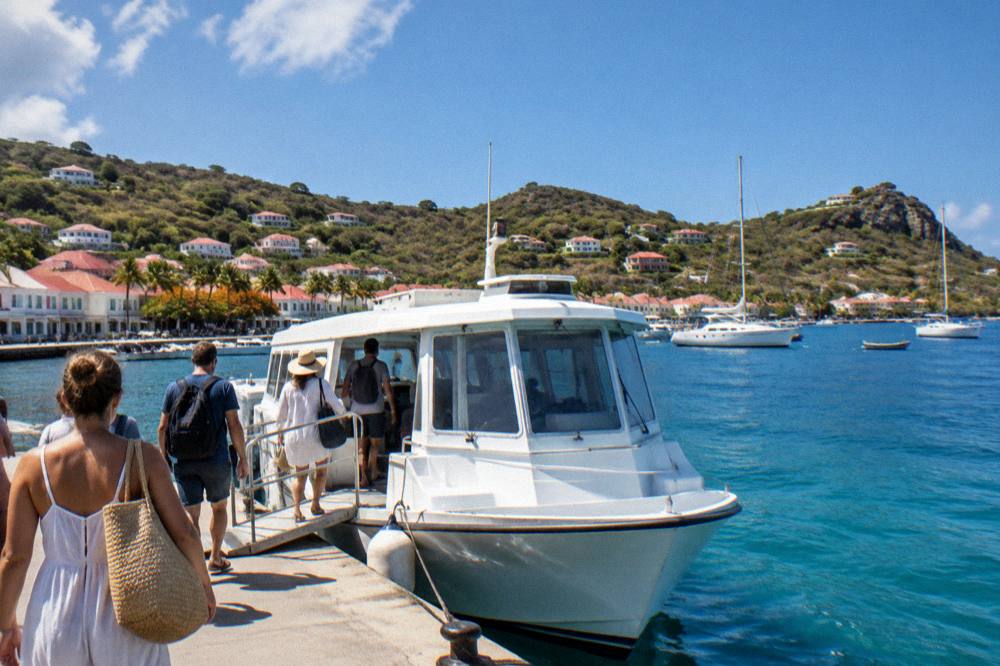
One practical consequence deserves emphasis for the ferry and flight arrival routes. Travelers reaching St Barts through St Martin, whether on the crossing from Philipsburg or the one from Marigot, or on a small STOL turboprop into Gustaf III Airport, pass no tax checkpoint of any kind. The St Barts airport guide describes what arrival on the island actually involves, and none of it includes a tax payment. The same holds for cruise passengers, who tender to Gustavia because the island has no cruise pier; a day ashore generates no lodging obligation at all. The cruise port guide covers the tender arrangement.
A second consequence concerns prepayment. When a rate is quoted and paid in advance, whether for a hotel room or a villa week, the tax may already be inside that total or may be added locally, and the two practices both exist. The booking confirmation is the document that settles the question, and asking the property directly before arrival is the reliable way to avoid a surprise line at checkout. This is ordinary bookkeeping, not a St Barts peculiarity, but it is the single most common point of confusion about the taxe de séjour among arriving guests.
When Do You Pay The St Barts Tourist Tax?
The St Barts tourist tax is charged on every night of a paid stay, year-round, with no high-season surcharge and no low-season waiver built into the framework: the collection period runs from the first of January to the thirty-first of December. The tax applies whenever money is paid for lodging, so the calendar that matters is the guest's own booking, not the island's season, and the amount moves with the accommodation price rather than with the month.
What does move with the month is everything around the tax. The island's rhythm is strongly seasonal: the high season runs roughly from November to April, many hotels and restaurants close each autumn and reopen between mid-October and early November, and the climate shifts across the year in ways the Meteo-France normals, 1991-2020, quantify. The mean daily high runs from 28.5 C in January to 31.7 C in September, the island receives 891.3 mm of rain in an average year, and October is the wettest month at 135.6 mm. None of that changes the tax, but it changes what a traveler gets for the night the tax attaches to.
| Month | Mean daily high (C) | Mean daily low (C) | Rain (mm) |
|---|---|---|---|
| January | 28.5 | 23.5 | 52.6 |
| February | 28.6 | 23.3 | 38.4 |
| July | 31.2 | 26.0 | 80.4 |
| September | 31.7 | 26.2 | 96.9 |
| October | 31.4 | 25.8 | 135.6 |
| December | 28.9 | 24.1 | 79.2 |
The season guide on this site, best time to go to St Barts, treats the shoulder and low months in detail, and the hurricane-season framework matters for autumn bookings: the Atlantic season runs 1 June to 30 November, with the peak from mid-August to mid-October. A canceled or shortened stay raises the question of what happens to lodging-tax already charged, and the answer sits with the property's cancellation terms, which is a reason to read them before paying rather than after.
For overnight visitors arriving by boat, the timing question can also interact with charter itineraries. A two-day private catamaran trip from St Martin that spends a night anchored off St Barts is a different lodging arrangement from a villa week, and the tax framework attaches to paid lodging on land; a live-aboard charter is a product priced as one bundle. The listings for such trips, all departing from St Martin or Sint Maarten, show their own inclusions.
Who Is Exempt From The St Barts Tourist Tax?
Two exemption categories are written into the St Barts framework: stays longer than six months, and seasonal workers holding contracts, both of which are removed from the tax base by the Collectivité's own rules. Day visitors are not an exemption category at all, because they were never in the base: the tax attaches only to paid overnight lodging, so a ferry day-tripper, a cruise tender passenger and a small-plane day guest owe nothing.
The long-stay exemption at more than six months reflects the boundary between a visitor and a resident, and it parallels the way the island's legal population of roughly 10,700 is counted by the French statistics agency. The seasonal-worker exemption reflects the island's labor reality: hotels, restaurants and villa operators bring in contract staff for the winter, and taxing those workers' employer-provided beds would work against the staffing the season depends on. Both exemptions are administered by the accommodation, like everything else in this system, and a guest who believes an exemption applies raises it with the property, not with a government office.
A few groups are worth clarifying precisely because the internet blurs them. Transit passengers passing through St Martin en route to St Barts pay no St Barts tax at the transit point; the obligation, if any, arises only if they sleep a paid night on St Barts itself. Crew and delivery staff of visiting yachts fall under the rules for their own arrangements, which the port's yachting procedures govern, and the Gustavia harbor guide context covers arriving by boat. Guests of friends or family who pay nothing for their bed are outside the base, since the tax follows payment, though long complimentary stays can involve residency questions well beyond a tourist tax.
None of this exempts the traveler from ordinary entry rules, which are a separate subject entirely. St Barts sits outside the Schengen area, and passport and visa requirements are covered on this site's customs and entry overview. A valid travel document is required regardless of any tax question.
How Does The Tourist Tax Fit Into A St Barts Trip Budget?
The St Barts tourist tax is a per-night statutory charge that scales with the price of the accommodation, so it fits a trip budget as a small pass-through line on the lodging invoice rather than as a fixed fee a traveler budgets separately.
The reliable planning method is to ask each property or agency whether the quoted rate includes the taxe de séjour, then treat any residual amount as part of the lodging total, exactly like a cleaning fee or a service charge would be treated anywhere else.
No rate figure belongs on a page like this one, because the rate is set by the Collectivité's deliberations and applied per property, and repeating a number detached from the actual invoice is how travelers get misled. What can be said with confidence is structural: the tax is a percentage-style levy tied to the net accommodation price, collected per night, capped in application by the rules the Collectivité publishes, and shown on the bill the property issues. The St Barts hotels overview and the luxury hotels guide cover the lodging landscape without pretending to know nightly prices, and the five-star hotels guide does the same at the top of the market.
For villa renters the same logic applies through the agency. A villa booking on St Barts typically involves an agency or manager, and that entity is the tax collector for the stay. The villa rental guide context on this site explains the villa-versus-hotel choice, and the practical tax question to ask the agency is identical to the hotel question: is the taxe de séjour inside the quoted total or added at the end.
Budgeting also benefits from knowing what the tax does not touch. Restaurant meals, car rental, shopping and boat trips carry no tourist-tax component; the island's general prices are simply its prices, and local costs are in euros. The taxe de séjour is a lodging charge and nothing broader. For the bookable side of a trip, the products listed here are priced in US dollars on their own listings, and the tokens below render those figures directly.
The group sail above is the one per-person product, running 12 May to 31 August 2027 on its listing, and it departs from St Martin or Sint Maarten, as every bookable St Barts tour does.
Do Day Visitors Or Cruise Passengers Pay The St Barts Tourist Tax?
Day visitors to St Barts pay no tourist tax, because the taxe de séjour attaches exclusively to paid overnight lodging and nothing else: a ferry passenger over from St Martin for the day, a cruise guest tendered into Gustavia, and a small-plane day-tripper all fall entirely outside the base. Cruise ships tender their passengers to Gustavia by boat, the island has no cruise pier, and no tax, fee or levy is collected at the tender point or anywhere in town for simply being ashore.
This is the cleanest answer in the whole subject, and it is worth stating firmly because port-town rumors elsewhere in the Caribbean sometimes suggest otherwise. The Collectivité's framework taxes the paid night. A ship at anchor contributes through port channels of its own, and an individual passenger stepping off a tender owes nothing to anyone. What the day visitor can spend money on is ordinary: a taxi, a rental car for the day, lunch, shopping, all in euros at local prices, with no tax line anywhere.
| Arrival type | Overnight stay? | Tourist tax applies? | Where collected |
|---|---|---|---|
| Hotel guest, one week | Yes, paid lodging | Yes, per night of the stay | On the hotel bill |
| Villa renter through an agency | Yes, paid lodging | Yes, per night of the stay | In the agency's total |
| Ferry day-tripper from St Martin | No | No | Nowhere |
| Cruise passenger tendered at Gustavia | No | No | Nowhere |
| Seasonal worker with a contract | Employer-provided stay | No, statutory exemption | Not applicable |
The day-trip framing also explains the trip list on this site. Every product departs from St Martin or Sint Maarten, visits St Barts, and returns, so a traveler building a trip around these tours either stays on St Martin, where French-side lodging taxes are a separate St Martin subject, or pairs a tour with an island stay that carries the taxe de séjour on its own nights. The St Maarten before or after St Barts planning guide covers the pairing logistics.
What Arrival Routes Mean For The St Barts Tourist Tax?
The St Barts tourist tax is completely independent of the arrival route: whether a traveler lands at Gustaf III Airport on a small STOL turboprop from St Martin, crosses by ferry from Philipsburg or Marigot, or arrives on a private boat, the tax is triggered only by the first paid night of lodging and is collected only by the accommodation. No gateway, carrier or terminal plays any role in collecting it, and the airport, the ferry docks and the harbor handle entry formalities, not lodging taxes.
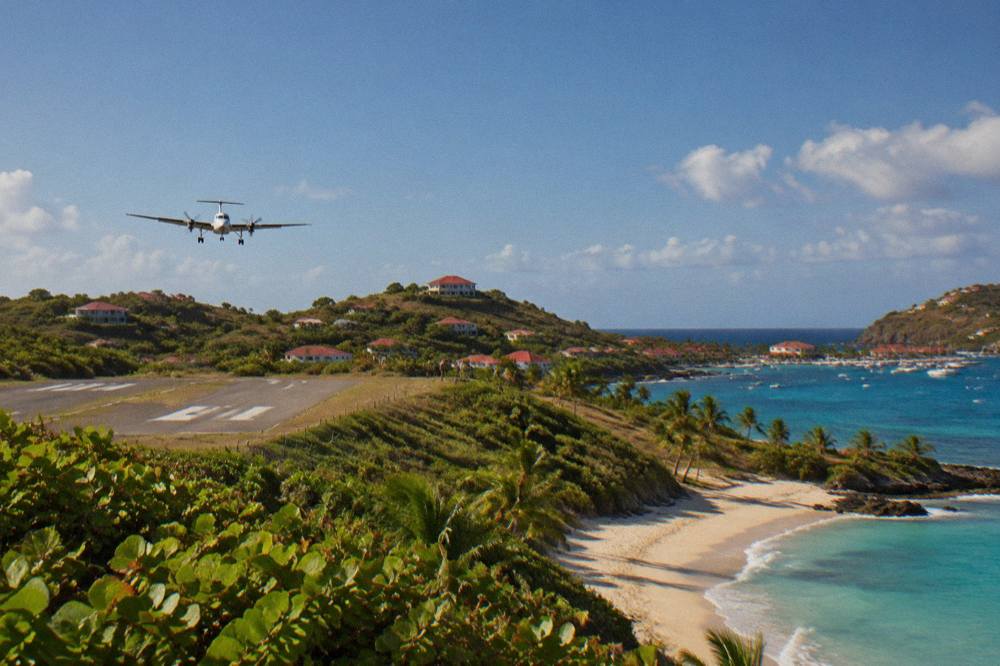
The island's geography makes the arrival story unusually narrow. Gustaf III Airport's runway is 646 metres, so only small STOL turboprops operate there, in daylight and visual conditions only, and no jet lands on the island. Scheduled small-plane service reaches St Barts from St Martin through St Barth Commuter, from SXM, Grand Case and Pointe-a-Pitre, and from San Juan and Antigua through Tradewind, with St Barth Commuter and Winair also working the SXM corridor. The flights to St Barts guide and the winair guide cover those routes, and none of them involves a tax transaction of any kind.
| Arrival route | Operator or carrier | Departure point | Tax collected en route? |
|---|---|---|---|
| Scheduled ferry, Dutch side | Great Bay Express | Bobby's Marina, Philipsburg | No |
| Scheduled ferry, French side | Voyager | Marigot Ferry Terminal | No |
| Small-plane shuttle | St Barth Commuter | SXM, Grand Case, Pointe-a-Pitre | No |
| Small-plane shuttle | Tradewind | San Juan, Antigua | No |
| Cruise tender | Various lines, ships up to 1,200 passengers | Anchorage off Gustavia | No |
The ferry crossings run about 45 minutes from Philipsburg and about 50 to 60 minutes from Marigot, figures the operators themselves publish, and both require a passport and a check-in well before departure. The Great Bay Express guide covers the crossing in detail, including the reality that the sea between the islands can be rough and no smooth passage is guaranteed. None of this touches the taxe de séjour, but knowing the arrival mechanics helps a traveler see exactly where the tax does and does not appear: everywhere at the hotel desk, nowhere in transit.
How Should You Ask About The St Barts Tourist Tax Before Booking?
The right question to ask a St Barts property or villa agency before booking is a single sentence: does the quoted rate include the taxe de séjour, and if not, when is it added and at what basis? Asking that one question in writing, by email or in the booking thread, resolves nearly every dispute before it can occur, because the answer creates a record of what the quoted price covers and what the final invoice will show.
Everything else flows from that. A property that answers yes has folded the tax into the rate, and the invoice will show it as included. A property that answers no will add it per night at checkout or in the final balance, and the basis, a percentage-style levy on the accommodation price under the Collectivité's rules, is the property's to apply, not the guest's to calculate. Travelers booking through villa managers should address the same question to the manager, since the manager is the collector for the stay.
Three follow-up situations deserve the same written-question discipline. For a long stay approaching the six-month boundary, ask whether the exemption applies, because the framework removes stays longer than six months from the base. For a booking during the autumn shoulder, ask about the property's own seasonal closure dates, since many hotels close in the late-summer-to-October window and reopen between mid-October and early November, and a stay spanning a closure is not a stay at all. For a booking in the June-to-November hurricane window, ask how cancellation interacts with prepaid amounts, including any prepaid tax component; the season runs 1 June to 30 November with its peak from mid-August to mid-October, and the terms, not the calendar, decide refunds.
It also helps to keep the tax in proportion. The taxe de séjour is one line on one invoice, collected by the same people who hand over the room keys. The bigger planning questions on this island are the ones this site's other pages handle: where to stay, covered across the area guides; how to arrive, covered by the airport and ferry pages; and what to do with the days themselves. The things to do in St Barts overview is the natural next stop.
For travelers pairing a St Martin stay with a St Barts day on the water, the private charter options above and below render their prices, ratings and durations directly from the listings, and all of them depart from St Martin or Sint Maarten.
Common Questions About The St Barts Tourist Tax
Is there a tourist tax in St Barts?
Yes. St Barts applies a taxe de séjour, a statutory tourist tax on paid overnight stays, instituted by the Collectivité de Saint-Barthelemy and governed by articles 123 to 125bis of its code of contributions. It is collected by the accommodation and remitted to the Collectivité.
How much is the St Barts tourist tax?
The tax is set as a levy tied to the accommodation price under the Collectivité's deliberations, and the amount for a specific stay depends on the property and the nightly rate. The booking confirmation or the final invoice from the property shows the exact figure for that stay, and asking the property before booking is the reliable way to know it in advance.
Do children pay the St Barts tourist tax?
The treatment of children follows the Collectivité's own deliberations rather than a single universal rule. The accommodation applying the tax is the right place to ask, since it administers the framework for every guest on the booking.
Do cruise passengers pay a tourist tax in Gustavia?
No. Cruise ships tender their passengers to Gustavia by boat, the island has no cruise pier, and the taxe de séjour attaches only to paid overnight lodging. A day ashore from a ship creates no tax obligation of any kind.
Do ferry day-trippers from St Martin pay the St Barts tourist tax?
No. Day visitors arriving by ferry from Philipsburg or Marigot, or by small plane from St Martin, pay no tourist tax, because the tax applies exclusively to paid overnight stays on the island.
Who is exempt from the St Barts tourist tax?
Stays longer than six months are exempt, and seasonal workers holding contracts are exempt. Beyond those categories, the tax follows paid lodging, so unpaid stays are outside the base entirely.