ESIM And Phone Coverage In St Barts
St Barthelemy, universally written St Barts, is a small French island in the Caribbean, and preparing a phone for a stay here means checking a few things most Caribbean checklists skip. This guide covers what to verify before buying an eSIM, how arrival by small plane or ferry shapes connectivity planning, and the island basics worth loading into a notes app before departure.
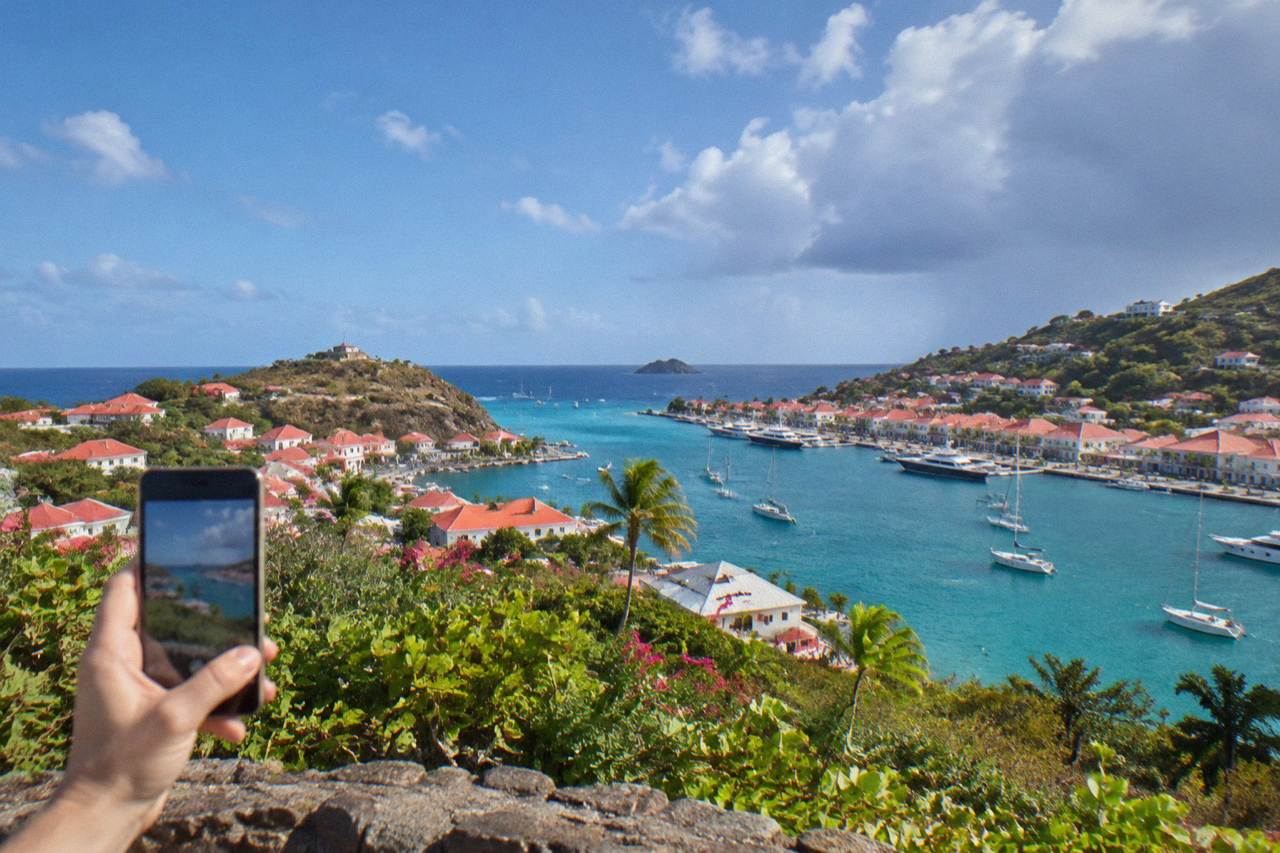
An eSIM works on St Barts if the device supports eSIM and the purchased plan covers the territory; because St Barts is a French overseas collectivity rather than mainland France, plan coverage must be confirmed on the operator's own listing before purchase.
St Barthelemy, better known as St Barts, is a French overseas collectivity in the Caribbean with about 21 square kilometres of hills, public beaches and red-roofed Gustavia as its harbour capital. Preparing a phone for the island involves a specific wrinkle: the territory is administered under French overseas rules rather than mainland French ones, and that distinction shows up in exactly the place travellers feel it, in the fine print of a mobile plan. This page from St Barthelemy Travel walks through the practical questions, from what an eSIM actually needs to work on the island to how arrival logistics, plugs and the annual calendar shape a connected stay.
Does An ESIM Work In St Barts?
An eSIM works on St Barts when two conditions are met: the phone supports eSIM activation, and the specific plan purchased explicitly covers Saint Barthelemy. Because St Barts is a French overseas collectivity, a plan described as covering France does not automatically cover the island, and the operator's own coverage list is the only reliable source. No SIM or eSIM price and no roaming arrangement can be stated here.
That second condition is where most of the trouble happens. The island has mobile service, and phones that connect in St Martin or Sint Maarten generally face a similar technical situation on St Barts, but the commercial question is separate from the technical one. A plan sold for "Europe" or "France" may list the French Caribbean separately, may include it, or may say nothing at all. The answer lives on the plan's own coverage page, and it should be read before purchase rather than after landing.
A useful habit is to check the coverage list for all the places an itinerary touches. A typical St Barts trip passes through St Martin or Sint Maarten, since the island's airport at Gustavia accepts only small turboprops and no jets, and many travellers also spend a night or two on the Dutch or French side of that neighbour island. A plan that covers one side of St Martin but not the other, or neither, changes the arithmetic of buying a local physical SIM at the gateway versus activating an eSIM before departure.
The device side is simpler. An eSIM is a carrier profile installed digitally rather than a physical card, and any current phone that supports eSIM installation can hold that profile alongside a home SIM. Travellers who prefer their home carrier's roaming can keep the physical SIM active and ask their provider directly whether their plan includes the territory. That answer must come from the provider, and no roaming claim is made here.
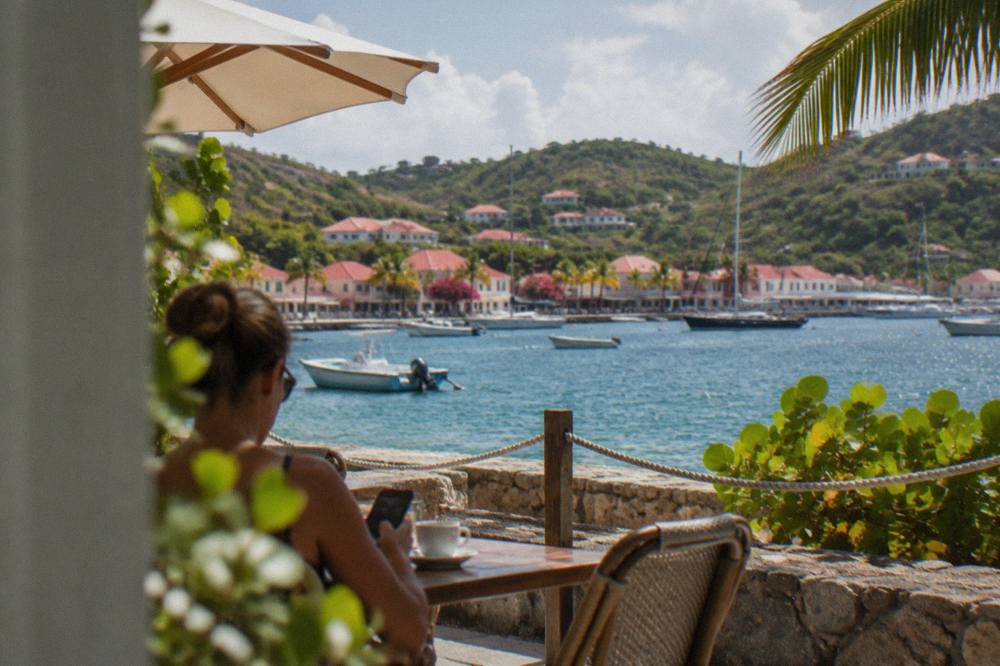
What To Check Before Buying An ESIM For St Barts
Before buying, verify four things on the plan's own listing: that Saint Barthelemy appears by name in the covered territories, that the data allowance suits the stay rather than only the transit, that the validity window matches the trip dates including any St Martin stopover, and that the phone is carrier-unlocked so an eSIM profile can install. If any one of the four is unclear, the listing's support channel is the place to ask.
The unlock question catches more people than the coverage question. A phone still locked to a home carrier will refuse a third-party eSIM profile regardless of what the plan covers, and unlocking is a request made to the home carrier, sometimes with a waiting period. It belongs on a pre-trip checklist weeks before departure, not at the airport.
The allowance question is about behaviour rather than numbers. A trip built around boat days, beach time and a harbour town uses a phone mostly for maps, messages and reservations. A trip built around photo backups and video calls uses far more. The honest approach is to look at the phone's own data-usage statistics from a normal month at home and treat that as the baseline, then judge the plan against it.
| Check | Why It Matters | Where To Confirm |
|---|---|---|
| Territory listed by name | French overseas collectivities are often listed separately from France | The plan's coverage page |
| Data allowance vs usage | Beach and boat days change how much data a trip really needs | The phone's own usage statistics |
| Validity window | Trips often include St Martin nights before or after the island | The plan's terms before checkout |
| Device unlocked | A locked phone will not install a third-party eSIM profile | The home carrier's unlock policy |
A fallback deserves planning too. Because the trip's gateway is St Martin or Sint Maarten, travellers who find their eSIM unusable on arrival are in a place with ordinary airport and port retail, where physical SIM options exist. Booking the island's day tours also rewards a working phone, since every bookable tour listed here departs from St Martin or Sint Maarten and coordination happens on the day of travel. The Boomerangs Group Sail and Snorkel, which visits Gustavia, Colombier Beach and Ile Fourchue, is one such departure, and its the operator's listing link shows live dates on the operator's listing.
Beyond the eSIM itself, two offline habits are worth an hour at home. Downloading offline maps for both St Barts and St Martin before departure removes the single largest data need on the ground, and saving confirmations, ferry bookings and accommodation addresses to the phone's local storage means nothing critical depends on a signal working at the exact moment a document is needed.
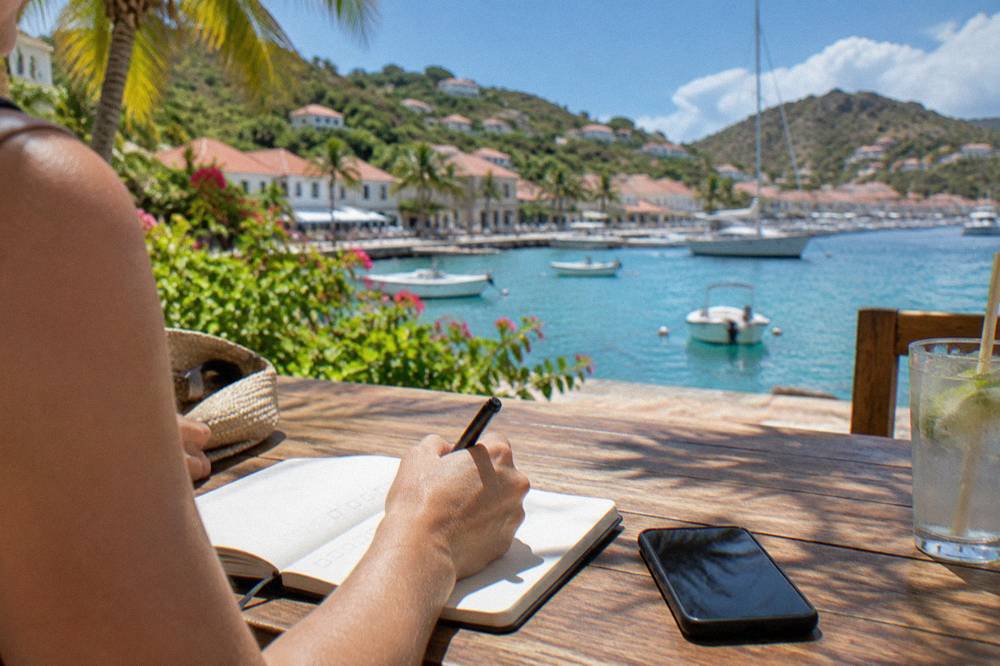
How Do You Get To St Barts And Where Does Your Phone Switch Over?
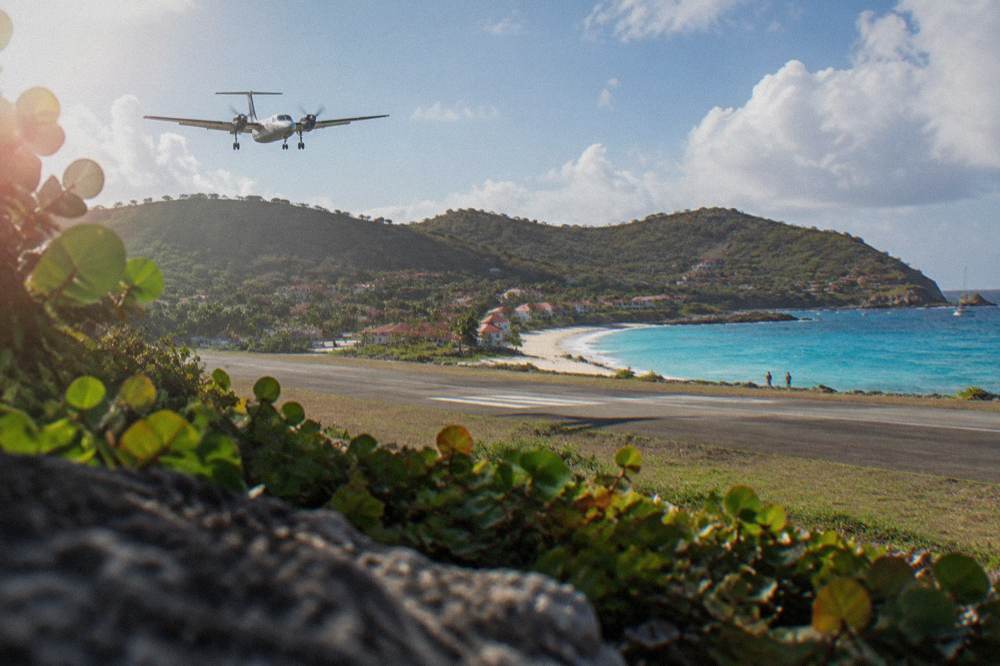
St Barts is reached through St Martin: a short hop on a small turboprop into Gustaf III Airport, or one of two scheduled ferries, Great Bay Express from Philipsburg taking about 45 minutes or Voyager from Marigot taking about 50 to 60 minutes. A phone that works across both sides of St Martin and on St Barts removes the last connectivity question of arrival day.
The geography explains the plan. The runway at Gustaf III Airport (code SBH, also called Remy de Haenen) is 646 metres and serves small STOL turboprops in daylight and visual conditions only; no jet lands on the island. St Barth Commuter flies from St Maarten's SXM airport, Grand Case on the French side and Pointe-a-Pitre in Guadeloupe, while Tradewind serves San Juan and Antigua. The alternative is the sea: Great Bay Express runs from Bobby's Marina in Philipsburg on the Dutch side, and Voyager runs from the Marigot terminal on the French side, with the crossing described by the operators in "about" terms and subject to weather. More detail sits in the guide to getting to St Barts by plane or ferry.
For phone planning, the practical point is that arrival usually involves two territories in one day. A plan covering only St Barts leaves the phone dark in Philipsburg or Marigot, exactly where ferry check-in coordination happens. Operators ask passengers to arrive well before departure, and Great Bay Express states that check-in closes before the boat leaves, so the minutes around the marina are active ones.
| Arrival Route | Departure Point | Carrier | Crossing Or Flight |
|---|---|---|---|
| Ferry, Dutch side | Bobby's Marina, Philipsburg | Great Bay Express | About 45 minutes |
| Ferry, French side | Marigot Ferry Terminal | Voyager | About 50 to 60 minutes |
| Small plane, main hub | Princess Juliana (SXM) | St Barth Commuter, Winair | A short hop |
| Small plane, French side | Grand Case (SFG) | St Barth Commuter | A short hop |
| Small plane, regional | San Juan (SJU), Antigua (ANU) | Tradewind | A short hop |
A connection also matters on the way home, and the airport guide for St Barts covers what the tiny terminal does and does not offer. Anyone connecting through SXM should read the page on reaching the ferry from St Maarten airport, since a missed connection there reshapes a whole travel day.
Phone, Plug And Emergency Basics On St Barts
The island runs on the euro, French is the official language with English widely spoken, the time zone is UTC-4 all year with no daylight saving, and plug types are C and E. Emergency numbers on the island include 112 alongside the standard French numbers. These basics live in phone notes better than in memory, because St Barts follows French overseas administration rather than Caribbean mainland conventions.
The plug detail is the one that catches arrivals from North America. Type C and E sockets are the European pattern, so a physical adapter is needed for anything that charges by cable, and a traveller relying on a phone as camera, map and boarding pass has a real interest in keeping it charged. The island's electricity follows French overseas practice; no voltage figure is confirmed for this page, so check the device's own charger label, which states its accepted input range.
The time zone is a quiet convenience. UTC-4 with no daylight saving means the island's clock never shifts against the US East Coast by more than its standard offset, which simplifies calls home and the scheduling of tour departures from St Martin. The currency point matters for any phone-based payments: local costs on the island are in euros, while the tour prices are in US dollars and are never converted between the two.
| Island Basic | St Barts |
|---|---|
| Status | French overseas collectivity since 2007 |
| Capital | Gustavia |
| Currency | Euro |
| Language | French official, English widely spoken |
| Time zone | UTC-4, no daylight saving |
| Plugs | Types C and E |
| Emergency numbers | Include 112, plus the standard French numbers |
| Area and population | About 21 square kilometres, roughly 10,700 residents |
Emergency preparedness deserves one honest sentence: the numbers above belong in the phone's contacts before departure, because the moment they are needed is not the moment to search for them. The same notes file can hold the accommodation address in French form, since taxi drivers and ferry staff work in both languages, and the booking reference for the return ferry. A car remains the standard way to move around the island's narrow, steep roads, and the page on renting a car in St Barts explains what the counters at the airport include.
What Is The Weather Like When You Visit St Barts?
The Meteo-France normals for 1991-2020 show St Barts warm all year, with a mean daily high of 28.5 C in January rising to 31.7 C in September, and 891.3 mm of rain across a typical year, of which October is the wettest month at 135.6 mm. Hurricane season runs from 1 June to 30 November with its peak from mid-August to mid-October, and no storm can be predicted for any date.
For connectivity planning the weather matters in one specific way: the ferry crossing between St Martin and St Barts is subject to sea conditions, and services can be affected by weather. A traveller whose whole plan depends on a specific afternoon sailing benefits from a working phone on the morning of departure, when operators communicate changes. That is an argument for confirming coverage on both sides of St Martin, not just on the island itself.
The seasonal rhythm also shapes what a phone is used for. In the cooler, drier months of the high season, from roughly December through April, the phone's job is reservations and coordination. In the warmer months, when the sea sits at about 26 C in winter warming to about 29 C from August to October, the day tilts toward beaches and boat trips, and the island's beaches are all public and free to access.
| Month | Mean Daily High C | Rain mm |
|---|---|---|
| January | 28.5 | 52.6 |
| April | 29.8 | 50.9 |
| July | 31.2 | 80.4 |
| September | 31.7 | 96.9 |
| October | 31.4 | 135.6 |
| December | 28.9 | 79.2 |
Many hotels and restaurants close for an autumn break and reopen in waves between mid-October and early November, a recurring pattern rather than a fixed schedule. Anyone travelling in that window should confirm directly what is open, and a phone that works from arrival makes that easier. The seasonal guide to the best time to go to St Barts expands on this calendar.
Which St Barts Boat Trips Are Worth Coordinating By Phone?
Every bookable tour listed here departs from St Martin or Sint Maarten rather than from St Barts itself, typically from harbours such as Simpson Bay, Cole Bay, Anse Marcel or Grand Case, so tour day always begins with a crossing whose timing is confirmed on the day. Prices, ratings and durations for these products appear on their listings, and this page prints none of them in prose.
The flagship per-person option is the group sail that visits Gustavia, Colombier Beach and Ile Fourchue in one day, rated highly on a small review count and bookable per person rather than per group. It runs on its listing only from 12 May to 31 August 2027, a seasonal window worth checking against trip dates before planning around it. Five of the six products listed here are private charters priced per group, including the Nikki Beach charter that pairs a crossing from Sint Maarten with a beach club day, and the two-day one-night private catamaran that turns the crossing into an overnight stay.
The private sailboat charter from St Maarten is the quiet middle option: a full day under sail for one party, with no rating published on its listing, which is a reminder that review counts on small listings say little about an experience. For travellers who want the water without committing a whole day, the day-trip list is summarized alongside land options on the things to do in St Barts page.
On any boat day the phone earns its data plan twice: once in the morning, when the meeting point at a St Martin harbour is confirmed, and once on the water, where the marine reserve's rules apply. The environment agency's regulatory-zones page lists a 5-knot speed limit inside reserve zones, a ban on jet skis and similar motorized devices, 23 dive sites, a prohibition on dogs on beaches and the instruction not to touch sea turtles. Those rules apply to visitors and operators alike, and knowing them before boarding makes the day smoother.
| Marine Reserve Rule | Detail Per The Environment Agency |
|---|---|
| Speed limit in zones | 5 knots maximum |
| Motorized water devices | Jet skis, seabobs and towed sports banned |
| Dive sites | 23 listed sites |
| Dogs | Not allowed on beaches or in the water in reserve areas |
| Protected species | No touching, chasing or feeding, including turtles |
Booking ahead matters listed here for a simple reason: with five of six products being private charters, availability is a single party's calendar, and the seasonal group sail has a defined window. The ferry operators and schedule guide covers the crossing logistics that surround any boat day.
Common Questions About ESIM And Phone Coverage In St Barts
Does an eSIM work in St Barts?
An eSIM works on St Barts if the device supports eSIM and the plan's own coverage list names Saint Barthelemy. Because the island is a French overseas collectivity rather than mainland France, coverage of France alone does not settle the question; the operator's coverage page does.
Should I buy the eSIM before I travel?
Buying and installing before departure is the safer sequence, because activation problems are easier to solve on home wifi than in a ferry terminal. Confirm first that the phone is unlocked and that the plan's validity window covers the whole trip, including any St Martin stopover.
Will my US phone work on St Barts?
US phones work where a plan covers the territory, and the home carrier is the only source that can confirm that for a specific plan. No roaming arrangement is stated here. A third-party eSIM that lists Saint Barthelemy by name is the usual alternative.
Do I need an adapter for plugs on St Barts?
Yes, for North American plugs. The island uses type C and E sockets, the European pattern. Check the charger's label for its accepted input range rather than relying on any local voltage figure.
What are the emergency numbers on St Barts?
Emergency numbers on the island include 112, alongside the standard French numbers used across the territory. They belong in the phone's contacts before departure.
Can I use my phone on the ferry from St Martin?
The crossing takes about 45 minutes from Philipsburg with Great Bay Express or about 50 to 60 minutes from Marigot with Voyager, and a plan that covers both St Martin and St Barts keeps the phone useful on both sides of the crossing. The ferry is subject to sea conditions, so day-of-travel communication matters.
A connected St Barts trip, in the end, is mostly a prepared one. The phone that carries an installed eSIM, offline maps, the island's emergency numbers and the morning's ferry confirmation turns every step of the journey, from the St Martin gateway to a boat in Colombier Bay, into a simpler version of itself.