Is St Barts A Country
St Barthelemy, usually written St Barts, is not an independent country. It is a French overseas collectivity, a territory of France in the Caribbean with its own local council, and the answer to its status shapes everything from the euro in your wallet to the passport you carry.
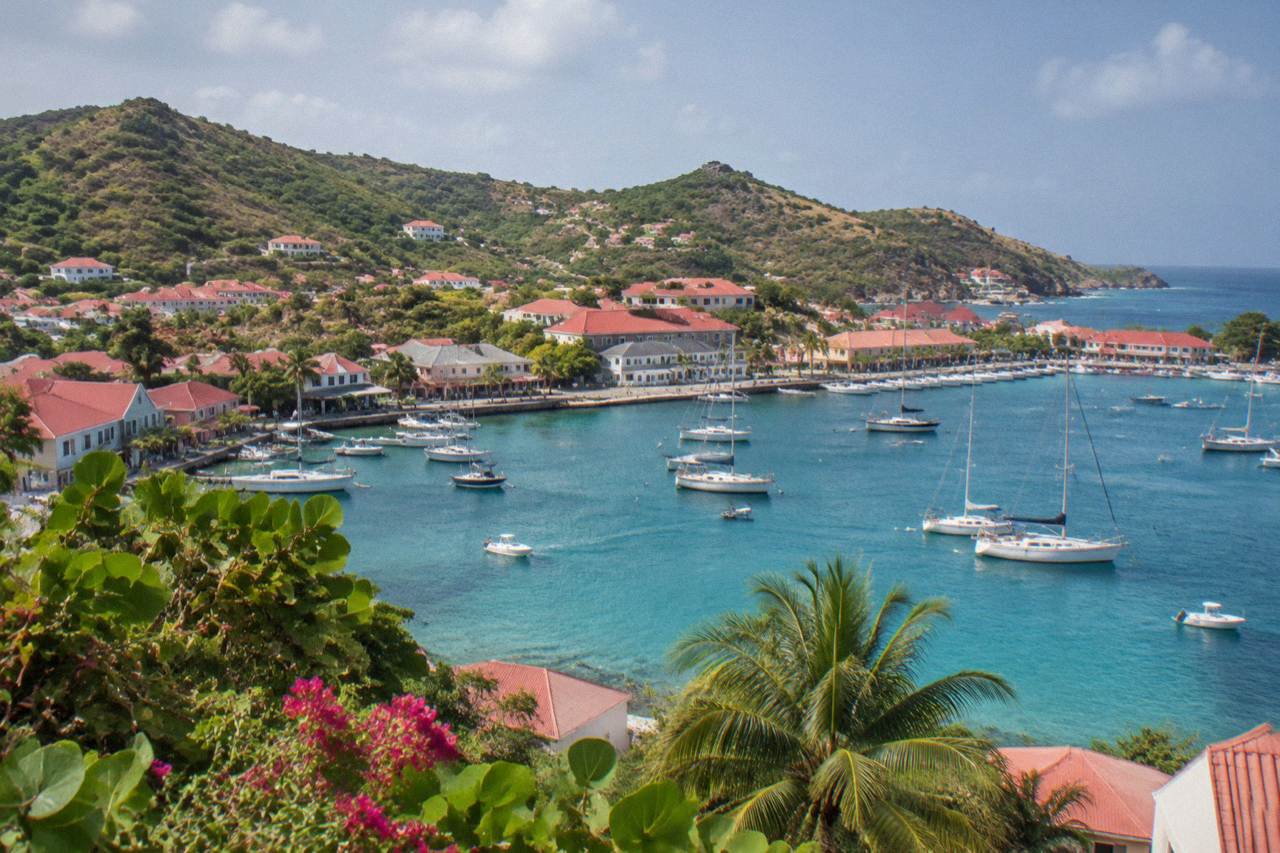
St Barts is not a country. It is a French overseas collectivity, a self-governing territory of France under Article 74 of the French Constitution since 2007, with a territorial council in Gustavia, the euro as currency and French nationality for its residents.
St Barthelemy, usually written St Barts, is not an independent country, and the question of what it actually is comes up more often than you might expect. It is a French overseas collectivity, a territory of France in the Caribbean that gained its own separate administrative status in 2007, when it was detached from Guadeloupe. That single fact answers a chain of follow-up questions travelers ask: why the currency is the euro, why the capital is a harbour town called Gustavia rather than a national capital, why residents hold French nationality, and why entry rules follow French overseas law rather than the Schengen framework. This page lays out the island's political status, how it is governed, and what it all means in practical terms for a visit.
Is St Barts A Country Or A Territory?
No, St Barts is not a country. It is a French overseas collectivity, a category of self-governing French territory created for the island under Article 74 of the French Constitution in 2007, when it separated from Guadeloupe. It issues no passports, has no army, no currency of its own and no seat at the United Nations, because France remains the sovereign state.
The distinction matters because the island looks and feels like a self-contained place. It has a land area of about 21 square kilometres, roughly 10,700 residents, its own tourism committee and its own environment agency. But all of those institutions operate under French law. The French state handles defense, policing of national matters, currency and foreign affairs, while the local territorial council, seated in Gustavia, legislates on island matters such as tourism, the environment and the tourist tax. The overseas territories ministry in Paris lists St Barthelemy among France's territories, and the French national statistics institute, INSEE, counts its population in the French census under its own code, 977.
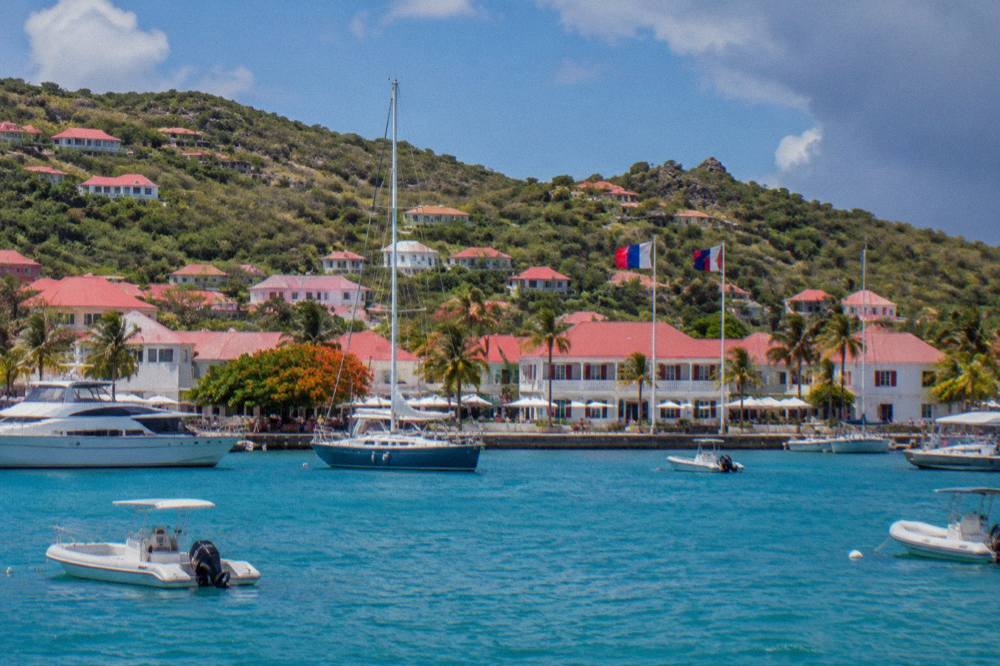
A useful way to picture the arrangement: St Barts is to France roughly what a heavily autonomous county is to a nation, with the island's council holding real powers over daily life. Residents vote in French elections and are represented in the French Parliament. The tourism committee's own site presents the island as a French Caribbean destination, not as an independent state.
| Question | Answer |
|---|---|
| Independent country? | No |
| Sovereign state | France |
| Political status | Overseas collectivity (COM) since 2007 |
| Legal basis | Article 74 of the French Constitution |
| Local seat of government | Gustavia |
| Nationality of residents | French |
| Currency | Euro |
| UN membership | None, as it is part of France |
For travelers coming at the question from other angles, the sibling pages what country does St Barts belong to and what country owns St Barts cover the ownership phrasing in more detail, and where is St Barts geographically addresses which nearby countries frame the island's neighborhood.
What Was St Barts Before 2007?
Before 2007, St Barts was administered as part of Guadeloupe, the larger French overseas territory to its southeast, and it had been governed from there for decades. The island's voters backed separation in a local consultation, and the change took legal effect in 2007, creating the separate collectivity that exists today under Article 74 of the French Constitution.
The push for separation reflected a long-standing local argument that an island of about 10,700 people, culturally distinct and economically built on high-end tourism rather than agriculture, was poorly served by an administration based in Basse-Terre. The French state agreed to a tailored status. Under Article 74, the collectivity received powers that Guadeloupe did not hold, including greater autonomy over taxation and immigration in specific areas, though French nationality and the euro were never in question.
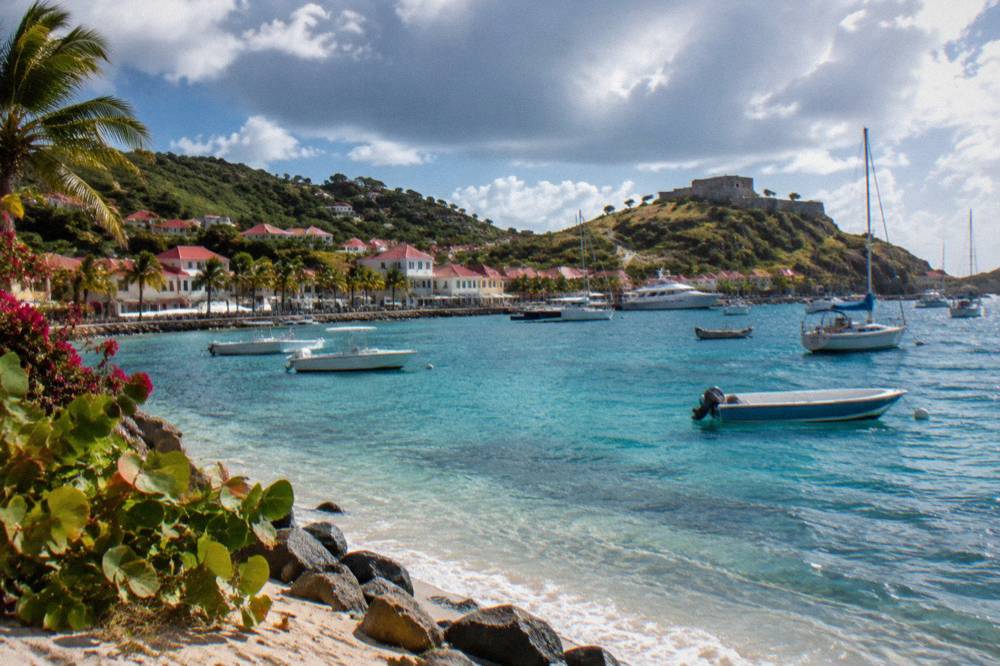
The Swedish chapter of the island's past, visible in Gustavia's name and in a small museum devoted to that period, ended long before the modern status was settled, and this page keeps to the modern record: collectivity status since 2007, and Hurricane Irma in September 2017 as the other fixed point in recent island history. The storm damaged much of the built fabric of the island, and the reconstruction years ran alongside the consolidation of the island's autonomous institutions.
| Period | Status |
|---|---|
| Earlier decades | Administered from Guadeloupe as part of its territory |
| Local consultation | Island voters back separation from Guadeloupe |
| 2007 | Separate overseas collectivity under Article 74 |
| Today | French overseas collectivity with a territorial council |
Because the island is part of France, exploring it in person is straightforward once you have arrived, and the country-status question rarely touches the traveler except at borders and cash registers. For what the island offers day to day, the site's root page on things to do in St Barts is the practical starting point.
Who Governs St Barts Day To Day?
Day to day, St Barts is governed by a territorial council of 19 members elected locally, led by a president of the collectivity, which legislates on island affairs from tourism to the environment, while France remains responsible for defense, currency, nationality and foreign relations. The council sits in Gustavia, and the French state is represented on the island by a prefect-level representative.
The council's output is visible everywhere on the island. It set the tourist tax, collected by accommodation providers through an official platform, and it backs the environment agency whose rules shape use of the marine reserve: a 5-knot speed limit in protected zones, a ban on jet skis, dogs barred from the beaches, and strict protection for sea turtles and their nests. The tourism committee, the island's destination body, promotes the island abroad and runs the official visitor information.
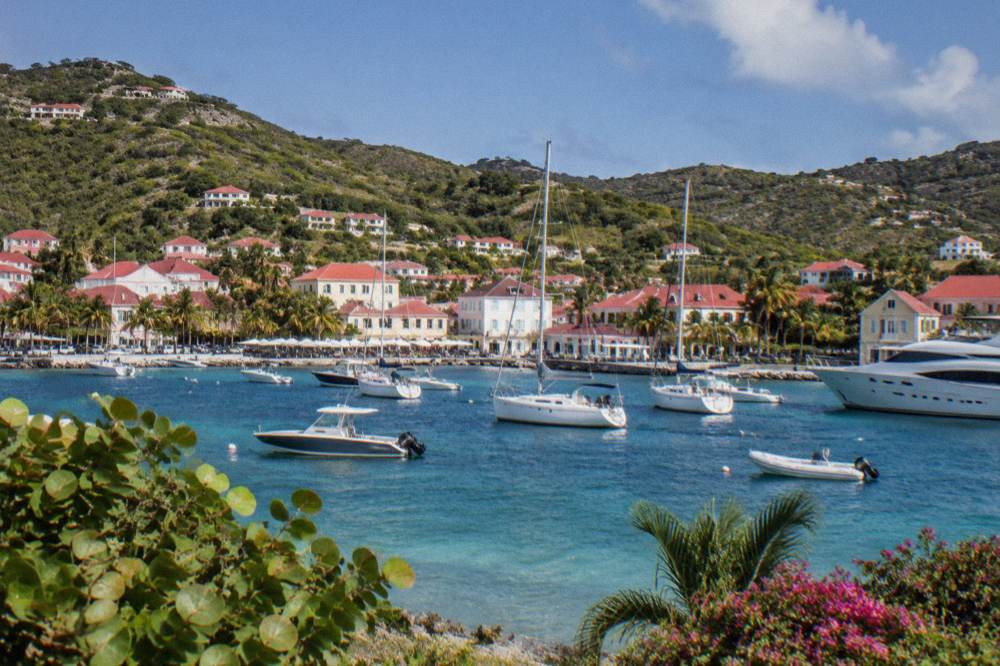
The marine reserve deserves a mention here because it shows the system working. The environment agency's regulatory-zones page lists five protected zones, including Colombier Bay and Ile Fourchue, with rules on anchoring, mooring buoys and vessel size. Those are local rules, made under the collectivity's environmental powers, enforced on French territory.
| Competence | Handled by |
|---|---|
| Tourism promotion | Territorial tourism committee |
| Environment and marine reserve | Territorial environment agency |
| Tourist tax | Territorial council, via an official platform |
| Currency | France (euro) |
| Nationality and passports | France |
| Defense and foreign affairs | France |
What Currency And Language Does St Barts Use?
St Barts uses the euro, because it is French territory, and French is the official language of administration, law and signage. English is very widely spoken in hotels, restaurants, shops and among tourism staff, so English-speaking travelers manage comfortably, though a few French phrases are received politely.
There is no local currency, no St Barts banknote and no separate exchange rate. Card payment is accepted almost everywhere, and ATMs in Gustavia and Saint-Jean dispense euros. Prices for meals, taxis and rentals are quoted in euros, while the island's bookable boat tours from St Martin, sold to an international audience, are priced in US dollars on their listings; the two are not converted against each other on this site.
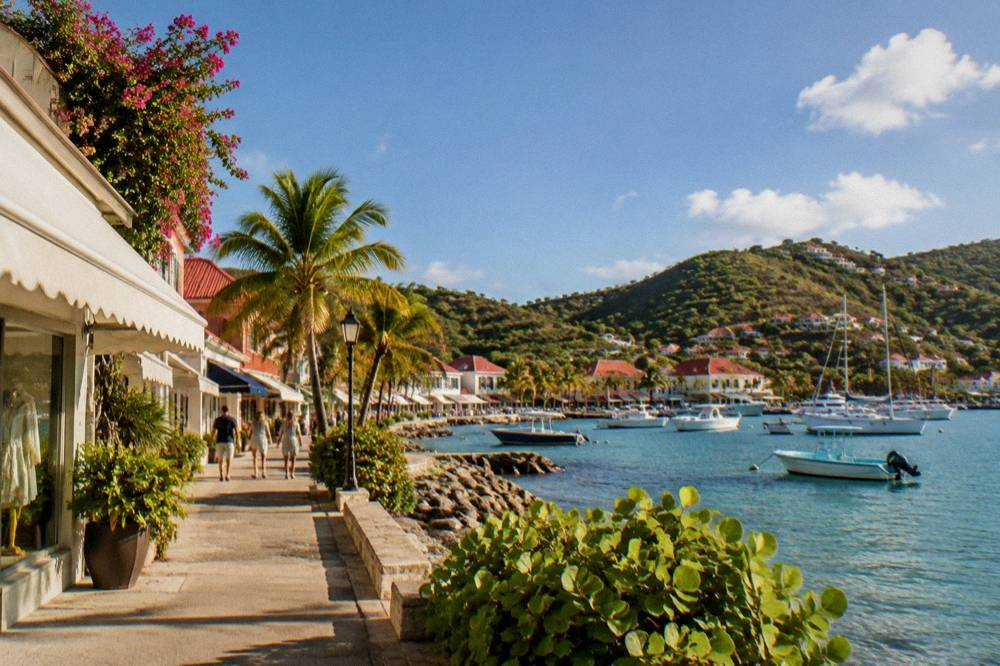
The language picture follows the same logic. The island's schools follow the French national curriculum in French, and official notices, from the marine reserve rules to parking signs, are posted in French, sometimes with English translations in tourist areas. The tourism committee publishes in both French and English.
| Practical matter | What applies |
|---|---|
| Currency | Euro |
| Official language | French |
| Widely used second language | English |
| Cards accepted | Yes, widely |
| Time zone | UTC minus 4, no daylight saving |
| Plug types | C and E |
The euro zone status is one reason the island's shopping scene has a distinctly French flavor, which the St Barts shopping guide covers in depth.
Do You Need A Passport For St Barts?
Yes, a passport is the standard requirement, because St Barts sits outside the Schengen area and applies French overseas entry rules rather than Schengen free movement. US citizens need a passport book, UK citizens a passport valid beyond the planned departure, and EU citizens may use a national ID card. A Schengen visa alone does not authorize entry where a visa is required.
The entry regime is set by a French ministerial order of 18 April 2012, as amended, and applies specifically to the French territories in the Caribbean. US, UK, Canadian and EU citizens are generally visa-exempt for short tourist stays of up to 90 days, and an onward or return ticket is required. Because government advice on passport validity differs by nationality, check your own government's travel advice before flying rather than relying on a single secondhand figure. The full index of guides sits on St Barthelemy Travel.
Two modern European systems are often confused into this question. ETIAS and EES do not govern entry to St Barts: the island is outside Schengen, and ETIAS is not operational in any case. There is no separate St Barts visa regime to arrange; where a visa is needed, it is a French visa with validity for the territory.
| Nationality | Document for a short stay |
|---|---|
| United States | Passport book, not the passport card |
| United Kingdom | Passport valid beyond planned departure |
| Canada | Passport valid for the stay |
| European Union | National ID card or passport |
| Visa-required nationals | French visa valid for the territory |
A tourist tax applies, collected by hotels and villas rather than at the border, and it is folded into the accommodation bill. The how to get to St Barts guide walks through the full arrival picture.
How Does Being French Territory Affect Getting There?
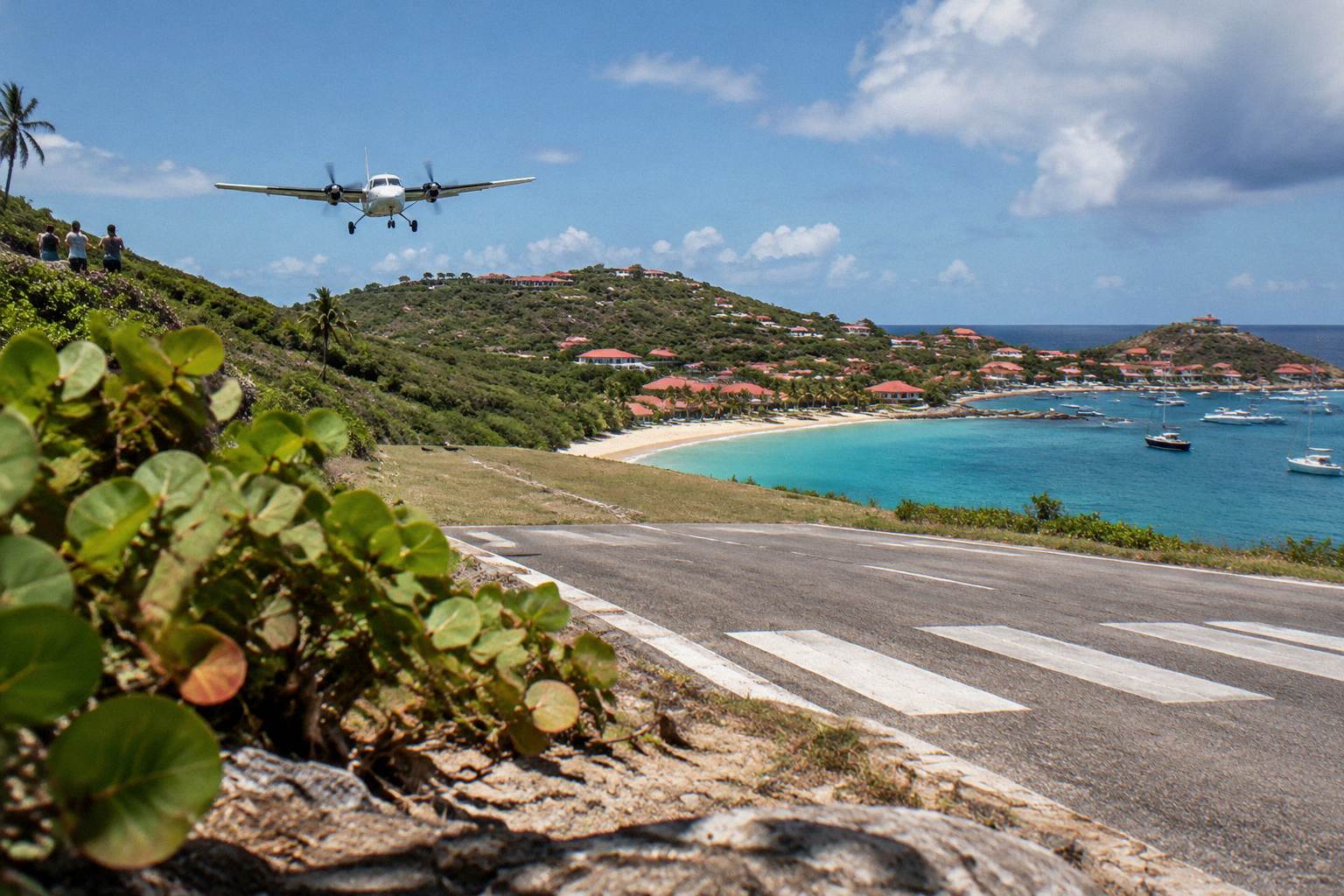
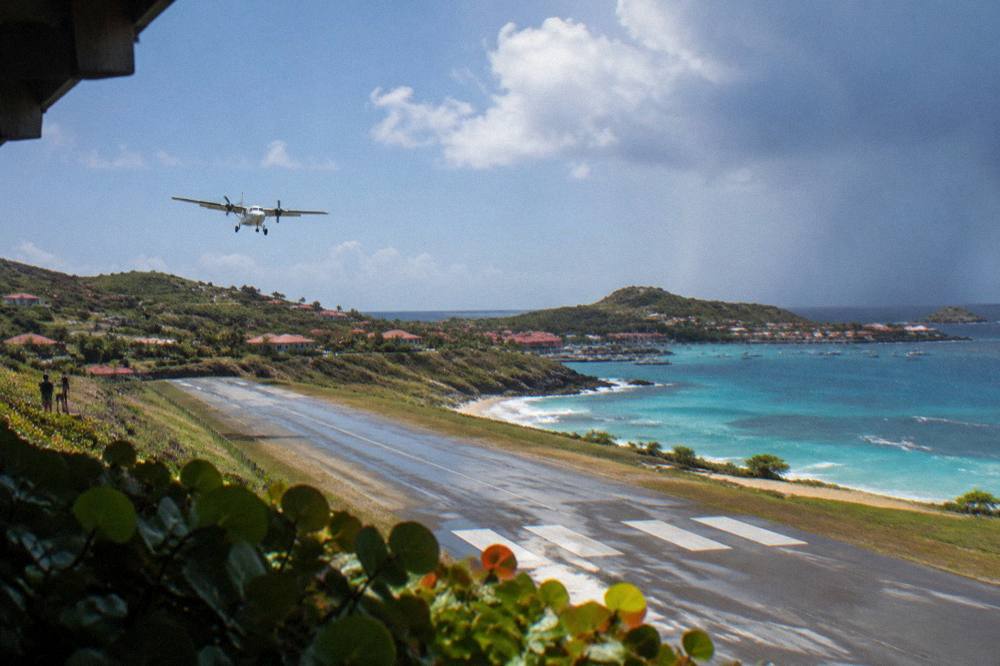
Because St Barts is French territory with a very short runway, there are no long-haul flights to the island at all: the 646 m strip at Gustaf III Airport accepts only small STOL turboprops in daylight and visual conditions. Travelers fly to a gateway, St Martin most commonly, then hop across by small plane or by ferry from Philipsburg or Marigot.
The gateway logic is a direct consequence of the island's geography and its status. Princess Juliana Airport on Sint Maarten handles the international traffic, and from there St Barth Commuter and Winair fly the short hop to St Barts, while Tradewind connects from San Juan and Antigua and St Barth Commuter also serves Guadeloupe and Grand Case. On the water, Great Bay Express runs from Philipsburg and Voyager from Marigot, each crossing in about 45 to 60 minutes. For fares, timetables and flight times, the operators' own sites carry live schedules.
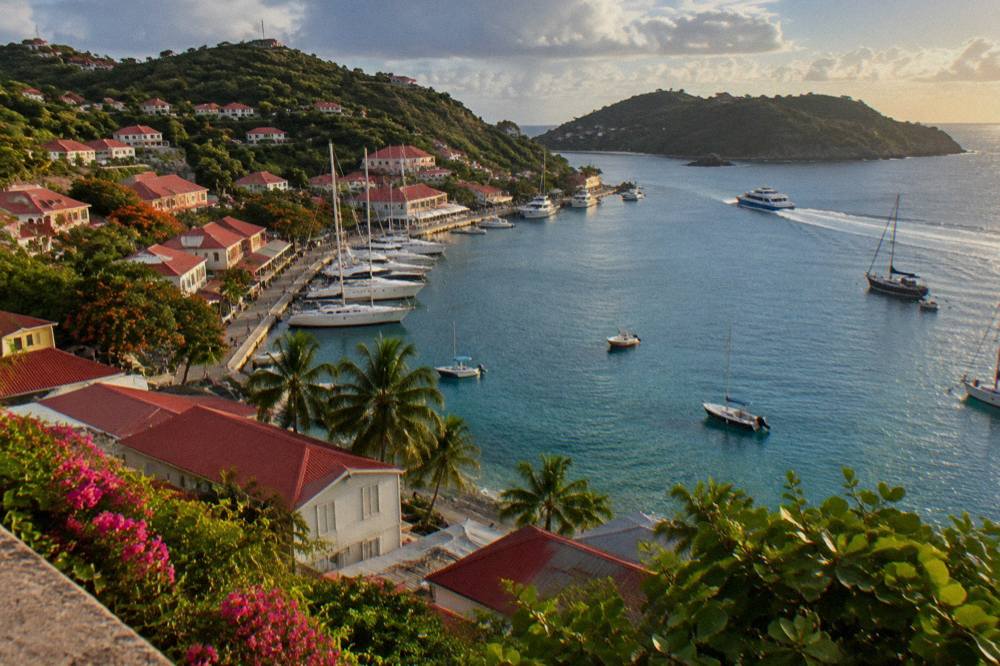
Cruise visitors meet the same territorial reality in a different form: ships anchor offshore and tender passengers into Gustavia, because there is no cruise pier, and the collectivity authorizes calls only for ships within a passenger limit, keeping the port small. The St Barts cruise port guide explains that arrival route.
A day trip by boat is also the most popular way for visitors staying on St Martin to touch St Barts without packing a bag, and the trip list on this site reflects that: every bookable tour departs from St Martin or Sint Maarten, never from St Barts itself. The group sail that anchors this site's things to do in St Barts round-up runs to Colombier Beach and Ile Fourchue, and private sailboat and catamaran options cover the same waters for groups who want the day to themselves.
Is St Barts Like Other Caribbean Territories?
St Barts belongs to the same family as the other French Caribbean territories, Guadeloupe and Martinique, but its Article 74 status gives it more local autonomy than either, and unlike the independent Anglophone islands of the region it has no sovereignty of its own. It shares the euro, French nationality and French law with them, and shares nothing administratively with Dutch Sint Maarten beyond a coastline on the neighboring island.
The neighboring island of St Martin illustrates the comparison perfectly, because it is split in two. The French side, St Martin, is itself a separate French overseas collectivity since 2007, twin in status to St Barts; the Dutch side, Sint Maarten, is a constituent country of the Kingdom of the Netherlands. So a traveler driving across that one island passes from French territory to Dutch territory without a passport stop, and a ferry ride away sits St Barts, French again.
| Territory | Status | Currency |
|---|---|---|
| St Barts | French overseas collectivity | Euro |
| St Martin (French side) | French overseas collectivity | Euro |
| Sint Maarten (Dutch side) | Country within the Kingdom of the Netherlands | Netherlands Antillean guilder |
| Guadeloupe | French overseas department | Euro |
| Anguilla | British overseas territory | East Caribbean dollar |
For travelers weighing the island against other French or regional options, the site maintains a set of comparisons, including a St Barts versus St Martin breakdown in the day-trip section. The short version: St Barts is the smallest and the most tourism-focused of the French Caribbean territories, about 21 square kilometres of hills and public beaches around Gustavia's harbour.
What Does French Status Mean For A Visit In Practice?
In practice, French status means the euro, French administrative habits, French school holidays shaping hotel seasons and a French-influenced dining scene, all on a tropical Caribbean island. Emergency numbers are the French ones, 15, 17, 18 and 112, the time zone sits at UTC minus 4 with no daylight saving, and plug types are the European C and E.
The rhythm of the year also follows a French Caribbean pattern rather than an American one. Many hotels and restaurants close each autumn and reopen in waves between mid-October and early November, before the high season that runs through winter into spring. The island's calendar fills with events tied to that season, from the Bucket Regatta in mid-March to the Music Festival on 8 to 18 January 2027 and the Gourmet Festival on 9 to 15 November 2026.
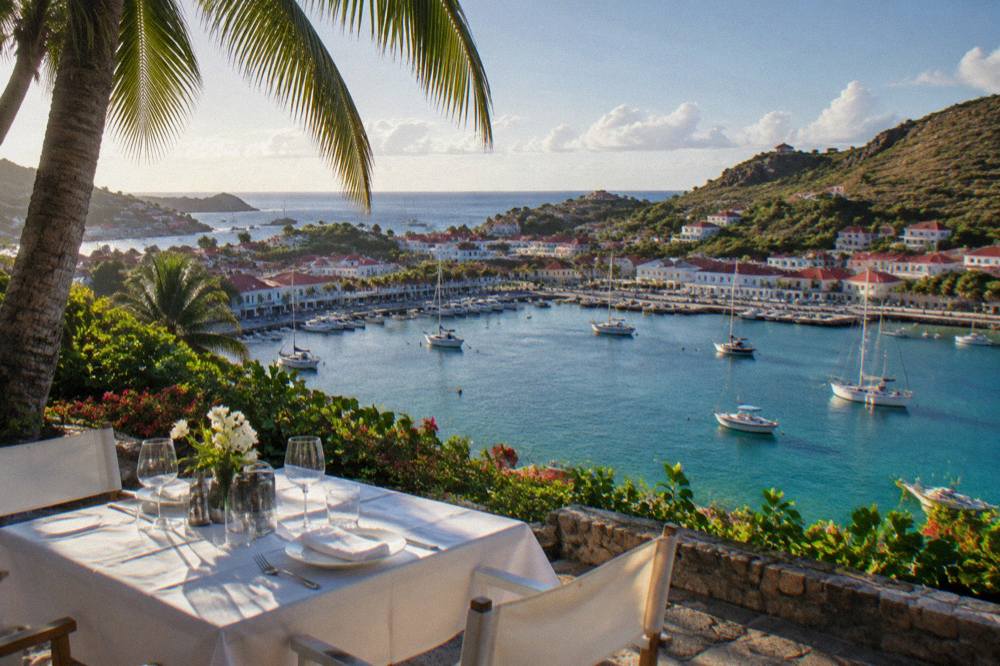
The climate, per the Meteo-France normals for 1991 to 2020, is warm year-round, with a mean daily high from 28.5 C in January to 31.7 C in September and 891.3 mm of rain across the year, October the wettest month at 135.6 mm. Hurricane season runs from 1 June to 30 November, peaking mid-August to mid-October. None of this is affected by the island's political status, but the closures pattern, the school calendar and the August patron-saint festivities on 24 and 25 August all are.
| Month | Mean daily high (C) | Rain (mm) |
|---|---|---|
| January | 28.5 | 52.6 |
| April | 29.8 | 50.9 |
| July | 31.2 | 80.4 |
| October | 31.4 | 135.6 |
| December | 28.9 | 79.2 |
The Meteo-France normals, 1991 to 2020, are the source for every figure in that table. For season-by-season planning, the site's guides to St Barts hotels and to New Year's Eve on the island cover the periods when the French Caribbean rhythm matters most.
Why Does The Country Question Keep Coming Up?
The question keeps coming up because St Barts behaves like a small country in daily life, with its own tourism board, its own environmental law, its own tax platform and a strong local identity, while legally being a territory of France with about 10,700 residents and no foreign policy. Search engines, hotel booking forms and cruise manifests often list it as if it were a standalone destination, which reinforces the impression of statehood.
The island's INSEE code, 977, its own internet domain conventions and its separate listing in French statistics all give it the appearance of separateness. So does the fact that it is outside Schengen even though it is French, a quirk that surprises European travelers who expect free movement to follow the flag. The correct shorthand, used by the French government itself, is an overseas collectivity of France: self-governing in local matters, French in everything that defines a state.
For related questions, what is the closest country to St Barts settles the geography, and the site's St Barts airport guide covers the distinctive arrival. Meanwhile the island itself carries on as it has since 2007, a French collectivity in the Caribbean that many visitors happily mistake for a country of its own.
Common Questions About Whether St Barts Is A Country
Is St Barts a country?
No. St Barts is a French overseas collectivity, a self-governing territory of France under Article 74 of the French Constitution since 2007. It is not an independent state and holds no UN membership.
Is St Barts a US territory?
No. St Barts has never been a US territory. It is French territory, and the nearest US-affiliated jurisdiction is Puerto Rico, which is itself a US territory, several hundred kilometres away.
What country does St Barts belong to?
St Barts belongs to France. It was administered as part of Guadeloupe until 2007, when it became a separate overseas collectivity with its own territorial council in Gustavia.
Do residents of St Barts have French citizenship?
Yes. Residents of St Barts are French nationals, vote in French elections and are represented in the French Parliament, and they travel on French passports.
Does St Barts use the euro?
Yes. As French territory, St Barts uses the euro. Cards are widely accepted and ATMs dispense euros in Gustavia and Saint-Jean.
Is St Barts part of the Schengen area?
No. St Barts is outside the Schengen area, so ETIAS and EES do not govern entry. Entry follows French overseas rules set by a 2012 French ministerial order, and a passport is required for most nationalities.