What Country Owns St Barts?
France owns St Barts: Saint Barthelemy is a French overseas collectivity in the Caribbean, with Gustavia as its capital, the euro as currency and French as the official language. Here is what that means for travelers.
France owns St Barts. Saint Barthelemy, usually written St Barts, is a French overseas collectivity in the Caribbean, a status it has held since 2007, when it separated administratively from Guadeloupe under Article 74 of the French Constitution. The island is about 21 square kilometres with roughly 10,700 residents, its capital and harbour town is Gustavia, its currency is the euro, and French is the official language with English widely spoken. None of it is Dutch, none of it is British, and none of it is American, which surprises travelers who confuse it with neighboring St Martin, an island that is genuinely split between France and the Netherlands.
The question sounds simple and the answer is simple, but the follow-up questions are where it gets interesting. Is St Barts part of the European Union? Is it in the Schengen area? Do United States citizens need a passport? Why does the island carry traces of a Swedish past if France owns it? This page answers each of those, and it points to the practical pages on St Barthelemy Travel that cover the details.
France owns St Barts in full. Saint Barthelemy is a French overseas collectivity, a collectivite d'outre-mer governed under Article 74 of the French Constitution since 2007, with an elected territorial council, representation in the French Parliament, the euro as its currency and French as its official language. No other country holds any part of the island.
The status matters more than the word "owns" suggests. An overseas collectivity is not a colony and not an independent state: the French government's overseas territories page lists St Barthelemy as a self-governing territory of the French Republic, responsible for many of its own affairs while remaining French for nationality, defense and currency. The INSEE national statistics office gives the island its own department code, 977, the same way it codes mainland departments.
The collectivity has run its own territorial council since the 2007 separation from Guadeloupe, and it is that council which sets local rules such as the tourist tax, the cruise ship limits in Gustavia and the marine reserve regulations. So when a reader asks who owns St Barts, the useful answer is: France owns it, and a local French collectivity administers it day to day.
Is St Barts Part Of The European Union And Schengen?
St Barts is a French overseas collectivity outside the Schengen area, so a Schengen visa does not authorize entry. Entry rules are set by French authorities under a 2012 ministerial order, and the ETIAS travel authorization, which is not yet operational, will not govern St Barts either. Travelers need a passport or, for EU citizens, a national ID card.
The customs formalities page of the island's tourism information describes the arrangement: the territory follows French overseas entry rules rather than the Schengen system that applies in mainland France. United States, United Kingdom, Canadian and EU citizens are generally visa-exempt for short tourist stays of up to 90 days, and an onward ticket is required. Government travel advice differs on passport validity, so check your own government's entry requirements before flying.
| Question | Answer For St Barts |
|---|---|
| Sovereign owner | France, as a French overseas collectivity since 2007 |
| Capital | Gustavia |
| Currency | Euro |
| Official language | French, with English widely spoken |
| In the European Union? | No, an overseas collectivity outside EU territory |
| In the Schengen area? | No, entry follows separate French overseas rules |
| US citizens need a visa? | No, for tourist stays up to 90 days |
Two neighboring guides on this site go deeper on the practical side: what country St Barts belongs to in travel terms and whether St Barts is a country in its own right.
Because the island is French, the easiest way to visit it as a day trip is from the French or Dutch sides of St Martin, and the bookable options all depart from there. A day on the water is one of the rewarding ways to see Gustavia and the marine reserve.
Why Does St Barts Have A Swedish Past If France Owns It?
France holds St Barts today, but the island's history includes a long Swedish period centered on its harbor town, and the town's very name, Gustavia, survives from that era. The island returned to French hands well before the modern era, and since 2007 it has been a French overseas collectivity with Gustavia as the seat of its territorial council. The Swedish traces are architectural and onomastic, not political.
The layered history explains a quirk travelers notice on arrival: a French island with a Scandinavian capital name and street names such as Rue du Roi Oscar. Only a narrow slice of history is settled beyond dispute, and this page sticks to it: the Swedish interlude and its architectural traces, the return to France, and the 2007 creation of the overseas collectivity. Everything else on the island's past belongs to the dedicated history guide.
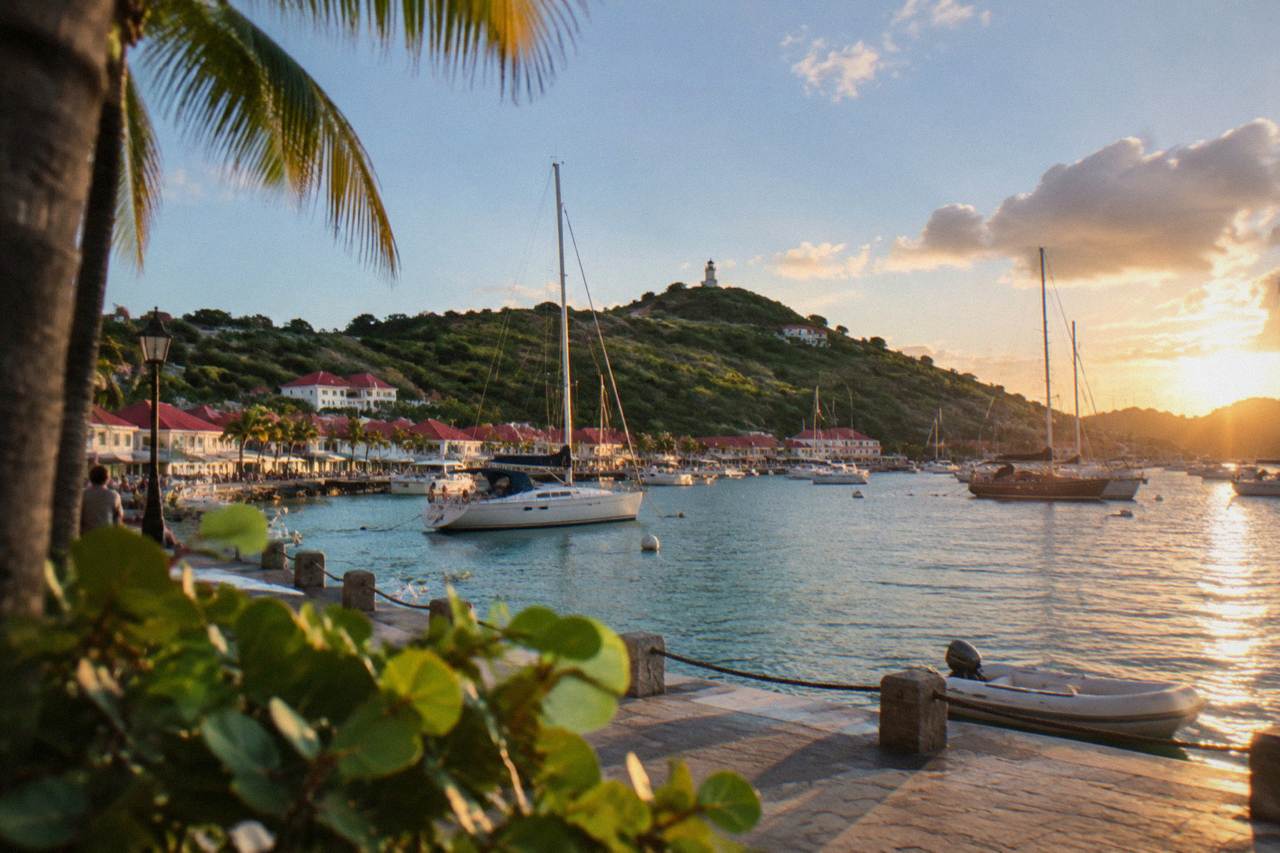
What that history means for a visitor is mostly visual. Gustavia wraps its harbor in low red-roofed buildings, the port fills with yachts through the winter season, and cruise passengers tender in from anchored ships because the port has no cruise pier. The town is compact and walkable, and the forts and museums above it are covered in the site's Gustavia pages.
Do You Need A Passport For St Barts?
Yes, in practice: a valid passport book is needed to enter St Barts by air or sea, and the island's tourism information states that a recognized travel document valid beyond the planned stay is required. EU citizens may enter with a national ID card. Entry is outside Schengen, so French overseas rules apply rather than the rules for mainland France.
The passport question is the one that catches day-trippers, because many visitors reach St Barts by ferry from St Martin and assume a Caribbean day trip needs no documents. The ferry operators state that passports are required for the crossing, since the journey enters a separate French territory. The site's detailed page on whether US citizens need a passport for St Barts covers the document rules, and the page on flying directly to St Barts from the US explains why the airport's 646 metre runway means every long-haul traveler connects through a gateway.
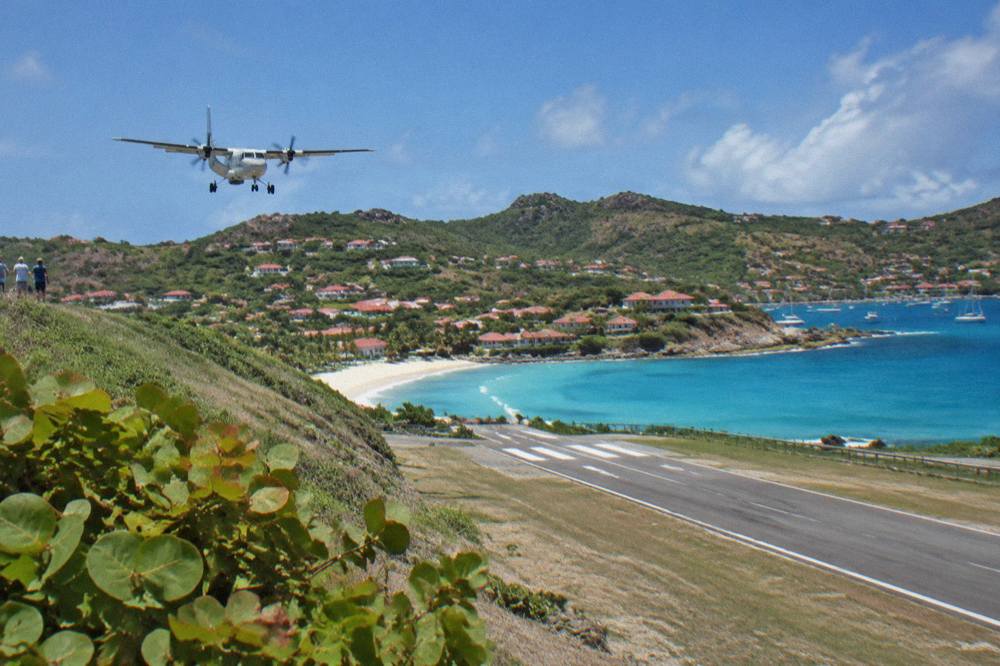
Gustaf III Airport, also called Remy de Haenen, accepts only small STOL turboprops in daylight and visual conditions. There are no jets. The practical consequence of French ownership is that the main gateways are St Martin, San Juan, Guadeloupe and Antigua, followed by a small plane or one of the two ferry operators from Philipsburg and Marigot.
For travelers planning the crossing as a day on the water, the flagship group sail is worth a look before dates fill: the per-person product lists its season from 12 May to 31 August 2027, and Cancellation terms are shown on the operator's live listing.
Is St Barts French Or Dutch?
St Barts is entirely French. The Dutch part of the neighboring island is Sint Maarten, about 30 kilometres northwest, and it is a separate country within the Kingdom of the Netherlands. St Barts shares no land border with any Dutch territory, uses the euro rather than any Caribbean guilder, and its residents are French nationals. The confusion comes from the shared airport hub at Princess Juliana on the Dutch side.
Most long-distance visitors fly into St Maarten's Princess Juliana Airport, which sits on the Dutch side, then cross to the French side or take a boat straight to Gustavia. That routing makes the two territories feel merged when they are not. The comparison guide on the difference between St Barts and St Martin separates the two islands clearly.
| Territory | Status | Currency | Relationship To St Barts |
|---|---|---|---|
| St Barts | French overseas collectivity | Euro | The island itself |
| St Martin | French overseas collectivity | Euro | Neighbor, main travel gateway |
| Sint Maarten | Country in the Kingdom of the Netherlands | Netherlands Antillean guilder, US dollars accepted | Neighbor, hosts the main airport hub |
| Saint-Barthelemy waters | French territorial waters with a national marine reserve | n/a | Regulated by the environment agency |
Ownership shapes the sea as much as the land. The marine reserve around the island is a French national nature reserve, and the environment agency's regulatory zones page lists its rules: a 5-knot speed limit inside protected zones, a ban on jet skis, 23 listed dive sites, no dogs on beaches and no touching of sea turtles. A sail that anchors at Colombier or Ile Fourchue operates inside those French protected waters, which is why the crossing from St Martin is run under reserve rules once it arrives.
For the group sail that visits those exact bays, availability is worth checking early: the one per-person product listed here lists its 2027 season from 12 May to 31 August, and the rest of the trip list is private charters priced per group.
Does Anyone Else Own Land On St Barts?
Private individuals and companies own land on St Barts under French property law, including foreign buyers, but no foreign state owns any part of the territory. Sovereignty rests entirely with France. Some celebrated private estates, such as the longtime Rockefeller holding on Colombier's headland, are private French real estate, and the question of who holds them today is a separate matter from who owns the island.
That distinction between sovereignty and private title is the source of most celebrity-estate questions, and the site covers the best known case on the page about who owns the Rockefeller estate on St Barts. Property on the island is bought and sold under the French legal system, notarial deeds and all, and the real estate market is covered on its own guide.
Famous private owners, from film stars to fashion designers, have never changed the island's status. When people ask where celebrities stay in St Barts, the answer is always private villas and hotels on French soil. The territory's laws, its police, its schools and its currency are French regardless of who holds the deeds to any villa.
Common Questions About What Country Owns St Barts
What Country Owns St Barts?
France owns St Barts. Saint Barthelemy has been a French overseas collectivity since 2007, with its own territorial council, the euro as currency and French as the official language.
Is St Barts A Country?
No. St Barts is a French overseas collectivity, a self-governing territory of France rather than an independent state. It is not a member of the United Nations and does not issue its own currency or passports.
Is St Barts Part Of The Schengen Area?
No. St Barts is outside the Schengen area, so Schengen visas and the future ETIAS system do not govern entry. French overseas entry rules apply instead.
Can US Citizens Visit St Barts Without A Visa?
Yes, for tourist stays of up to 90 days. A valid passport book is required, and an onward ticket. Check current government travel advice before booking.
Why Does St Barts Have A Swedish Past?
Sweden held the island for a long period centered on its harbor town before it returned to France. The capital's name, Gustavia, and parts of its street grid survive from that era.
What Currency Does St Barts Use?
The euro. St Barts is French territory, so local costs are priced in euros. Credit cards are widely accepted.
France owns St Barts, and every practical detail of a visit follows from that: a passport for entry, euros for the beach cafés, French law on the beaches and in the marine reserve, and a French island capital looking out over one of the Caribbean's great yacht harbors.