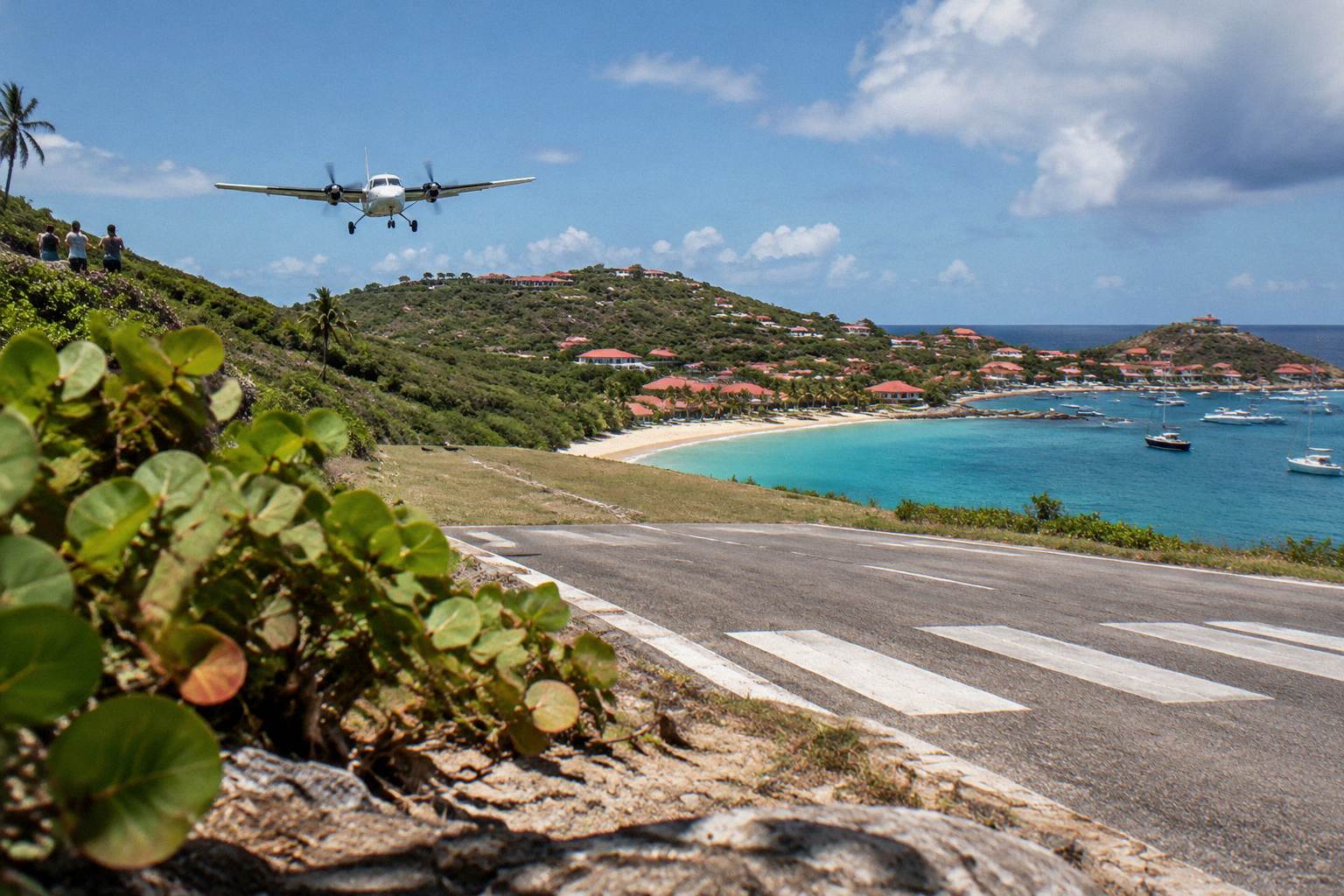
Who Owns The Rockefeller Estate On St. Barts?
Who owns the Rockefeller estate on St Barts? What public reporting says about the family's land on St Barthelemy, the Colombier coast, and how to see it from the water.
St Barthelemy, the French Caribbean island everyone shortens to St Barts, has a land story that runs alongside its beach story. About 21 square kilometres of hills and coves, roughly 10,700 residents, and a century of quietly accumulated private holdings along its most beautiful shores. Among the names attached to that land, Rockefeller is the one readers ask about most, and it is a harder question to answer than it looks, because the private-property records of a French overseas collectivity do not publish a searchable list of who owns which hillside. What follows is what public reporting supports, where it stops, and how the coastline itself can still be seen.
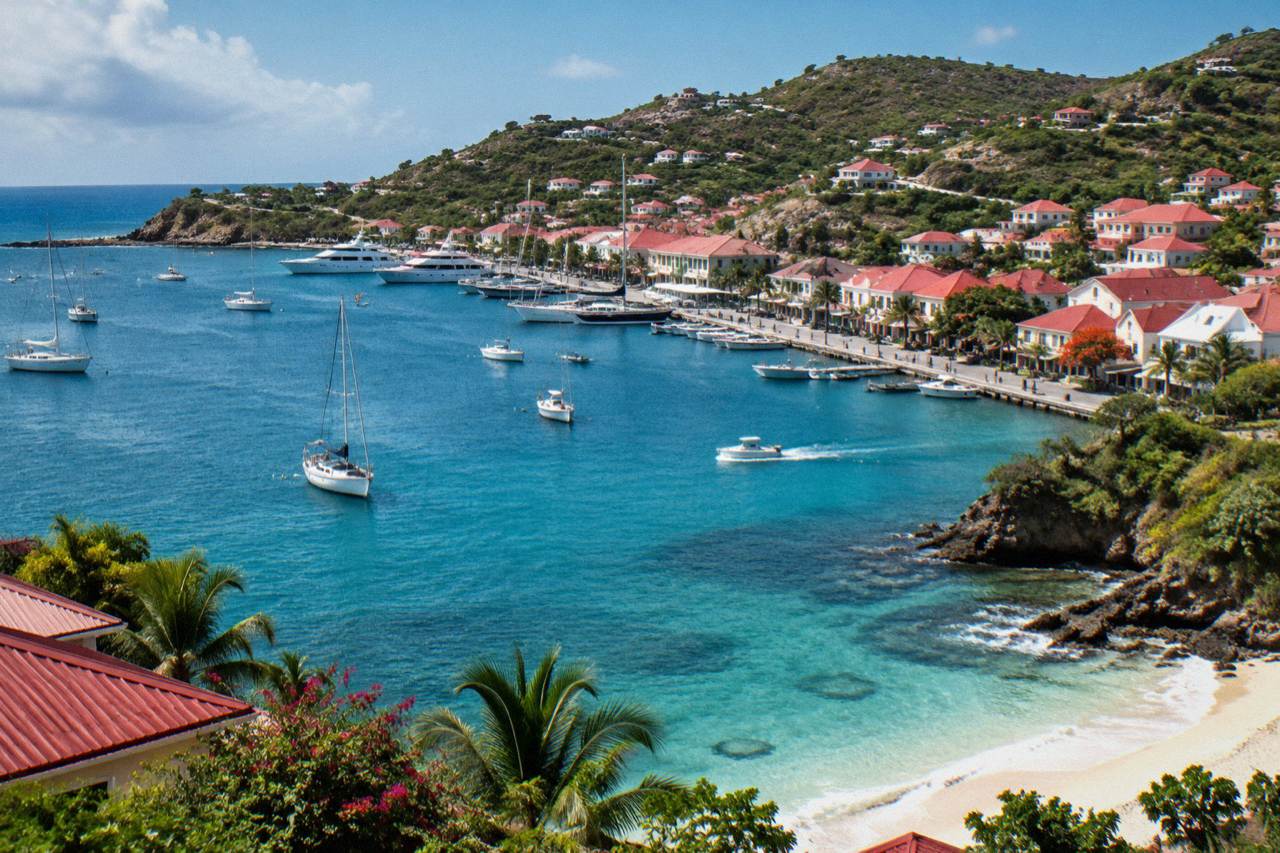
No published document names a current owner of the Rockefeller estate on St Barts. Reporting over decades ties the Rockefeller family to a large private holding on the island's northwestern coast, but no sale record, registry filing or family statement in the public domain confirms who holds the title today, so any page that names a living owner with certainty is going beyond what is documented. The family's association with the island is treated as background fact in coverage of St Barts' development, yet ownership of private land on a French overseas collectivity is not a matter of public bulletin the way a listed company's shareholders are. The defensible answer is: the Rockefeller link is reported.
That unsatisfying precision matters. St Barts real estate coverage is full of confident claims about which billionaire owns which pointe, and much of it is recycled or guessed. The island's property market is genuinely opaque to outsiders: transactions are handled through notaries under French law, and there is no island equivalent of a deeds website a curious reader can search. For background on how the island is governed and why its records work this way, the companion page on what country owns St Barts explains the collectivity's status since 2007.
What can be said is geographic. The land most consistently associated with the Rockefeller name in decades of reporting sits on the wilder northwestern side of the island, the Colombier side, where development has always been thinnest. That coast is protected today: the marine reserve's rules for Colombier Bay come from the environment agency's regulatory-zones page, which lists a 5-knot speed limit in its zones, a ban on jet skis and restrictions on anchoring. Private land above the shore and protected water below it sit almost on top of each other, which is why the estate's setting is better known than its title.
Where Does The Rockefeller Family's Land Sit On St Barts?
Decades of reporting place the Rockefeller holding on St Barts' northwestern coast, in the hill country above Colombier Bay, one of the least developed corners of the island, reached today by a hiking trail or by boat rather than by a road lined with villas. Colombier Beach itself is public, as every beach on St Barts is, and the bay below it lies inside the marine nature reserve. The land above the beach is where the private estates are, on a peninsula that reporting has long described as held in old family ownership rather than carved into house lots.
The geography explains the mystique. Colombier sits at the end of its own roadless stretch; the public trail down to the beach is the land access, and the Colombier hike is the standard way in on foot. From the sand, the surrounding hills read as untouched, which on an island this small and this developed is rare. Readers deciding which shore to visit can compare it against the other options on the page about the nicest beach in St Barts.
For the reserve itself, the rules are specific and worth knowing before any boat day. The table below pulls together what the environment agency's regulatory-zones page says about the waters off this coast. Everything else covered here is indexed on St Barthelemy Travel.
| Rule in the marine reserve | What it means for the Colombier coast |
|---|---|
| 5-knot speed limit inside reserve zones | Boats approach Colombier Bay slowly |
| No jet skis or towed motorized devices | The bay stays quiet by regulation, not custom |
| No dogs on beaches or in the water | Applies island-wide, enforced in reserve areas |
| No touching turtles, coral or protected species | Green and hawksbill turtles are common here |
| Vessel size and mooring limits in Colombier and Ile Fourchue bays | Large boats use ecological moorings, not anchors |
Can You See The Rockefeller Coast From The Water?
Yes, and the water is the easiest way to see it: boat trips from St Martin and Sint Maarten round St Barts' northwestern point and pass Colombier Bay and Ile Fourchue directly, giving a clear view of the unbroken hillside the estate sits on, without setting foot on private land. Every bookable boat trip listed here departs from St Martin or Sint Maarten, crosses to St Barts, and tours the island's coast, and the Colombier and Ile Fourchue leg is the part that passes the old estates. No tour enters private property; the viewing is from the sea, inside reserve waters.
The group option that covers this exact stretch is the Gustavia, Colombier Beach and Ile Fourchue tour, a day sail from St Martin that spends its island time in this bay, with snorkeling in reserve water. It runs per person on set dates on its listing, and the operator's listing shows the live calendar. Private alternatives cover the same water on your own schedule, and the two most relevant are below.
A private or overnight charter changes the rhythm rather than the route: the same headlands come up on the way around the island's northwest, but with the freedom to linger in the bays the reserve protects. The overnight catamaran even puts you at anchor overnight in St Barts waters, waking up inside the scenery the day-trippers photograph at midday. All of these depart from the St Martin side, so they pair naturally with a stay there before or after, a combination the guide to St Maarten before or after St Barts covers in detail.
Who Else Owns Famous Property On St Barts?
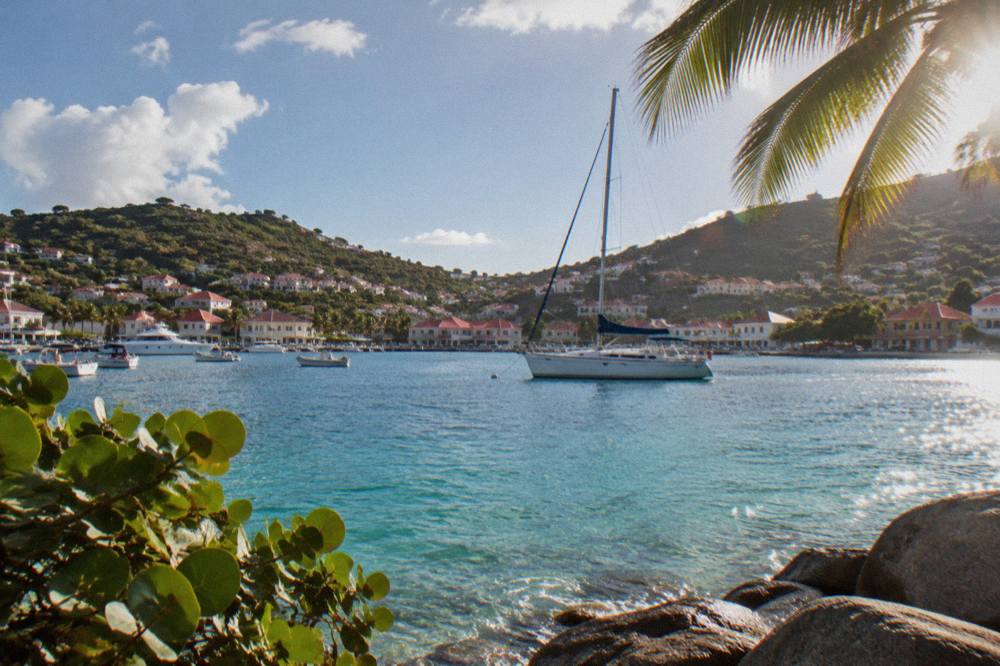
St Barts' most storied properties are held by a mix of long-time family owners, hotel groups and, reportedly, a French luxury group taking over the Guanahani, while the Eden Rock remains linked to the family whose name it carries, and no single registry summarizes any of it. The pattern the island's coverage shows is old private estates on the wild coasts and branded hotels on the swimming beaches. The table below separates what is reported about headline properties from the settled facts, using hedged language where the facts are thin.
| Property or holding | What public reporting says about ownership |
|---|---|
| Colombier hillside | Long linked to the Rockefeller family; current title not published |
| Eden Rock, Saint-Jean | Associated with the Matthews family; see the dedicated page on whether they still own it |
| Le Guanahani, Grand Cul-de-Sac | Becoming Airelles Le Guanahani on 1 November 2026 under a new French operator, with hotel tables reopening 1 November 2026 per local calendars |
| Villa market island-wide | A large villa market managed by firms including WIMCO, Sibarth and St Barth Properties; no count is published reliably |
The Eden Rock question is answered on its own page, does the Matthews family still own Eden Rock, and the wider celebrity-property angle, including where famous visitors actually sleep, is covered in where celebrities stay in St Barts. For the money side of the island's real estate, the guide to St Barts real estate walks through how buying actually works under French law.
Why Does Ownership Of Private Land Stay So Opaque On St Barts?
Because St Barthelemy is a French overseas collectivity where property transactions run through the French notarial system, which does not publish a public, searchable register of beneficial owners, and the island's high-profile buyers have every reason to keep holdings structured and quiet, so rumor fills the gap that records leave open. French law records title through a notaire and the land registry, but access is restricted and nothing resembling a journalist-friendly database of who owns which St Barts hillside exists. The result is an information economy of "reported" and "said to", and the only honest posture is to repeat those hedges rather than strip them.
This is also why the estate question and the celebrity-hotel questions get conflated. A hotel with a public brand has a traceable corporate trail; a family's private acreage above Colombier does not. When a reader sees a confident claim about the Rockefeller land changing hands, the thing to check is whether a notarized sale, a family statement or a court filing is cited, and in almost every case none is.
Common Questions About The Rockefeller Estate On St. Barts
Who owns the Rockefeller estate on St. Barts?
Public reporting ties the Rockefeller family to a large private holding on the island's northwestern coast, but no published registry document, sale notice or family statement names the current owner, so present-day ownership is not part of the public record.
Can you visit the Rockefeller estate on St Barts?
No. The land is private. The adjacent shore, Colombier Beach, is public like every beach on St Barts, reached by a hiking trail or by boat, and the bay is inside the marine reserve.
Is Colombier Beach private?
No. All beaches on St Barts are public, and Colombier is reached on foot by trail or by boat. The hills above it hold the private estates; the sand and the water are open.
How do you see the Rockefeller coastline?
From the water. Boat trips departing from St Martin and Sint Maarten round the island's northwestern point and pass Colombier Bay and Ile Fourchue, the stretch of coast associated with the old estates.
Do other famous families own land on St Barts?
Reporting over the decades links several well-known families and hotel groups to property on the island, including the names behind Eden Rock and the reported Airelles takeover at Le Guanahani, but private landholdings are not publicly registered in a searchable way.
The Rockefeller question endures because the landscape it asks about endures: a green headland over protected water, unchanged while the island around it built up. The title may stay private forever; the view does not have to. For planning the rest of an island trip around that view, the site's root guide to things to do in St Barts is the place to start, and for the boat day itself the overnight and private options below cover the same coast at a different pace.