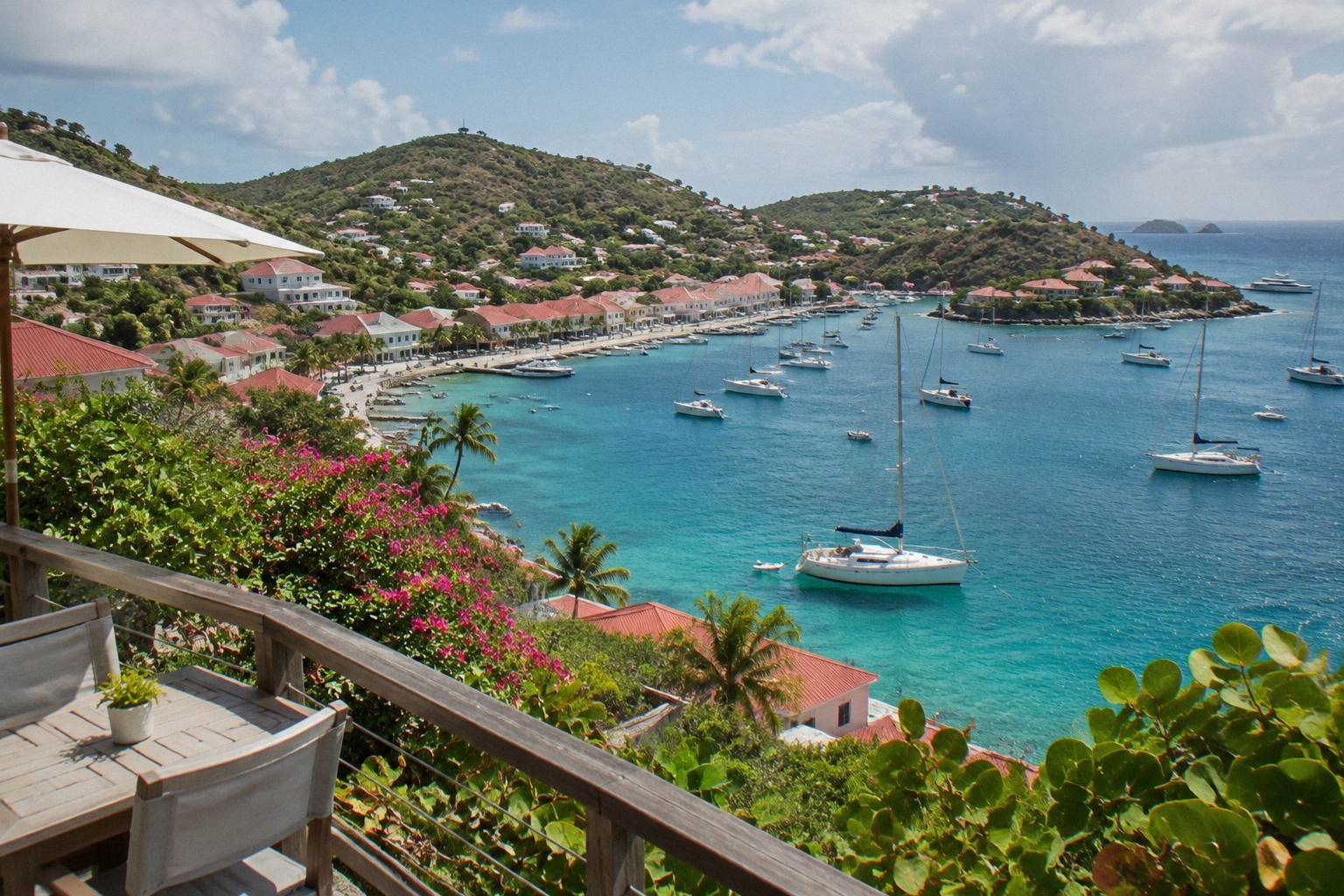
Can A US Citizen Move To St Barts?
A US citizen cannot simply relocate to St Barts: the island is French, stays beyond 90 days need French long-stay permission, and this guide explains the entry rules, work limits and daily realities.
St Barthelemy, usually written St Barts, is a French overseas collectivity in the Caribbean with about 21 square kilometres of hills and roughly 10,700 residents, and no part of it belongs to the United States. That is the heart of the answer. A US citizen may enter visa-free for a short stay of up to 90 days in any 180-day period, according to the entry rules set by French authorities, but the same rules make no provision for an open-ended relocation. A genuine move requires French long-stay permission, and everything else on this page, documents, work limits, cost of living and daily logistics, follows from that.
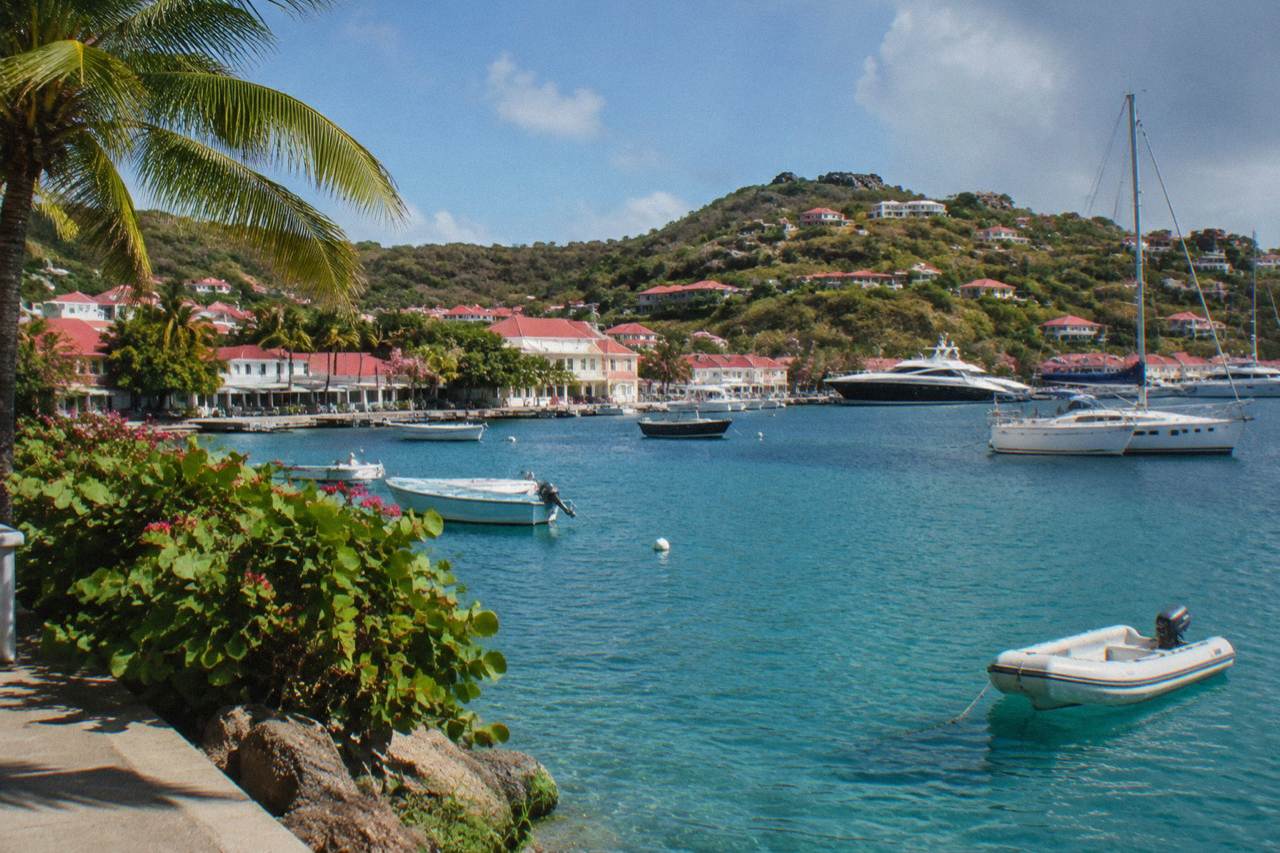
The island is not a US territory, does not use the dollar as its official currency and sits outside the Schengen area altogether, so the European travel authorizations sometimes discussed for France do not govern entry either. Readers weighing the territory question in full will find a dedicated breakdown at Is St Barts A US Territory, and the passport rules for short visits are covered in Do US Citizens Need A Passport For St Barts. This page sticks to the relocation question: what the rules allow, what they forbid and what daily life would involve.
Not by simply buying a ticket and staying. St Barts is a French overseas collectivity, so a US citizen may visit visa-free for up to 90 days in any 180-day period under the French entry rules, but living there permanently requires a French long-stay visa and, eventually, a residence permit. Working without French work authorization is not permitted, and owning property does not confer the right to reside.
The framework is the French order of 18 April 2012, as amended, which governs entry to St Barthelemy separately from Schengen. For US citizens the practical ladder looks like this: a short tourist stay needs only a valid passport book and an onward ticket; a stay beyond 90 days needs a long-stay visa applied for through the official France-Visas system before travel; and settling indefinitely means converting that into residency rights under French law. Each rung is a French administrative process. There is no US channel, no US consulate shortcut and no treaty that exempts Americans.
Two things that do not help are worth naming plainly. Buying a villa or an apartment does not grant residence; the property market and immigration status are separate systems. And marrying the idea of the island through repeated long visits does not accumulate toward anything, because the 90-day allowance resets within a rolling 180-day window rather than converting into a pathway.
| Stay type | What a US citizen needs | Authority that decides |
|---|---|---|
| Tourist visit up to 90 days in any 180 | Valid passport book, onward ticket, proof of funds | French border police at entry |
| Stay longer than 90 days | French long-stay visa obtained before travel | France-Visas and the French consulate |
| Residence without time limit | Long-stay visa converted to a residence permit | French immigration authorities |
| Employment of any kind | Work authorization in addition to residence rights | French authorities |
None of this makes the move impossible; it makes it a French administrative project with realistic timelines and paperwork that rewards early preparation. Anyone serious about it should treat their own government's travel advice and the France-Visas portal as the two primary references, since both the visa categories and the exemption lists have been amended as recently as 2025.
What Rules Govern A Long Stay In St Barts?
Entry to St Barthelemy is governed by French overseas rules, not Schengen: the island is explicitly outside the Schengen area, so a Schengen visa does not authorize entry and the ETIAS and EES systems do not apply, with ETIAS not yet operational. A visa valid for the territory itself, naming the collectivity or the French departments of the Americas, is what counts where a visa is required.
That territorial detail trips up many American movers. France runs different immigration machinery for its Caribbean collectivities than for mainland France, and a document valid for Paris may carry no weight in Gustavia. US citizens are visa-exempt for short stays, which covers scouting trips comfortably, but the moment the plan becomes a year-round life, the application must name St Barthelemy specifically. The French consular network in the United States processes these applications, and processing is not instant, so the calendar matters.
The tax dimension deserves early professional advice. As a French collectivity, St Barthelemy has its own contribution code, administered by the local collectivity, and an American abroad keeps US filing obligations regardless. The island also levies a tourist tax, generally five percent of the net nightly accommodation price, collected through lodging providers, which applies to visitors rather than residents but illustrates how locally specific the fiscal machinery is. None of these figures translate into a simple verdict; they translate into a recommendation to engage a cross-border accountant before, not after, committing to a lease or a purchase.
A practical first step costs nothing beyond a ferry or plane ticket: an extended scouting stay inside the 90-day allowance. Pair it with the sea approach, which is how many future residents first fall for the island. The group sail to Gustavia, Colombier and Ile Fourchue leaves from St Martin and loops the island's northwestern anchorages in a single day, which is a fast way to understand the geography a move would be built on. See the live listing
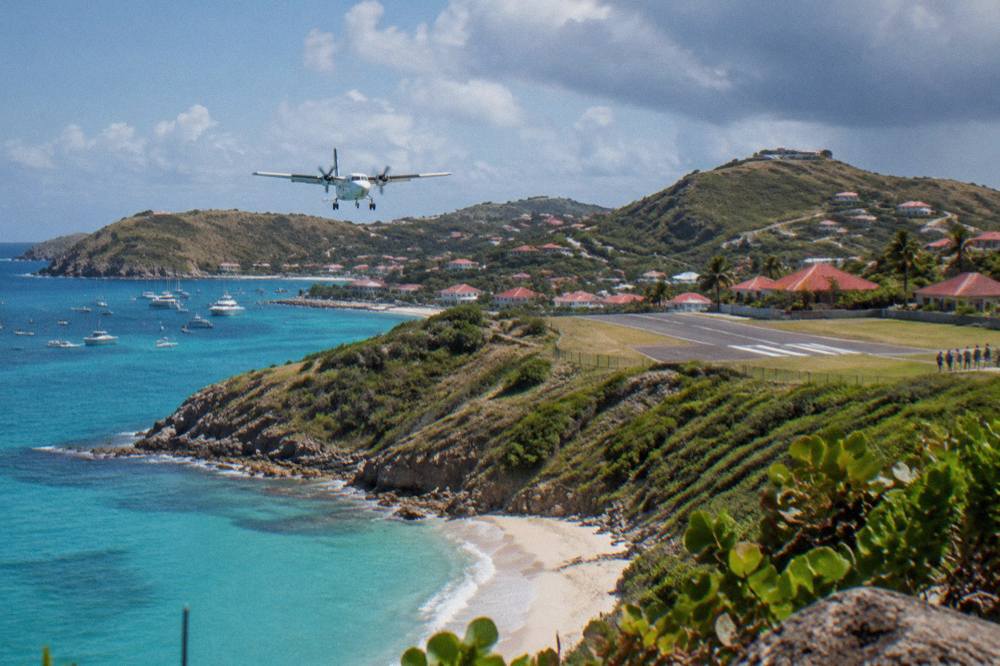
Before any scouting trip, it is worth reading Flying To St Barts From The US, because the island's small airport shapes every arrival. The runway at Gustaf III is 646 metres, serves small STOL turboprops only and operates in daylight and visual conditions, so no jet lands there and every long-haul journey breaks at a Caribbean gateway such as St Martin, San Juan, Guadeloupe or Antigua. Movers who underestimate that last hop underestimate the island itself.
Can A US Citizen Work In St Barts?
Employment is the hardest part of any move. Working on St Barts requires French work authorization in addition to the right to reside, and a US passport alone grants neither; the local economy is small, employers must justify hiring through French channels, and remote work for a US employer sits in a gray area that French rules, not American ones, define.
The local job market is compact. Tourism, hospitality, yachting services and construction dominate a private sector serving roughly 10,700 residents plus a seasonal influx, and the collectivity's own rules favor locally resident labor for many roles. Seasonal workers with contracts are a recognized category, and the tourist tax code even carves out exemptions for them, which signals how the island formally accommodates short-term labor without opening a general immigration door.
Remote work raises the cleanest-sounding option and still needs care. A US citizen working remotely for a US company while living on St Barts is nonetheless resident in a French collectivity, and whether that arrangement needs a long-stay visa with a specific purpose, and how it is taxed, are questions for French consular officials and a cross-border adviser rather than for internet forums. The honest summary of the rules: short stays are easy, residence is achievable through the French process, and employment of any kind adds a separate authorization layer on top.
Private charter options from St Martin, covered in the selection above, let a household test the commute from the gateway island, the sea conditions and the rhythm of Gustavia's harbour before anyone signs a French visa application.
Is St Barts French Or American In Practice?
St Barts is French in law, currency and administration: it has been an overseas collectivity of France since 2007, the euro is the official currency, French is the official language with English widely spoken, and emergency numbers follow the French system. American influence is real but informal, visible in visitors and shopping habits rather than in any legal status.
Daily life runs on French plumbing, so to speak. The collectivity has its own territorial council under French constitutional provisions, is represented in the French Parliament, and applies French overseas entry, customs and administrative rules. The practical consequences reach further than most Americans expect: healthcare operates under the French system, driving follows French rules on the right, and the taxe de séjour and local contribution code are French-influenced machinery administered locally. The question of who actually owns and governs the island is unpacked in What Country Does St Barts Belong To.
What softens the transition for Americans is the island's bilingual, visitor-facing character. English is widely spoken in shops, restaurants and real estate circles, US visitors are a longstanding presence, and Gustavia's harbour retail culture is attuned to American customers. The dollar question is practical rather than legal: cards are accepted widely, but the euro is the currency that counts, a topic covered in Can You Use US Dollars In St Barts.
| Aspect | How it works on St Barts |
|---|---|
| Sovereignty | French overseas collectivity since 2007 |
| Capital and harbour | Gustavia |
| Official language | French, with English widely spoken |
| Currency | Euro |
| Entry framework | French overseas rules, outside Schengen |
| Emergency numbers | 15 for medical, 17 for police, 18 for fire, 112 as the European number |
| Time zone | UTC minus 4, with no daylight saving |
The climate is the part that sells itself, so it is worth quoting precisely. Meteo-France normals for 1991 to 2020 show a mean daily high of 28.5 C in January and 31.7 C in September, with 891.3 mm of rain across the year and October the wettest month at 135.6 mm. Hurricane season runs from 1 June to 30 November, peaking mid-August to mid-October, and Hurricane Irma struck the island in September 2017. A mover is signing up for all twelve months of that calendar, not just the February postcard.
What Should A Future Resident Test Before Committing?
Anyone contemplating the move should test three things inside the visa-free 90-day window: the gateway journey through St Martin or another hub, the seasonal rhythm including the autumn closure pattern when many hotels and restaurants shut and reopen between mid-October and early November, and the geography of the island's areas from Gustavia to Grand Cul-de-Sac, since daily life without a car is a real constraint on these hills.
Getting there is its own skill. Most arrivals route through St Martin: either the small-plane hop from Princess Juliana or Grand Case airports, or the scheduled ferries, with Great Bay Express running from Philipsburg on the Dutch side in about 45 minutes and Voyager from Marigot on the French side in about 50 to 60 minutes, both crossings weather-dependent and never to be counted on as smooth. A future resident will make that journey, or host guests making it, repeatedly. The comparison between the two gateway options is laid out in How Do I Get To St Barts From The US.
Housing is the second test. The island's accommodation divides between a hotel sector that largely closes each autumn and a large villa market that operates year-round, managed by established names such as WIMCO, Sibarth and St Barth Properties. Long-term rental stock is thin in high season, which is why a scouting trip across both high and low season tells you more than any single visit. Where to base a household is a real decision with real trade-offs, and What Part Of St Barts Is Best To Stay In walks through the areas, from Gustavia's walkable harbour to the quiet of Toiny and Corossol.
The third test is the smallest one and the most telling: how the island feels on an ordinary Tuesday, out of season, with a rental car on steep roads and a grocery run ahead of it. The sea is warm year-round, about 26 C in winter rising to about 29 C from August to October, and the public beaches are free, but residency is lived on land, in euros, through French paperwork.
Between scouting trips, the pages of St Barthelemy Travel cover the practical layers in depth, from ferries and flights to areas and beaches, all written from the same primary sources. This site also holds the view that the water is the island's best orientation tool: the day trips above, all departing from St Martin, show St Barts as a coastline and a harbour rather than as a real estate listing.
Common Questions About Moving To St Barts
Can a US citizen live in St Barts permanently?
Yes, but only through the French system: a long-stay visa obtained before travel, then a residence permit under French immigration rules. A US passport alone allows 90 days in any 180-day period and nothing more.
Can a US citizen move to St Barts without a visa?
Not for a move. Visa-free entry covers short tourist stays only. Living on the island requires French long-stay permission, and the island is outside Schengen, so Schengen arrangements do not transfer.
Does buying property in St Barts give a US citizen residency?
No. Property ownership and immigration status are separate under French law. Foreigners can buy, but the right to reside still runs through the long-stay visa and residence permit process.
Can a US citizen work remotely from St Barts?
Residing on the island requires French long-stay permission regardless of who pays you, and remote work's treatment under those rules is a question for French consular authorities and a cross-border adviser before committing.
Is St Barts a US territory?
No. St Barts is a French overseas collectivity, separate from Guadeloupe since 2007, with the euro as its currency and French as its official language.
How long can a US citizen stay in St Barts as a tourist?
Up to 90 days in any 180-day period, with a valid passport book, an onward ticket and the other standard entry conditions under the French overseas rules.