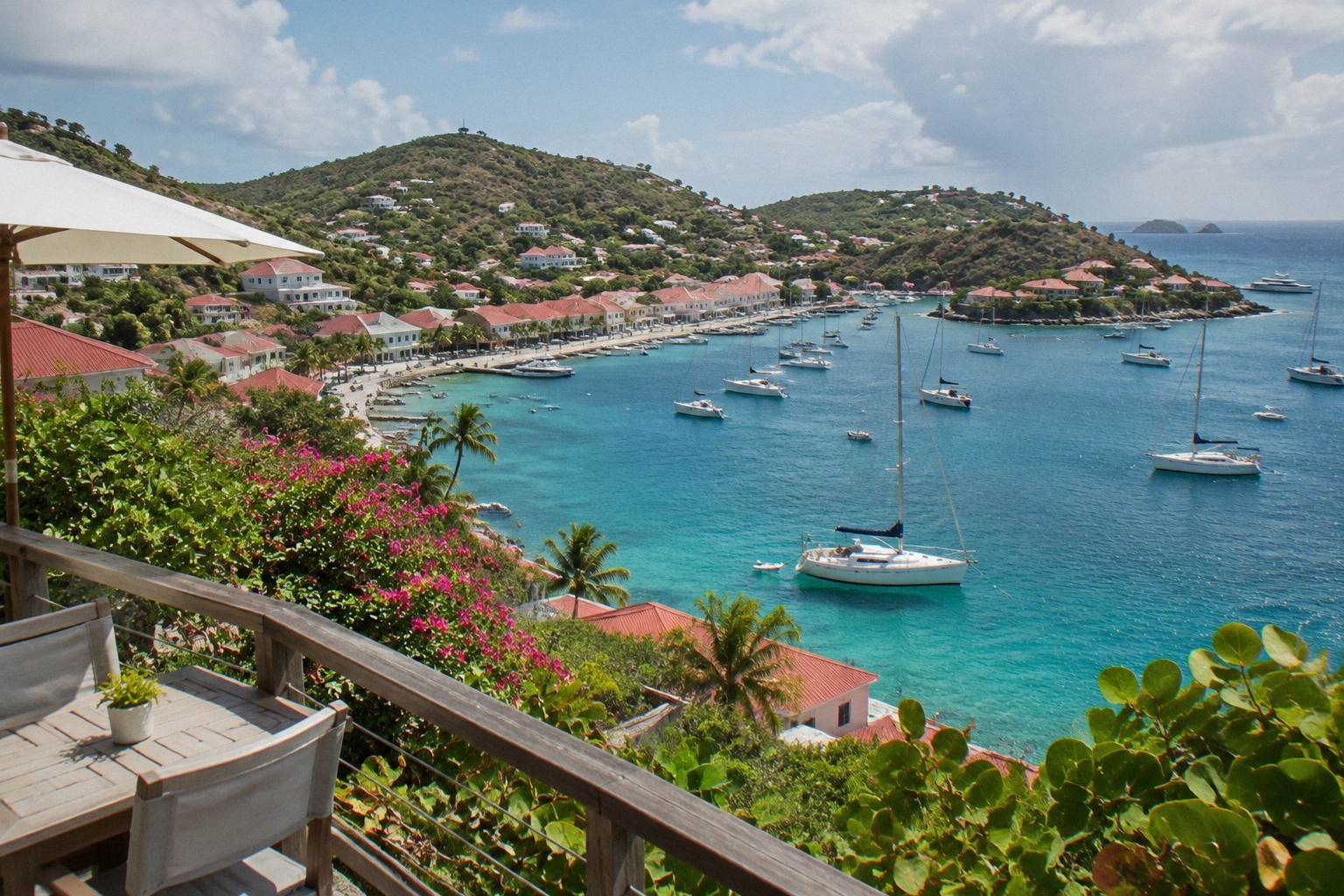
St Barts Packing List
St Barthelemy, the small French Caribbean island everyone calls St Barts, rewards light, specific packing: warm weather all year, a small-plane or ferry arrival, public beaches and a marine reserve with its own rules.
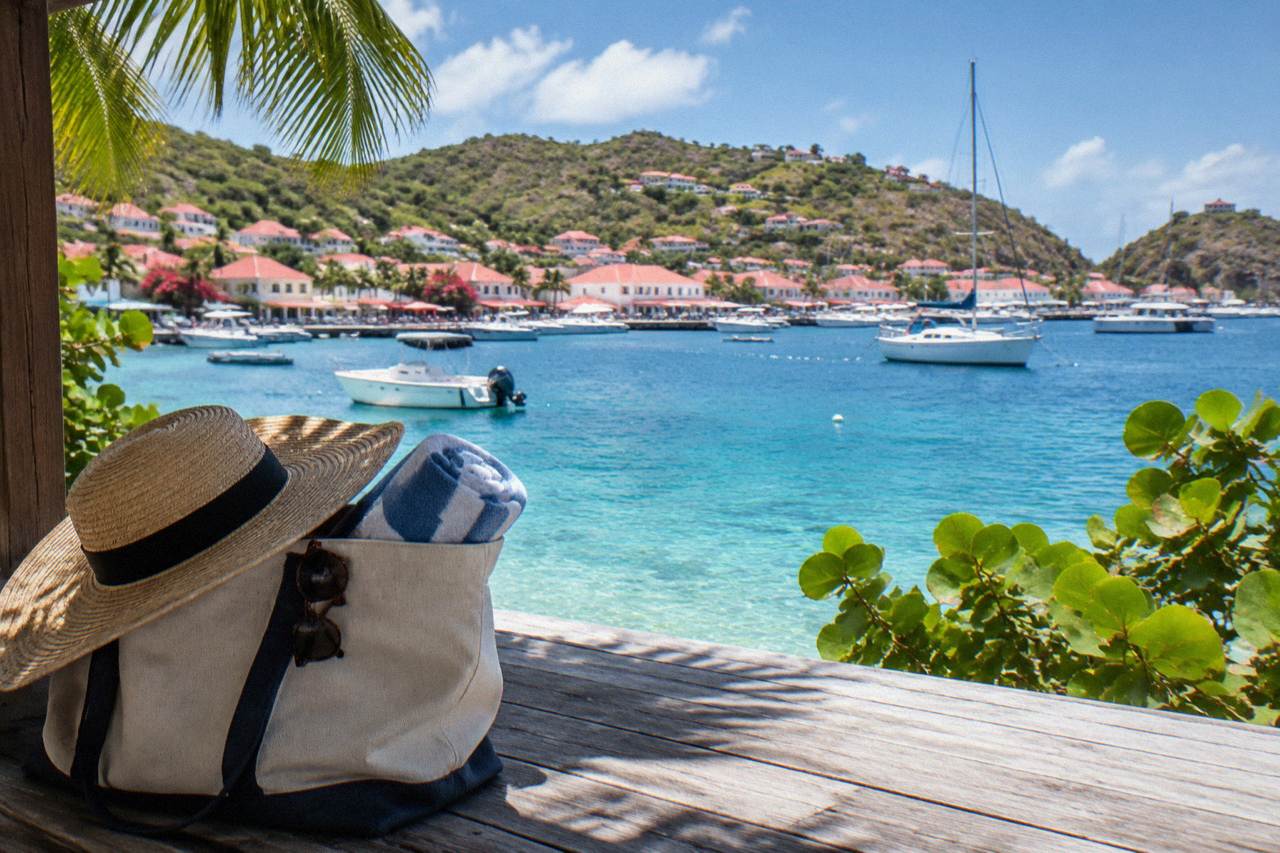
Pack light, breathable clothing, reef-safe sunscreen, water shoes, a passport and carry-on-only luggage sized for the small STOL aircraft or ferry from St Martin, plus a light layer for evenings and boat trips.
St Barthelemy, better known as St Barts, is a French overseas collectivity in the Caribbean of about 21 square kilometres, roughly 10,700 residents, a harbour capital called Gustavia and a permanent supply of warm air. The Meteo-France climate normals for 1991 to 2020 put the mean daily high between 28.5 C in January and 31.7 C in September, which means the packing problem here is never cold weather. It is weight, size and specificity: the island is reached by small aircraft or ferry from St Martin, the beaches are public and mostly undeveloped, and the surrounding marine reserve has rules that change what belongs in a beach bag. This St Barts packing list works through the whole suitcase, section by section, with the island's own constraints in mind.
What Should You Pack For A Trip To St Barts?
Pack for heat, water and a weight-limited arrival: breathable summer clothing, swimwear, reef-safe sunscreen, a hat, sunglasses, water shoes, a dry bag for boat days, medications in original packaging, your passport, and soft luggage you can carry, because the small aircraft and ferries serving St Barts reward travelling light and punish hard, oversized cases. The island is formal by Caribbean beach standards in the evening, so one or two smarter outfits cover harbor dinners in Gustavia. Everything else on this list exists because of a specific island condition: strong sun, a protected marine environment, narrow hilly roads if you rent a car, and an autumn season that overlaps the Atlantic hurricane months.
The core wardrobe principle is simple. Days are hot and sunny year round, nights are warm but breezy near the water, and the wind on a boat or an open-sided restaurant terrace can feel cool after sunset. A light layer, not a jacket, is the fix.
| Category | What To Pack | Why It Matters On St Barts |
|---|---|---|
| Documents | Passport, travel insurance details, driving licence | Entry is outside Schengen; car rental counters check licences |
| Clothing | 5 to 7 breathable outfits, 2 swimwear sets, one smart-casual evening set | Hot days, warm evenings, French-influenced dinner dress sense |
| Sun | Reef-safe sunscreen, SPF lip balm, wide-brim hat, polarized sunglasses | Sun is strong all year; reserve rules favor reef-safe products |
| Feet | Flip-flops, water shoes, one pair of comfortable walking shoes | Rocky entries at some coves, hilly village streets |
| Water gear | Dry bag, snorkel mask, quick-dry towel | Boat trips and beach-hopping between public beaches |
| Health | Medications, motion-sickness tablets, basic first aid, insect repellent | Ferry crossings can be rough; tropical insects exist |
Soft duffels beat rolling suitcases. The airport at St Barts, Gustaf III, is small, and if you arrive by ferry from Philipsburg or Marigot you will carry your own bags on and off. More on the arrival itself is in the guide to how to get to St Barts.
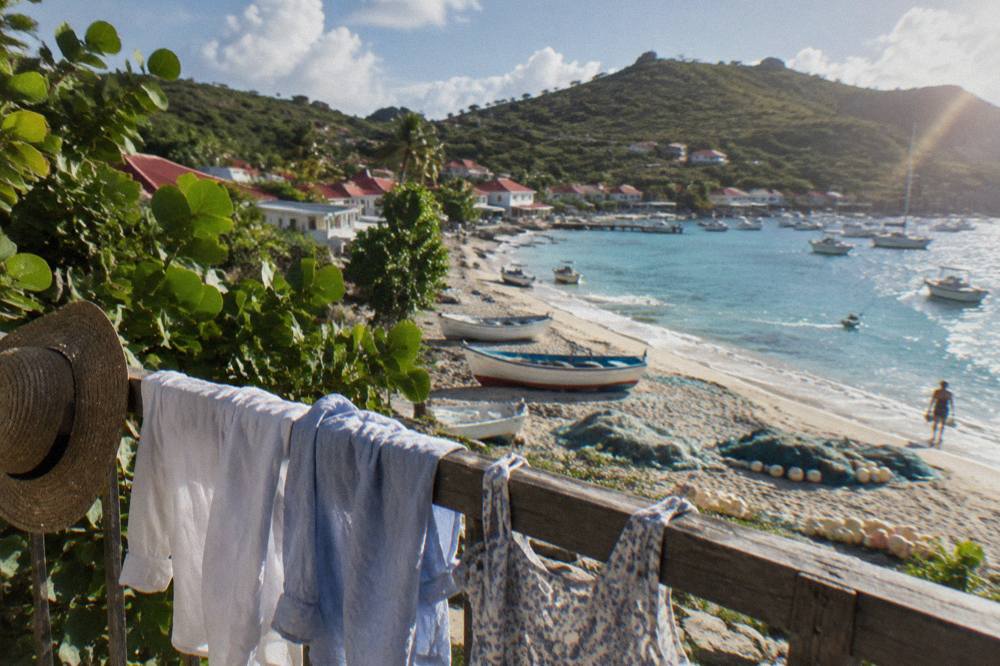
What Clothes Work For St Barts Days And Evenings?
Days call for light, loose, breathable clothing: cotton or linen shirts, shorts, sundresses, swimwear with a cover-up for walking to and from the beach, and sandals, because daytime temperatures stay in the high 20s Celsius every month of the year and the sun is strong even in the northern-hemisphere winter. Evenings in Gustavia lean smart-casual rather than beachwear; the tourism committee describes an island where French influence shapes restaurant culture, so men are comfortably in a collared shirt and women in a summer dress at harbor tables. Pack one or two evening outfits, not a wardrobe of them. Between November and April, high season brings breeze-cooled evenings, so a light sweater or a long-sleeve shirt earns its place.
Layering is the one trick worth learning. The same wind that makes a boat deck pleasant at noon makes it cool at six, and the same applies to open-air dinners. A packable windbreaker doubles as boat-trip outerwear.
| Setting | Daytime Standard | Evening Standard | Extra To Pack |
|---|---|---|---|
| Beach or cove | Swimwear, cover-up, flip-flops | Cover-up works for casual spots | Rash guard for long sun exposure |
| Gustavia harbor | Shorts and a shirt, sundress | Smart-casual, collared shirt or dress | One light layer for the breeze |
| Boat day | Swimwear, t-shirt, hat | Dry change of clothes in a dry bag | Windbreaker |
| Hike to Colombier | Breathable shirt, walking shoes | Same, plus a spare shirt | More water than feels reasonable |
| Village wandering, Corossol or Lorient | Light casual clothing | Same | Coin purse for small euro purchases |
Clothing volume should match your laundry tolerance rather than your trip length. Many villas have washer-dryers, which is one reason the villa route suits longer stays; the trade-offs are covered in the things to do in St Barts guide, and in the roundup of St Barts hotels.
What Beach Gear Do You Need On St Barts?
Bring reef-safe sunscreen, a wide-brim hat, polarized sunglasses, a quick-dry towel, water shoes and a dry bag, because every beach on St Barts is public and many are undeveloped, with no vendors, so whatever you want at the water's edge travels with you. The environment agency's regulatory-zones page lists the marine reserve's core rules: a 5-knot speed limit in protected zones, no jet skis, no touching or chasing sea turtles, no collecting coral, shells or sand, and no dogs on beaches anywhere on the island. None of that requires special equipment, but it does shape what you carry. Reef-safe sunscreen is the single most useful item on this list.
Two swimwear sets matter more than they sound. One is always drying while the other is in use, and salt water plus strong sun ages swim fabric fast.
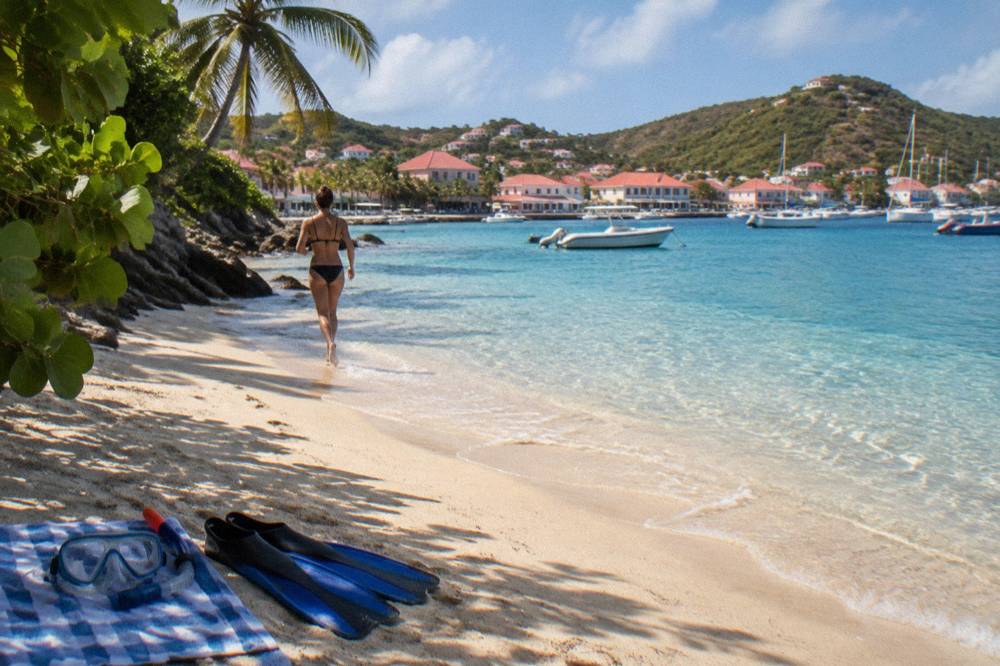
Snorkel gear divides opinion. The marine reserve lists 23 dive sites and turtles are common in the Grand Cul-de-Sac lagoon and around Colombier, so a mask you trust is worth its weight. Fins are bulkier; if you prefer travelling without them, the boat trips that include snorkel stops provide equipment, and the listing says so for each product.
For the practical side of a day on the water, the per-person option is the Boomerangs group sail and snorkel, which departs from St Martin or Sint Maarten and covers Gustavia, Colombier and Ile Fourchue; a dry bag, hat and reef-safe sunscreen are exactly what fits its day.
The beaches themselves need no booking and no entry fee. The island's shoreline from Saint-Jean to Shell Beach (Grand Galet), Saline, Gouverneur, Flamands, Colombier and Grand Cul-de-Sac is public, which is why a well-packed beach bag replaces most of what a developed resort beach would provide.
What Should Go In Your Carry-On For The St Barts Flight?
Put your passport, medications, electronics, one change of clothes, swimwear and valuables in a soft carry-on you can hand-carry onto a small aircraft or a ferry, because the final leg to St Barts is flown by STOL turboprops with limited hold space, and the ferry operators require you to carry your own bags aboard and off again at Gustavia. The runway at Gustaf III Airport is 646 m, so only small aircraft land there, in daylight and visual conditions only. That constraint travels all the way back up your packing list: hard-shell cases sized for widebody holds are the wrong tool for this route.
The route to the island runs through St Martin: a gateway flight into Princess Juliana airport, then a small plane or the ferry. The full routing, including the small-plane carriers and the two ferry operators, is laid out in the site's St Barts airport guide and the page on ferry operators and schedules.
| Item | Carry-On Or Checked | Reason |
|---|---|---|
| Passport | Carry-on, always | Required for entry and for both ferry operators |
| Medications in original packaging | Carry-on | No jet bridges or long pharmacy hours to fall back on |
| Swimwear and one outfit | Carry-on | If checked luggage is delayed, the island still works |
| Electronics and chargers | Carry-on | Small aircraft cabins mean bags stay with you anyway |
| Reef-safe sunscreen | Checked, or buy locally | Liquid limits apply on gateway flights |
| Snorkel mask | Either | Compact, fragile, and used from day one |
| Soft duffel, not a hard case | The bag itself | Hold space on STOL aircraft and ferry racks is tight |
The crossing itself deserves a line of respect rather than fear. The ferry from Philipsburg takes about 45 minutes and the ferry from Marigot about 50 to 60 minutes on the operators' own figures, and swells are normal in the open channel. Motion-sickness tablets in the carry-on, taken before boarding, are the difference between a rough hour and a miserable one for plenty of people. Never book the crossing expecting flat water; the operators' own pages say services are weather-dependent.
What Should You Pack For The Marine Reserve And Snorkeling?
Pack a well-fitting mask, reef-safe sunscreen, a rash guard, water shoes and a dry bag, and pack the reserve's rules alongside them: the environment agency's page lists a 5-knot limit in protected zones, a ban on jet skis and seabobs devices, no touching or chasing turtles, corals or rays, no gloves in the water, no collecting anything, and no drones without authorization near the reserve. Turtles are strictly protected; the agency asks that nests and sightings be reported rather than approached. Green and hawksbill turtles are common in the Grand Cul-de-Sac lagoon and around Colombier, which is exactly where most snorkelers go.
The practical reading of those rules for a packing list: gloves stay home, collecting bags stay home, and a good mask comes along. A rash guard replaces a second coat of sunscreen in the water, which the reef prefers. More of these guides are collected on St Barthelemy Travel.
| Reserve Rule From The Environment Agency | What It Means For Your Bag |
|---|---|
| No touching or chasing turtles, corals, rays | Fins sized to avoid contact; buoyancy-aware snorkeling, no gloves |
| No collecting coral, shells, sand or rocks | Leave the mesh collecting bag at home |
| No jet skis, seabobs or electric surfboards | Nothing to pack; such devices simply are not part of the island |
| No dogs on any beach, island-wide | Pet travel needs a different plan entirely |
| Drones prohibited without authorization | Leave the drone home or seek authorization first |
| Ecological moorings and anchoring limits in Colombier and Fourchue bays | Boat days are captain's business, not yours |
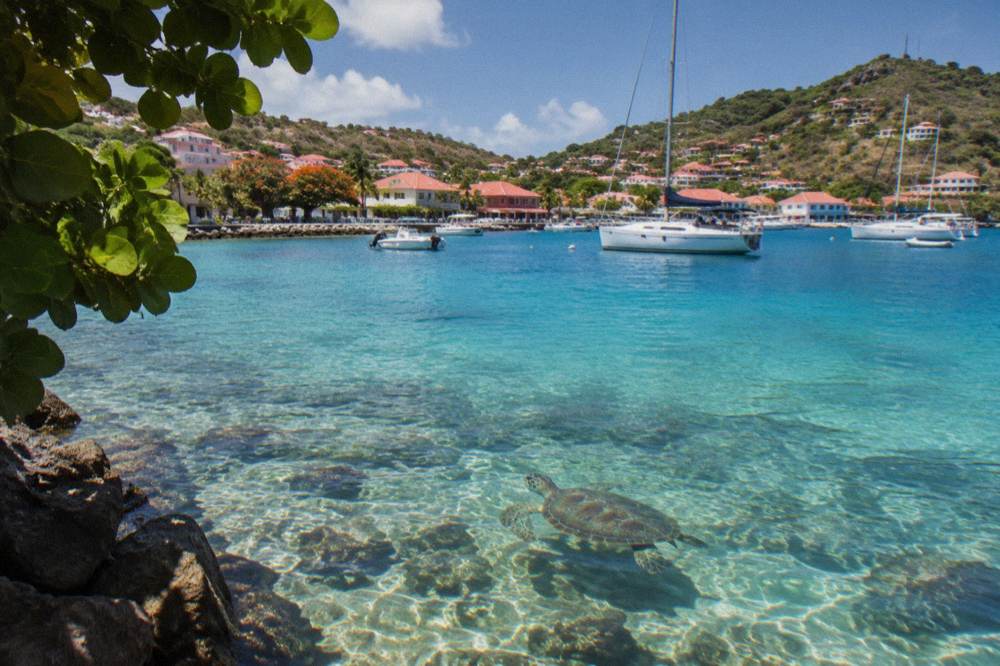
If a day on the water is the centerpiece of the trip, the charter side of the trip list departs from St Martin and Sint Maarten too, and each boat carries its own snorkel equipment. Two of the strongest options listed here are shown below.
For guests who want the day shaped entirely around a beach club stop, the Nikki Beach private charter is the dedicated option, again departing from Sint Maarten.
How Does Hurricane Season Change The St Barts Packing List?
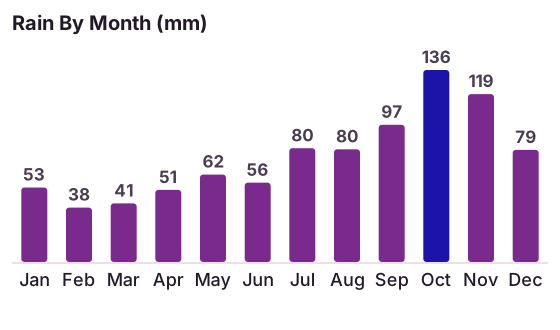
From 1 June to 30 November, add a packable rain jacket, a dry bag for electronics, a power bank, offline maps and copies of your documents in a waterproof sleeve, because the Atlantic hurricane season overlaps the warmest and wettest months on the island, with the peak of activity from mid-August to mid-October and the climatological peak near 10 September. The Meteo-France normals for 1991 to 2020 show the pattern plainly: October is the wettest month at 135.6 mm of rain, September follows at 96.9 mm, and February is the driest at 38.4 mm. None of that predicts any particular week, but it does tell you what kind of jacket to bring.
It also tells you what the season does to the island's rhythm. Many hotels and restaurants close each autumn and reopen in waves between mid-October and early November, a pattern rather than a schedule, so an autumn trip packs for a quieter island with fewer open tables and lower demand for evening clothing.
| Month (Meteo-France Normals, 1991-2020) | Mean Daily High | Mean Daily Low | Rainfall |
|---|---|---|---|
| January | 28.5 C | 23.5 C | 52.6 mm |
| April | 29.8 C | 24.2 C | 50.9 mm |
| July | 31.2 C | 26.0 C | 80.4 mm |
| October | 31.4 C | 25.8 C | 135.6 mm |
| Year | 30.2 C | 24.9 C | 891.3 mm |
The rain jacket should be genuinely packable, not a lined coat. Rain in the tropics arrives hard and short, and the temperature barely drops. Travel insurance that covers disruption is sensible in these months; check your own government's travel advice for the territory before booking, since entry and advisory details sit outside this page's scope.
What Should You Pack For Events And High Season In St Barts?
For the December-to-April high season, pack smarter evening clothing than the rest of the year, a light layer for windy nights, and book-dependent extras: the island's calendar concentrates the St Barth Music Festival from 8 to 18 January 2027, the Gourmet Festival from 9 to 15 November 2026, and the Bucket Regatta in mid-March, and New Year's Eve in Gustavia is the island's biggest single night. The sailing weeks, the superyacht scene and the festivals tilt the wardrobe one notch more formal. None of this means packing a suit; it means your one or two best summer outfits get used repeatedly.
The festival calendar rewards planning more than luggage. The Music Festival's dates for 2027 are fixed on its own site; details for Les Voiles de St Barth in April 2027 and the Film Festival were still unconfirmed when the tourism calendar was last checked, so treat those as April and late April or early May respectively rather than as booked dates.
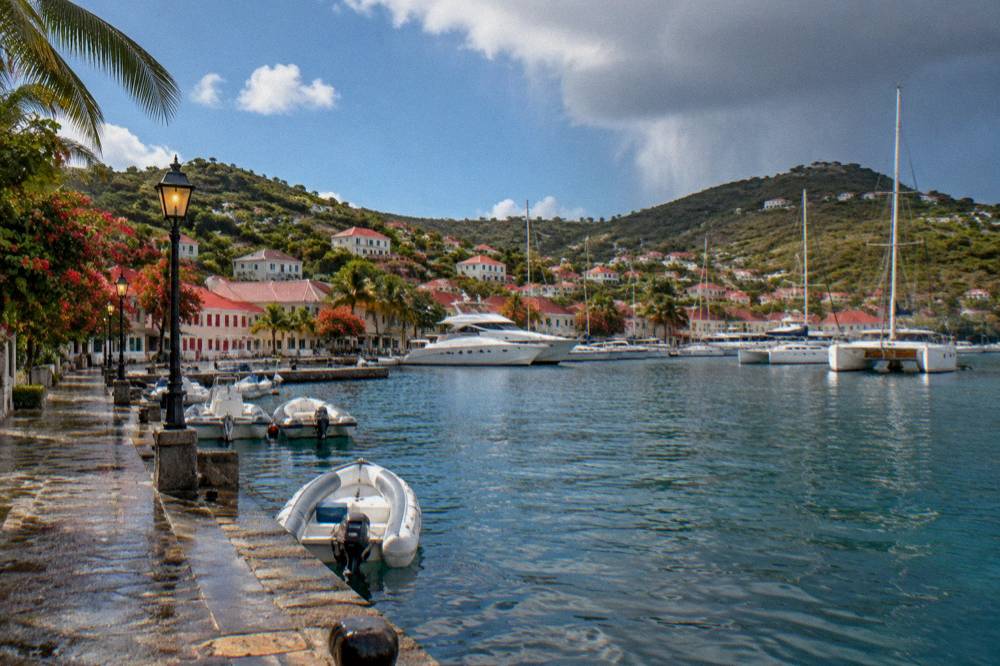
| Occasion | Clothing Standard | Non-Clothing Extras |
|---|---|---|
| New Year's Eve in Gustavia | Best summer outfit, light wrap for the night | Earplugs; fireworks run late over the harbor |
| Music Festival, January | Smart-casual for evening concerts | Event tickets printed or offline |
| Gourmet Festival, November | Smart-casual, reserve ahead | Bookings confirmed before arrival |
| Bucket Regatta, mid-March | Deck-friendly daywear, windbreaker for watching from the water | Binoculars, polarized sunglasses |
| Sailing weeks, April | Boat clothing, non-slip shoes | Dry bag, motion-sickness tablets |
What Can You Buy On The Island Instead Of Packing It?
Buy sunscreen only as a top-up, heavy liquids and wine locally, and beach toys or umbrellas if you need them, because St Barts has real shops in Gustavia, but everything arrives by boat or small plane, prices reflect that, and the specific reef-safe sunscreen brands the reserve favors may not be on a local shelf, so pack the reef-safe products and buy the bulky ordinary ones. Toiletries, after-sun, snacks and bottled water are all available around Gustavia and Saint-Jean. What is not worth sourcing locally is anything specialized: prescription items, a correct-fitting mask, motion-sickness tablets in your preferred formulation and children's swim gear.
The shopping scene in Gustavia also runs the other way: visitors leave with more than they brought. Fashion, jewelry and French pharmacy products are the island's retail strengths, and the site's St Barts shopping guide covers what is genuinely worth the luggage space on the way home.
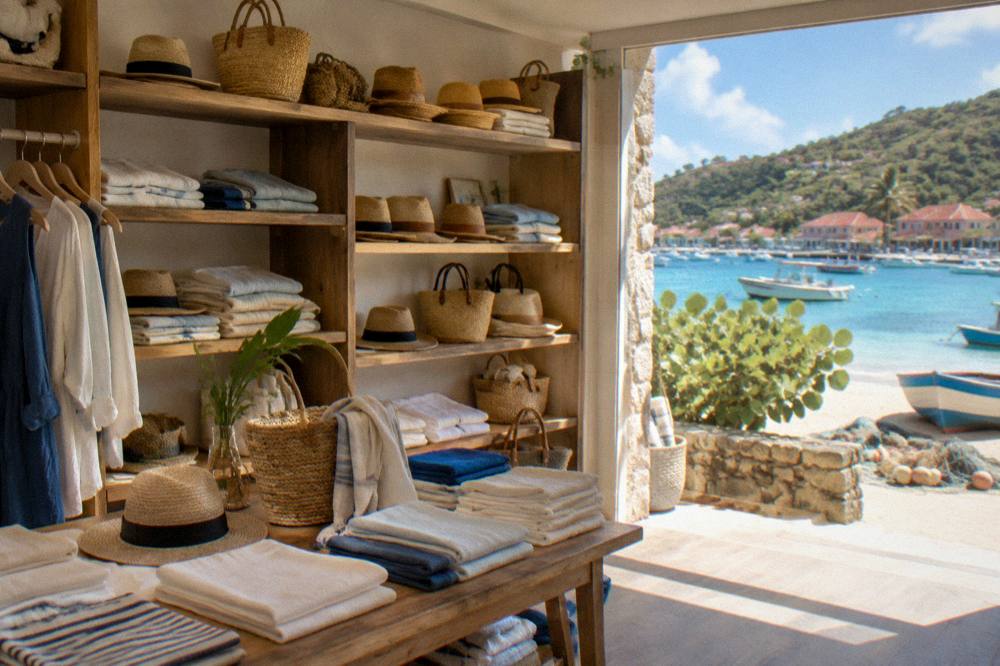
One structural point saves more packing than any tip: the island's currency is the euro, cards are accepted widely, and there is no need to carry large amounts of cash. A small amount of euros for beach snacks and tips is plenty; the site's coverage of currency and tipping fills in the rest.
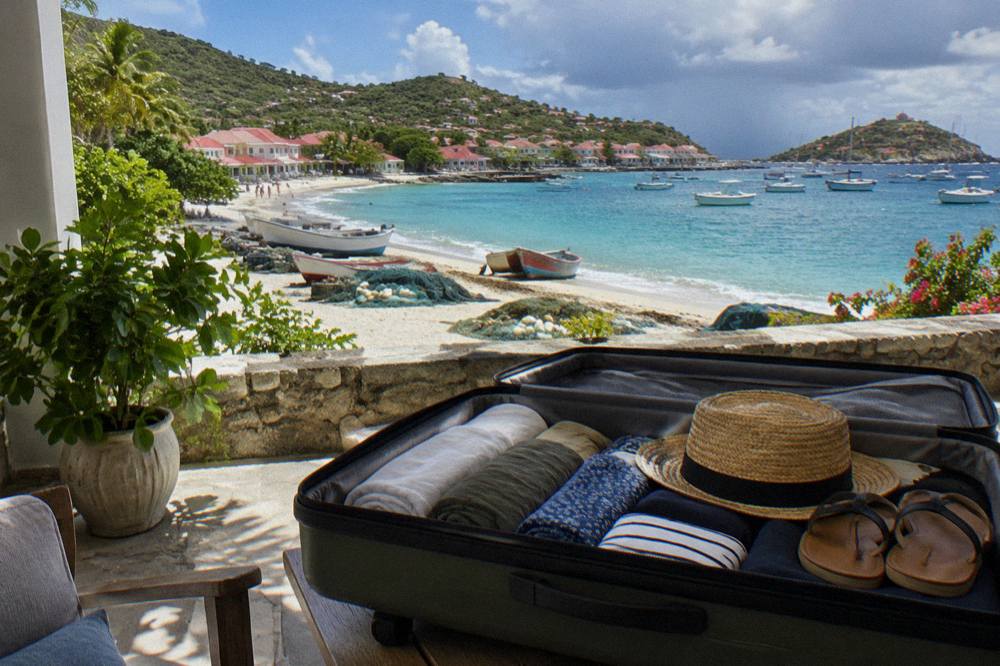
A Final Checklist Before You Fly
Run one last pass against the island's four hard constraints: documents in hand luggage including your passport, liquids and tools of the reef-friendly kind only, soft luggage sized for a STOL aircraft or a ferry rack, and insurance plus a rain layer if you travel between June and November, when hurricane season overlaps the island's warmest and wettest months. Everything else on this list is comfort, and comfort on St Barts is a light bag, dry electronics, protected skin and a mask that fits. The rest of the island, its public beaches, its harbor and its hills, is already packed.
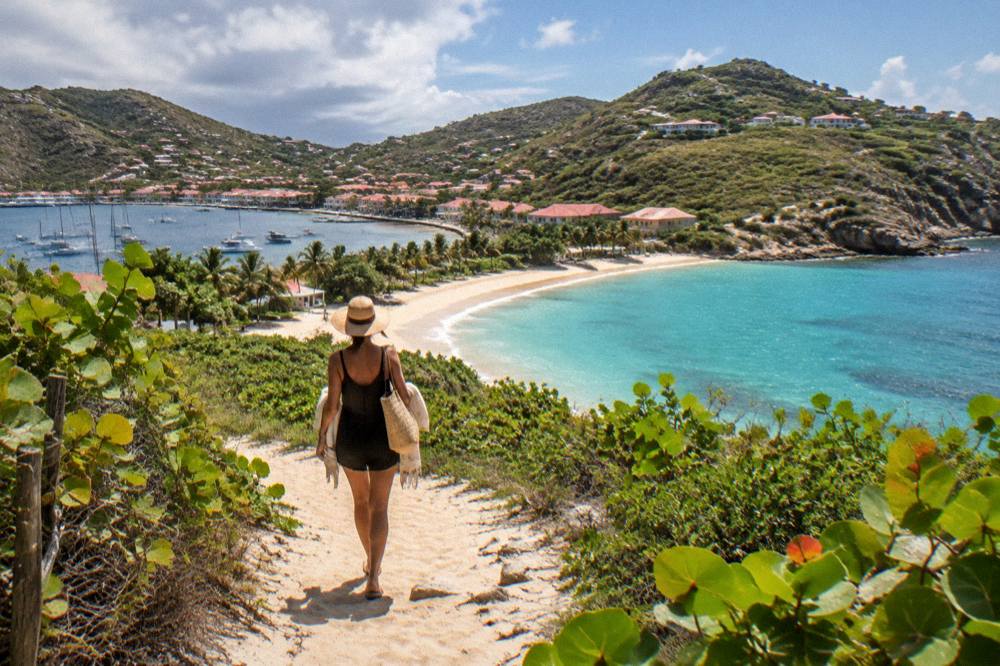
Common Questions About Packing For St Barts
What kind of luggage is best for St Barts?
A soft duffel or a light weekender bag. The final leg to the island is flown by small STOL turboprops with limited hold space, or taken on a ferry where you carry your own bags aboard. Hard, oversized suitcases fit neither well.
Do I need reef-safe sunscreen for St Barts?
Yes. The marine reserve protects the waters around the island, including Colombier and Fourchue bays, and its rules bar anything that damages the protected environment. Reef-safe sunscreen is the standard choice and may not be easy to find in your preferred brand locally, so pack it.
What shoes should I pack for St Barts?
Three pairs cover the island: flip-flops for the beach and village, water shoes for rocky entries and snorkeling, and one pair of comfortable walking shoes for hilly streets and the Colombier trail.
Will I need warm clothes in St Barts?
No more than a light layer. The Meteo-France normals, 1991 to 2020, put the mean daily low between 23.3 C and 26.3 C across the year. A sweater or windbreaker for breezy evenings and boat decks is enough.
Should I pack snorkel gear?
A mask, yes, if you have one that fits well. Fins are bulkier and the boat trips that include snorkel stops provide equipment on board, so fins are optional for most travellers.
What extras does hurricane season require?
From 1 June to 30 November, add a packable rain jacket, a dry bag, a power bank, offline maps and waterproof document copies. October is the wettest month in the climate normals at 135.6 mm, so the jacket earns its place.