Is St Barts Bigger Than Manhattan?
No. St Barts covers about 21 square kilometres while Manhattan is several times larger by land area, and Manhattan holds vastly more people. Here is what the size difference means for a visit.
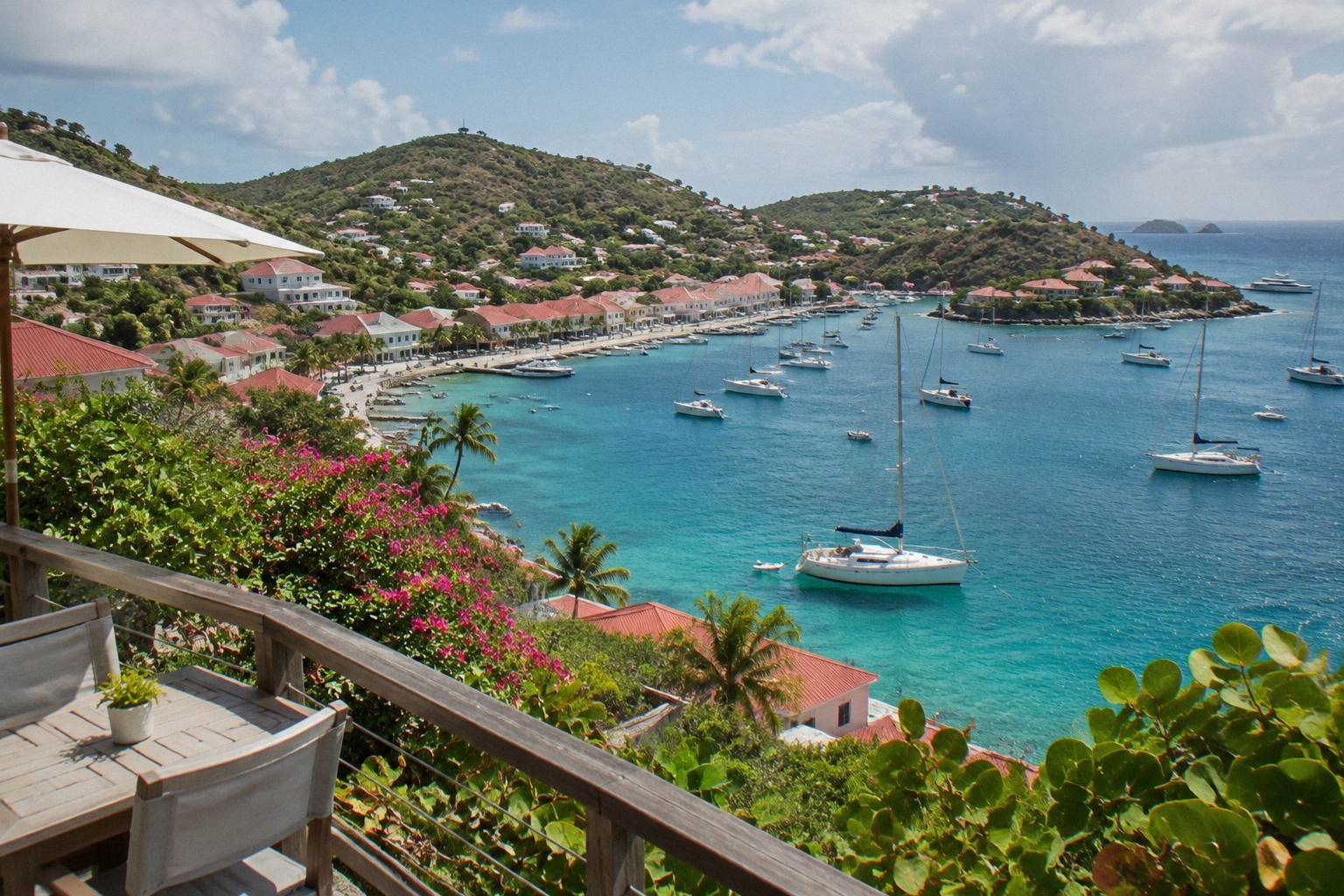
St Barthelemy, written St Barts on this site, is a small French island in the Caribbean covering about 21 square kilometres, and no, it is not bigger than Manhattan. Manhattan is several times larger by land area, according to United States census figures, and its population density is in a different universe from an island of roughly 10,700 residents. The comparison comes up more often than you might expect, usually because both places appear constantly in photographs of wealth, yachts and famous faces. The similarity ends there. One is a grid of skyscrapers at the mouth of a great river, the other a ring of public beaches around a volcanic hillside with a single harbour town, Gustavia, at its center.
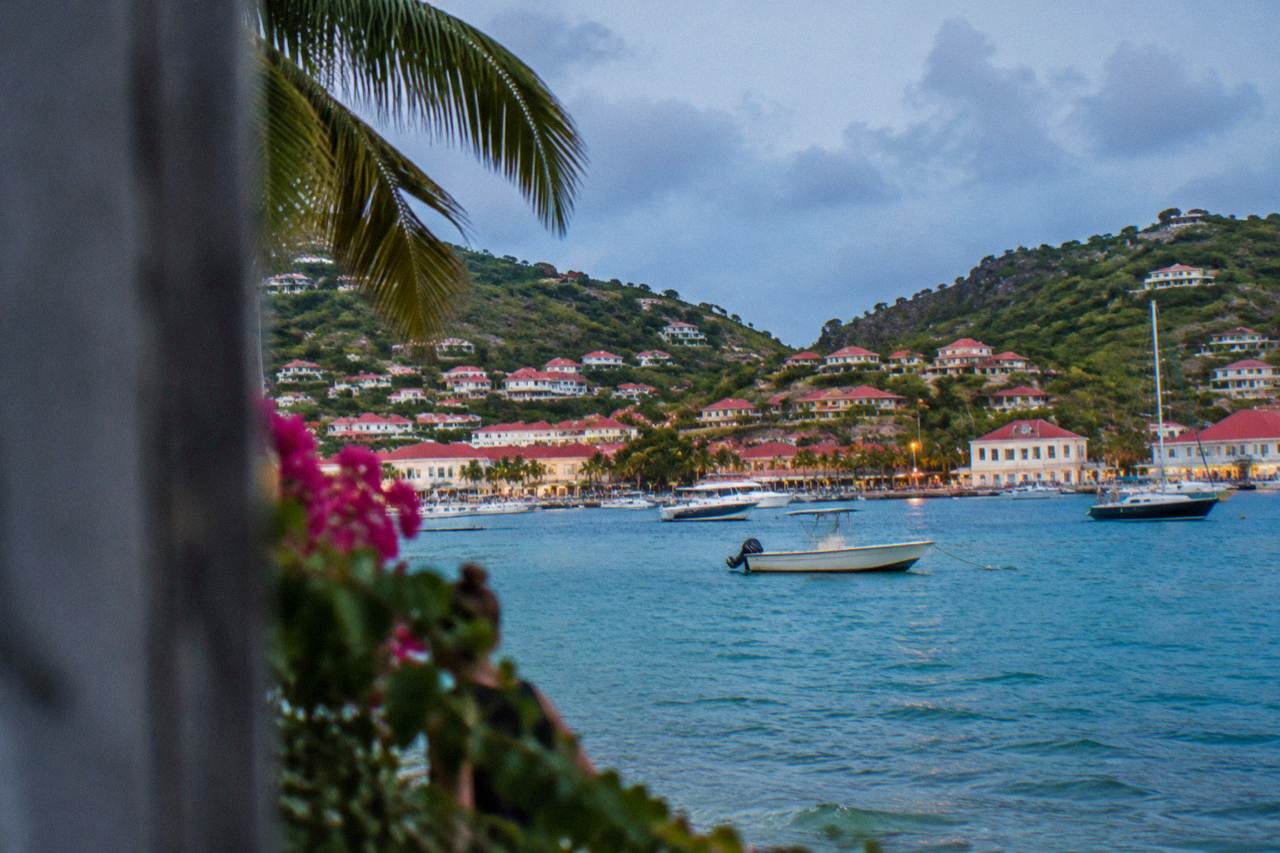
No, St Barts is much smaller than Manhattan. St Barts covers about 21 square kilometres of land, while Manhattan is several times larger in area, one of the most densely built boroughs in the United States. The population gap is wider still: St Barts has roughly 10,700 residents against Manhattan's more than 1.6 million, so the island has a small fraction of Manhattan's people on a small fraction of its land.
The area figure for St Barts comes from the French government's overseas territories page for the collectivity, and the resident figure from the French national statistics office's census work. St Barts has been an overseas collectivity of France since 2007, with Gustavia as its capital and the euro as its currency. Manhattan, by contrast, is a borough of New York City, one of the most densely built places on earth. Putting the two side by side is really a study in opposites, and the numbers make the point faster than any description.
| Measure | St Barts | Manhattan |
|---|---|---|
| Land area | about 21 square kilometres | several times larger than St Barts |
| Residents | roughly 10,700 | more than 1.6 million |
| Status | French overseas collectivity since 2007 | Borough of New York City |
| Capital or core | Gustavia, a harbour town | Midtown and Lower Manhattan |
| Setting | Hills, beaches and turquoise water | Dense urban grid between rivers |
One useful way to picture the difference: if you lifted Manhattan out of the Hudson and set it down over St Barts, it would swallow the island whole, hills, beaches and all. The island's scale is closer to a single New York neighborhood than to any borough.
How Big Is St Barts Compared With Other Familiar Places?
St Barts measures about 21 square kilometres, which makes it far smaller than Manhattan and comparable to a mid-sized town footprint rather than a city. About 10,700 people live there year round, spread across Gustavia and a handful of villages including Saint-Jean, Lorient and Corossol. The island's tallest point is a modest hill, and its coastline is a series of public beaches rather than a developed waterfront.
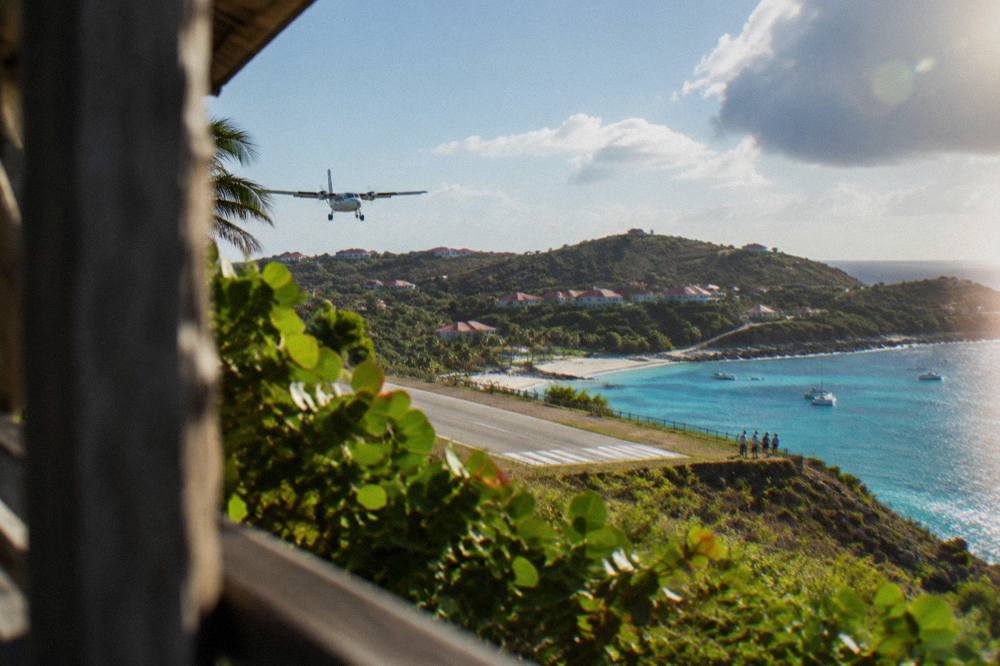
The tourism committee's material describes an island of hills and coves, about 21 square kilometres in area, with Gustavia as its harbour capital. There is no real equivalent of a Manhattan grid anywhere on it. Roads are narrow, winding and steep, speed limits are low, and the airport, Gustaf III with its 646 metre runway, takes only small turboprop aircraft in daylight conditions. No jet lands on St Barts, which is itself a statement about scale: the island's infrastructure was built around the idea that only small things fit.
For a sense of how that smallness is arranged, the beaches ring the coast and all of them are public, from Saint-Jean beside the airport to Gouverneur, Saline, Flamands and Colombier. Colombier in particular sits at the end of a coastal walk on the island's northwest, part of the protected marine reserve. The environment agency's regulatory-zones page lists a 5 knot speed limit in reserve waters, a ban on jet skis and a rule against touching sea turtles, all of it on a scale where a slow boat covers a meaningful share of the coastline in an afternoon. Readers curious about which stretch of sand to prioritize can start with the site's answer to what is the nicest beach in St Barts.
Why Does Getting To St Barts Feel Harder Than Getting To Manhattan?
Almost everyone reaching St Barts passes through St Martin first, either by a small plane or by ferry, because the island's runway at Gustaf III Airport is only 646 metres long and accepts small turboprops in daylight and visual conditions only. No jet flies into St Barts directly. Manhattan, in contrast, sits beside two major airports with nonstop service from every continent. The extra leg is the price of the island's small size.
Gateway flights land at St Martin, San Juan, Guadeloupe or Antigua, and from there St Barth Commuter and Tradewind operate the small aircraft that serve the island, while ferries run from Philipsburg and Marigot across to Gustavia in about 45 to 60 minutes depending on the operator. The full picture, including why the airport is famous among aviation watchers, is in the site's answer to why is it so hard to get to St Barts. Size is the root cause of all of it. A 21 square kilometre island cannot host a jet runway, a cruise pier or a highway, and it does not try. Cruise ships anchor offshore and tender their passengers into Gustavia, and even that is capped by rules limiting which vessels may call.
That constrained access is worth remembering when the Manhattan comparison comes up. Manhattan's bigness is its function: it exists to absorb enormous flows of people and capital. St Barts' smallness is also its function. The 1,200 passenger ceiling on cruise calls, the ban on jets and the reserve's quiet-water rules all exist to keep the island at a scale its 21 square kilometres can carry. Visitors who find the multi-step journey tedious can weigh it against the payoff, which the site covers in is it worth going to St Barts.
Seeing the island from the water makes the scale vivid in a way no statistic does. The group sail that visits Gustavia, Colombier and Ile Fourchue, departing from St Martin rather than from St Barts, packs the island's whole northwestern face into a single day on the water. See the live listing if that angle appeals.
How Does The Size Difference Change How You Visit?
On St Barts everything is close: the airport sits beside a beach, Gustavia sits inside a bay you can walk around, and the beaches lie one after another along a coastline you can circle by boat in a day. On Manhattan distance is measured in avenue blocks and subway lines. The practical consequence is that a St Barts trip compresses into a few days what a Manhattan trip spreads across a week, with no transit system needed beyond a rental car or taxi.
Car rental on the island runs through counters at the airport including Avis, Budget and Hertz, plus local agencies offering the open Mini Mokes the island is known for. Roads are narrow and steep with low speed limits, so even the longest drive stays short in absolute terms, though the site's guidance in is it worth renting a car in St Barts covers whether a car is needed at all rather than how long anything takes. The honest answer on timing: no figure is needed, because the island's dimensions do the work. A place of 21 square kilometres simply does not contain far-away things.
| Feature | St Barts | Manhattan |
|---|---|---|
| Arrival by air | Small turboprops only, 646 m runway | Two major airports with global nonstop service |
| Getting around | Rental car, Mini Moke or taxi on narrow roads | Subway, buses, taxis and walking |
| Waterfront | Public beaches and a tender harbor | Riverside parks and piers |
| Overnight scene | Hotels and villas, many closing in autumn | Hotels operating year round |
| Signature view | Gustavia harbor from the hills | The skyline from across the East River |
The seasonal rhythm differs too. Many St Barts hotels and restaurants close each autumn and reopen between mid-October and early November, a pattern tied to the hurricane season that runs from 1 June to 30 November with its peak from mid-August to mid-October. Manhattan never pauses in that way. Anyone planning a trip around the island's calendar should treat autumn closures as a structural fact of the destination rather than a surprise.
What Does A Small Island Do Better Than A Big Borough?
St Barts concentrates its appeal: every beach is public, the marine reserve sits minutes from the harbor, and the whole coastline is readable in a way a borough of 1.6 million people can never be. The Meteo-France normals for 1991 to 2020 show mean daily highs from 28.5 C in January to 31.7 C in September, with warm sea year round, so the outdoor life that Manhattan reserves for a few months runs all year here. Smallness, in this one sense, is the product.
The island's calendar leans on that concentration. The St Barth Music Festival runs 8 to 18 January 2027, the Gourmet Festival runs 9 to 15 November 2026, and the Bucket Regatta fills the harbor with superyachts in mid-March. On an island this size, an event is never far away and never anonymous; the harbor at Gustavia is both the stage and the front row. None of that depends on scale in the Manhattan sense. It depends on the opposite.
For travelers weighing the two, the choice is not really about size at all. It is about what size buys. Manhattan's scale buys variety, velocity and anonymity. St Barts' smallness buys legibility, quiet water and a coastline you can hold in your head after a week. The site's broader overview at St Barthelemy Travel covers how to build a trip around the island's compact geography, from arrival through St Martin to days spent moving between a handful of coves.
Common Questions About St Barts And Manhattan
Is St Barts bigger than Manhattan?
No. St Barts covers about 21 square kilometres while Manhattan is several times larger by land area, and St Barts has roughly 10,700 residents against Manhattan's more than 1.6 million.
Could St Barts fit inside Manhattan?
In terms of area, yes, comfortably. St Barts is about 21 square kilometres and Manhattan is several times that size, so the island would fit inside the borough with substantial room to spare.
Is St Barts crowded like Manhattan?
The two are not comparable. St Barts has roughly 10,700 residents and caps cruise calls at ships of at most 1,200 passengers, which the local authorities authorize, while Manhattan is one of the most densely populated places in the United States.
Why can't jets fly to St Barts the way they fly to New York?
The runway at Gustaf III Airport is 646 metres long and accepts only small turboprop aircraft, in daylight and visual conditions. Travelers connect through St Martin by small plane or ferry.
Are the beaches on St Barts public like New York parks?
Yes, all of the beaches on St Barts are public, from Saint-Jean to Colombier, though dogs are banned on the island's beaches and reserve rules such as the 5 knot limit apply on the water.
The size question, answered plainly, is also an invitation. An island you can cross by boat in an afternoon, ringed with public beaches and anchored by one small harbor town, rewards a slower kind of trip than any borough ever could, and the comparison with Manhattan is the clearest way to see why.