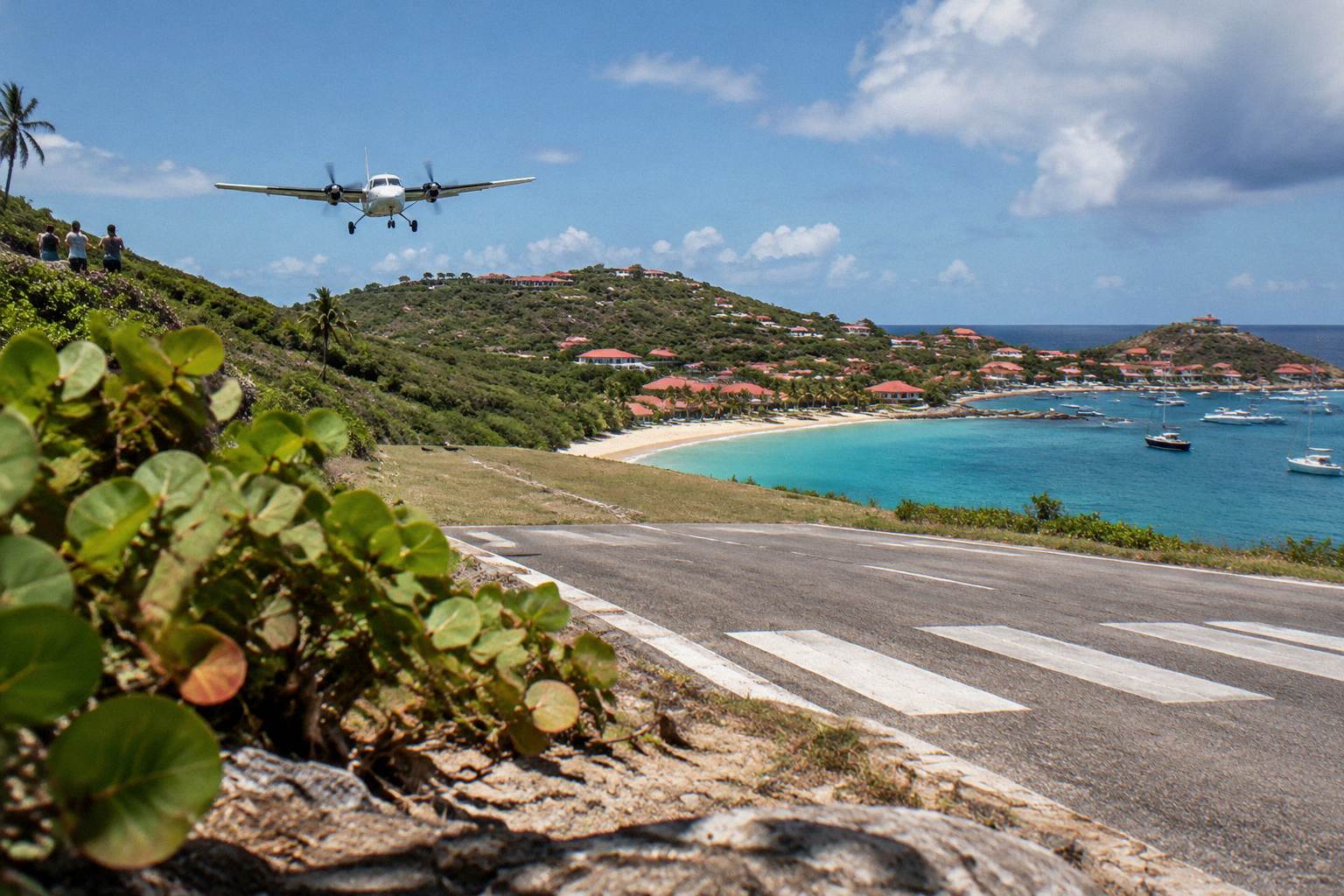
Can You Fly Directly Into St Barts?
Can you fly directly into St Barts? Only small turboprops land on the island, so a direct jet flight is impossible. Here is how every arrival actually works.
St Barthelemy, usually written St Barts, is a small French island in the Caribbean with one of the shortest commercial runways in the world. The airport, Gustaf III, also called Remy de Haenen and coded SBH, has a single runway of just 646 metres (2,119 feet), which means no jet of any kind can land there. So the short answer to a very common question is: not on a jet, and not from outside the Caribbean. Every air arrival is a short hop on a small STOL turboprop from a nearby gateway, usually St Martin, and thousands of travellers each year make that final leg by sea instead. This page explains exactly what "flying directly into St Barts" means in practice, which airlines serve the island, why the runway is so restrictive, and what the alternatives are.
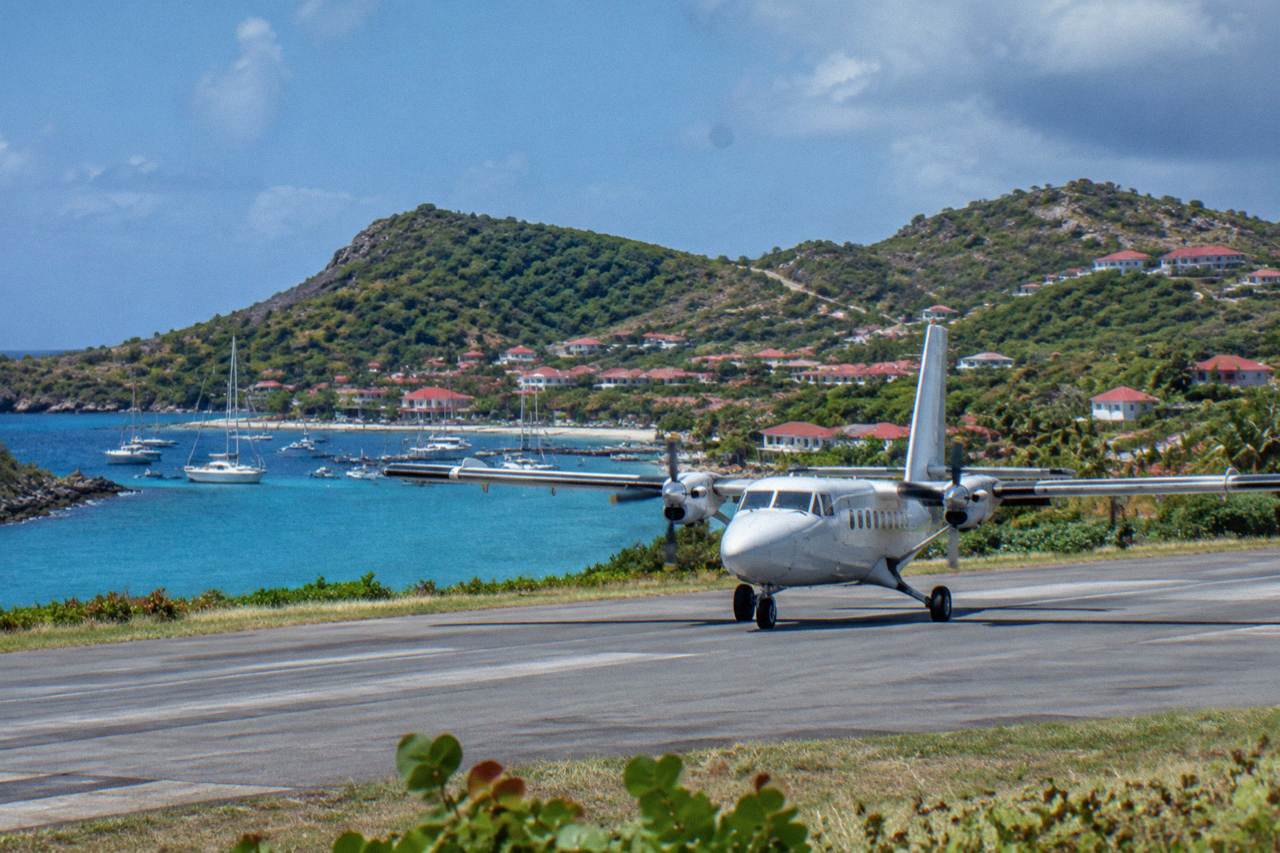
You can fly into St Barts, but only on a small turboprop from within the Caribbean. The runway at Gustaf III Airport is 646 metres long, which rules out every jet, and operations are limited to daylight and visual conditions. There is no direct jet service from the United States or Europe: a traveller flies to a gateway such as St Martin, San Juan, Guadeloupe or Antigua, then takes a short hop or the ferry.
That is the whole picture in one paragraph, and the details below fill it out. The word "directly" is where the confusion starts, because a search for direct flights to St Barts returns plenty of results, just not jet flights that land on the island. What those results actually offer is a one-stop journey: a mainstream flight into a regional hub, then a connection on an aircraft type built for short runways. The question of what airport you fly into for St Barthelemy has a two-part answer, and the second part is always a small plane or a boat.
The physics are simple and unchangeable. A runway of 646 metres cannot take an airliner, and there is no space to extend it: the strip runs between a hill and a beach at the edge of Gustavia harbor. The airport's operating rules reflect this. Only STOL-rated aircraft, meaning planes certified for short takeoff and landing, are permitted, and pilots need a special qualification for the approach. There are no runway lights, so the airport closes shortly after sunset and reopens around first light. Weather that would barely register at a large airport, such as low cloud over the hill on the approach, can pause operations at SBH.
Which Airlines Fly Into St Barts, And From Where?
Two scheduled carriers are the core of the St Barts air network: St Barth Commuter flies to SBH from St Martin (SXM), Grand Case on the French side (SFG) and Pointe-a-Pitre in Guadeloupe (PTP), while Tradewind flies from San Juan (SJU) and Antigua (ANU). Winair flies the SXM to SBH hop on Twin Otters. All of them use small STOL turboprops, and none flies a jet.
To see the flight options into each gateway, book a flight comparison.
That structure means the choice of gateway drives everything else about the trip. Travellers coming from the United States usually connect through St Martin or San Juan, and there is a dedicated page on flying to St Barts from the US that covers the routing in detail. Travellers coming from Europe typically route through St Martin or Guadeloupe. From St Martin the final hop is famously short, a quick visual flight across the channel that separates the two islands, and from San Juan it is a longer sector over the Leeward Islands chain. The airlines publish their own schedules and fares, and both change with the season, so the live listing for each carrier is the place to confirm days and times.
| Gateway airport | Code | Carrier serving SBH | Aircraft type | Where it fits |
|---|---|---|---|---|
| Princess Juliana, Sint Maarten | SXM | St Barth Commuter; Winair (Twin Otter operator) | STOL turboprops | The main gateway, reached by jets from North America and Europe |
| Grand Case, St Martin | SFG | St Barth Commuter | STOL turboprops | A quiet French-side alternative for regional connections |
| Pointe-a-Pitre, Guadeloupe | PTP | St Barth Commuter | STOL turboprops | The natural link from the French Caribbean |
| San Juan, Puerto Rico | SJU | Tradewind | STOL turboprops | A common US connection point |
| Antigua | ANU | Tradewind | STOL turboprops | A seasonal link from the eastern Caribbean |
One planning note that saves confusion: a ticket sold as "St Barts" is often, on inspection, a ticket to St Martin with the small-plane leg sold separately or as a codeshare. Checking the final destination code on the itinerary, SBH, is the only reliable way to know whether the small-plane leg is included. The main getting-there guide rounds out the picture for travellers building a full trip around the island rather than just the flight.
For anyone whose heart is set on the sea instead, the same corridor that the planes fly over is served by scheduled ferries, and several private boat options exist as well.
Why No Jet Ever Lands At St Barts
The runway is 646 metres long, roughly a fifth of the length a modern jet airliner needs, and the terrain leaves no room to extend it. Only STOL-certified turboprops are permitted, and the airport operates in daylight under visual flight rules only, with no runway lighting. The result is structural: no scheduled jet, no private jet on a scheduled basis, and no direct long-haul arrival, ever.
The airport sits at the edge of Gustavia, squeezed between a slope on the approach end and the water on the other. The approach passes low over a col, a dip in the ridge, and pilots flying into SBH hold a special qualification for it. These are the reasons the island's air link has stayed small aircraft only for decades, and why every projection of "bigger planes one day" runs into the same wall of geography. Travellers sometimes ask about private jets specifically: the same runway math applies, so a private jet lands at St Martin or another gateway and the last leg is a turboprop or a boat. More of these guides are collected on St Barthelemy Travel.
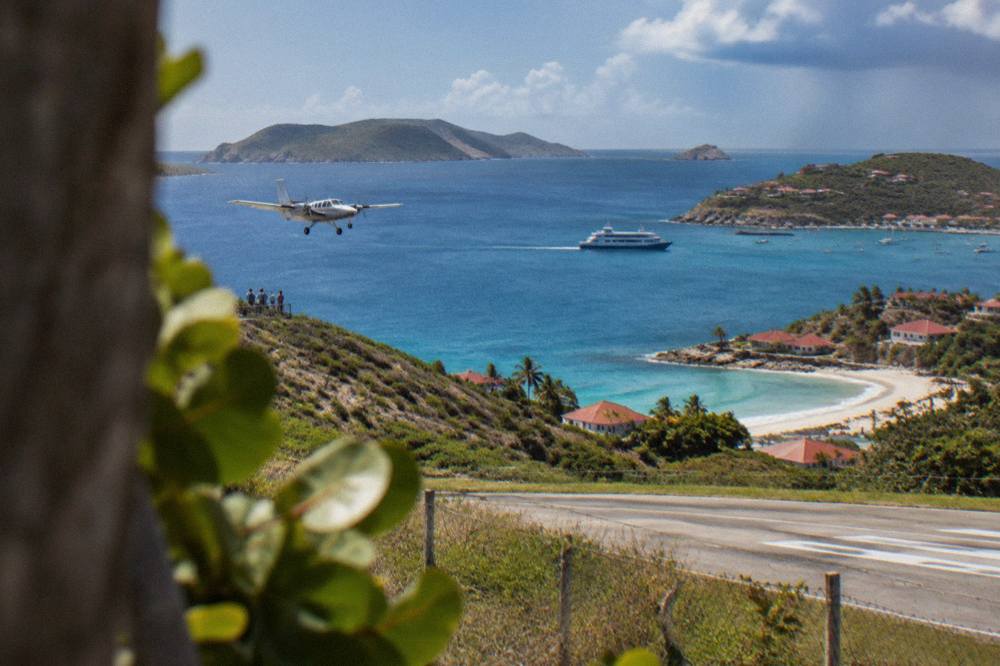
There is a hidden benefit in the restriction. Because every aircraft arriving is small, the passenger volume through SBH stays modest relative to other Caribbean destinations, and the arrival itself, a low pass over the hill and a touchdown within sight of Gustavia harbor, is widely described as one of the distinctive flying experiences in the region. Plane spencers gather at the fence near the runway for exactly this reason, and the island's airport spotting guide explains where the viewing points are.
Can You Reach St Barts Without Flying At All?
Yes. Two scheduled ferry operators connect St Martin and Sint Maarten with Gustavia: Great Bay Express runs from Philipsburg on the Dutch side, a crossing of about 45 minutes, and Voyager runs from Marigot on the French side, about 50 to 60 minutes. Passports are required and sailings depend on sea conditions, so the crossing can be rough.
The ferry is the standard answer for travellers who would rather not take the small-plane hop, and it doubles as the day-trip route: many people stay on St Martin or Sint Maarten and visit St Barts by sea for the day. Both operators run several departures a day in each direction, with more in the high season, and both publish live schedules on their own booking pages. Check-in normally closes some minutes before departure and a passport is required, since St Barts and St Martin are separate entry points even though the crossing is short. Sea states in the channel vary, and sailings can be cancelled in rough weather; the operators' pages show current conditions and any service notices.
For a day trip built around the water rather than the airport, the trip list on this site offers boat options that depart from St Martin and Sint Maarten and visit St Barts. The Gustavia, Colombier Beach and Ile Fourchue group sail is a per-person option that spends a full day around the island's northwest coast, See the live listing if the sea route appeals. Private charters and an overnight catamaran round out the list, all leaving from the St Martin side. One seasonal note from the listing: the per-person group sail runs only from 12 May to 31 August 2027, while the private options operate on their own calendars.
What Should You Know Before Booking The Last Leg?
Book the gateway and the last leg with the connection in mind: the small-plane and ferry services run on their own schedules, daylight limits the flying day at SBH, and weather in the channel affects both air and sea legs. Leaving buffer time on the outbound and return protects the trip, and the ferry gives a genuine alternative if a flight cannot operate.
The practical failures on this route are almost always connection failures. A late jet into St Martin can mean a missed turboprop, and because SBH closes after dark, an evening arrival at the gateway can force an overnight on St Martin before the morning hop. Booking the two legs on one itinerary where possible, or leaving several hours of buffer, is the standard advice. On the return, the same logic applies in reverse: the last flights of the day from SBH leave well before sunset, so a tight international departure from St Martin deserves an early start. Travellers with specific questions about the US side of the routing will find the page on which airports fly direct to St Barts useful, and the deeper comparison of direct flights from the US breaks down each hub.
| Last-leg option | Departs from | Approximate crossing | Notes |
|---|---|---|---|
| St Barth Commuter | SXM, SFG, PTP | A short hop | Scheduled STOL turboprop services to SBH |
| Tradewind | SJU, ANU | A longer sector | Scheduled STOL turboprop services to SBH |
| Winair | SXM | A short hop | Twin Otter operations from St Maarten |
| Great Bay Express ferry | Philipsburg, Sint Maarten | About 45 minutes | Scheduled passenger ferry to Gustavia |
| Voyager ferry | Marigot, St Martin | About 50 to 60 minutes | Scheduled passenger ferry to Gustavia |
| Private charter boat | St Martin / Sint Maarten ports | Varies by vessel | Bookable day and overnight options |
Common Questions About Flying Into St Barts
Can you fly directly into St Barts?
Only from within the Caribbean, on a small STOL turboprop. The runway at Gustaf III Airport is 646 metres long, which excludes every jet, so no direct jet flight from the United States or Europe exists. Fly to St Martin, San Juan, Guadeloupe or Antigua and connect on St Barth Commuter, Tradewind or Winair, or take the ferry from St Martin or Sint Maarten.
Can a private jet land at St Barts?
No. The 646 m runway cannot take jet aircraft of any kind, private or scheduled. Private jets land at a gateway such as St Martin and the final leg to St Barts is completed on a small turboprop or by boat.
Which airport do you fly into for St Barts?
The island's own airport is Gustaf III, also called Remy de Haenen, code SBH, at the edge of Gustavia. Because only small turboprops serve it, most itineraries pair a jet flight into Princess Juliana (SXM) on Sint Maarten or San Juan (SJU) with a short connecting hop to SBH.
Is the flight into St Barts safe?
The airport operates under strict rules: STOL-certified aircraft only, specially qualified pilots, daylight operations and visual conditions only. When weather does not meet those conditions, flights are delayed or cancelled rather than attempted, and the ferry is the standing fallback.
Can you get to St Barts without flying?
Yes. Great Bay Express runs a scheduled ferry from Philipsburg on Sint Maarten, about 45 minutes, and Voyager runs from Marigot on St Martin, about 50 to 60 minutes. Private boat charters from St Martin and Sint Maarten are also bookable, including day trips and an overnight catamaran option.
Do flights to St Barts operate every day?
Scheduled services run daily in normal conditions, but the flying day at SBH is limited to daylight hours and visual weather, and frequencies rise and fall with the season. The airlines' live listings show the current days and times for specific travel dates.
For travellers weighing the whole journey, the honest summary is this: St Barts is deliberately hard to reach by air, the runway guarantees it, and the small-plane hop or the channel crossing is part of what the island is. Plan the gateway, protect the connection, and the last leg takes care of itself.